 Back
BackNeural Integration: Sensory Receptors, Somatic Pathways, and Higher Brain Functions
Study Guide - Smart Notes
 Tailored notes based on your materials, expanded with key definitions, examples, and context.
Neural Integration
Sensation
Sensation is the conscious and unconscious awareness of changes in the external or internal environment. The process of sensation involves several steps:
Stimulation of the sensory receptor: A stimulus activates a sensory receptor.
Transduction of the stimulus: The receptor converts the stimulus into a nerve impulse.
Conduction: The nerve impulse is conducted to the central nervous system (CNS).
Translation: The CNS interprets the impulse as a specific sensation.
Classification of Senses
General senses: Provide information about conditions within internal organs and the body as a whole.
Special senses: Include smell, taste, vision, hearing, and equilibrium.
Types of Sensory Receptors
Free nerve endings: Detect pain and temperature (thermoreceptors and nociceptors).
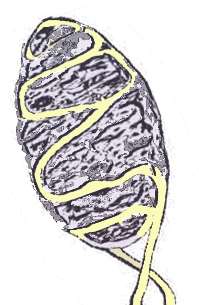
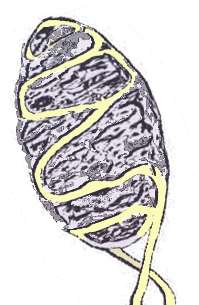
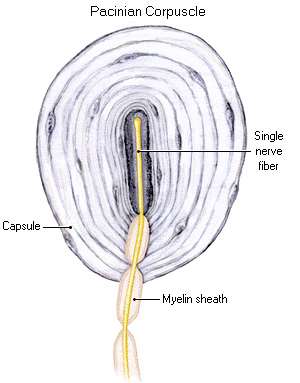
Encapsulated nerve endings: Such as Pacinian corpuscles, which are surrounded by connective tissue capsules.
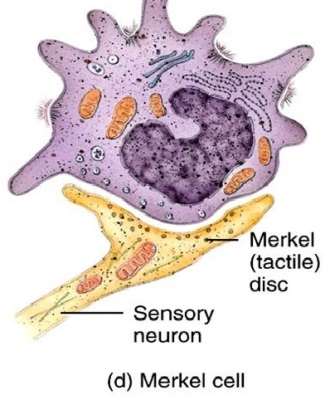
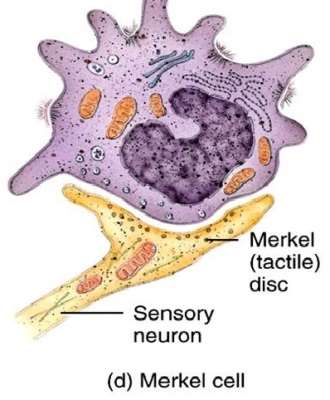
Modified nerve endings: Such as Merkel cells, which are specialized for tactile sensation.
Classification of Sensory Receptors by Location
Exteroceptors: Respond to stimuli from the external environment (e.g., skin, special senses).
Interoceptors: Monitor internal organ activity.
Proprioceptors: Provide information about body position and movement (located in muscles, tendons, and joints).
Classification of Sensory Receptors by Stimulus Type
Mechanoreceptors: Respond to mechanical forces (touch, pressure, vibration).
Thermoreceptors: Detect temperature changes.
Nociceptors: Detect pain from tissue damage.
Photoreceptors: Detect light (in the retina).
Chemoreceptors: Respond to chemical stimuli (taste, smell, blood chemistry).
Osmoreceptors: Detect changes in osmotic pressure.
Somatic Sensations
Overview
Somatic sensations arise from sensory receptors in the skin (cutaneous sensations), muscles, tendons, joints, and the inner ear. There are four main modalities:
Tactile
Thermal
Pain
Proprioceptive
Tactile Sensations
Tactile sensations include touch, pressure, vibration, itch, and tickle. The main tactile receptors in the skin are:
Meissner corpuscles: Sensitive to light touch and low-frequency vibration.
Hair root plexuses: Detect hair movement.
Merkel discs: Detect sustained touch and texture.
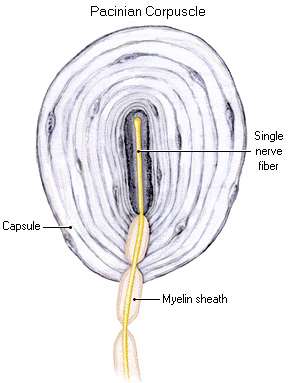
Pacinian corpuscles: Detect deep pressure and high-frequency vibration.
Free nerve endings: Detect pain, temperature, itch, and tickle.

Touch
Crude touch: Awareness that something has touched the skin.
Discriminative touch: Ability to precisely locate the point of contact; mediated by Meissner’s corpuscles.
Pressure
Longer-lasting and felt over a larger area and deeper tissue compared to touch.
Detected by Pacinian corpuscles.
Vibration
Result of repetitive sensory signals.
Low-frequency vibration: Meissner corpuscles.
High-frequency vibration: Pacinian corpuscles.
Tickle and Itch
Both detected by free nerve endings.
Tickle is unique in that it cannot be self-elicited.
Thermal Sensations
Thermal sensations are detected by thermoreceptors, which are free nerve endings. There are two types:
Cold receptors
Warm receptors
Pain Sensations
Pain is a protective sensation detected by nociceptors, which are free nerve endings found in all body tissues. There are two types of pain:
Visceral pain: Originates in internal organs.
Somatic pain: Originates in skin (superficial) or muscles, tendons, and joints (deep).
Proprioceptive Sensations
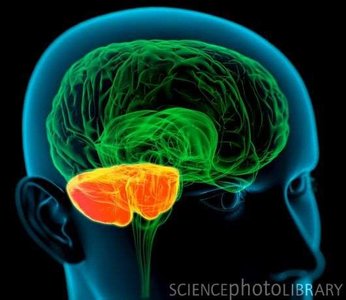
Proprioceptors provide information about body position and movement, playing a key role in balance and posture. The cerebellum is essential for proprioceptive sensation, performing the following functions:
Monitors the intention for movement.
Monitors the actual movement.
Compares intention with actual performance.
Sends out corrective signals.
Somatic Sensory and Motor Pathways
Somatic Sensory (Ascending) Pathway
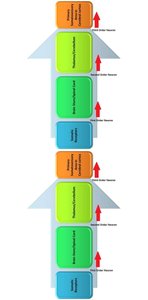
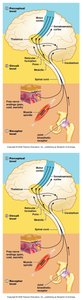
Somatic sensory pathways relay information from sensory receptors to the cerebral cortex. The pathway involves three neurons:
First-order neuron: From the somatic receptor to the spinal cord or brainstem.
Second-order neuron: From the spinal cord or brainstem to the thalamus or cerebellum.
Third-order neuron: From the thalamus to the primary somatosensory cortex.
Somatic Motor (Descending) Pathway
Somatic motor pathways transmit signals from the cerebral cortex to skeletal muscles, enabling voluntary movement. The pathway includes:
Origin in the cerebral cortex
Relay through the cerebellum and medulla oblongata
Descent through the spinal cord
Termination at the muscle
Integrative Functions of the Cerebrum
Wakefulness and Sleep
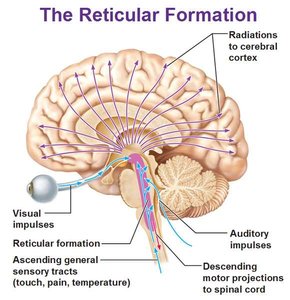
The Reticular Activating System (RAS) is crucial for maintaining consciousness and regulating the sleep-wake cycle. The RAS consists of neurons projecting from the reticular formation through the thalamus to the cerebral cortex. Increased RAS activity causes arousal from sleep.
Sleep
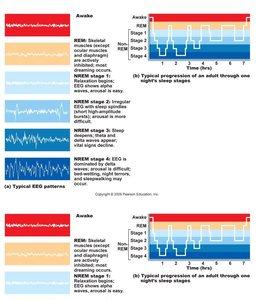
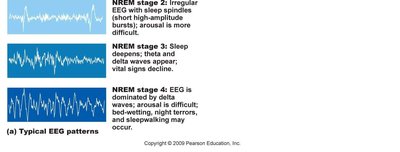
Sleep is a state of altered consciousness with two main components:
Non-rapid eye movement (NREM) sleep: Occurs first, lasting about 45 minutes.
Rapid eye movement (REM) sleep: Begins about 90 minutes after sleep onset. Characterized by increased heart rate, blood pressure, body temperature, decreased GI motility, and reduced skeletal muscle activity. Most dreaming occurs during REM sleep.
Learning and Memory
Definitions
Learning: The ability to acquire new information or skills through instruction or experience.
Memory: The process by which information acquired through learning is stored and retrieved.
Types of Memory
Short-term memory: Temporary recall, involving chemical and biological changes at synapses.
Long-term memory: More permanent, involving biochemical and anatomical changes at synapses.
Factors influencing transfer to long-term memory include:
Rehearsal
Emotional state (excitement)
Association with old data (past experience)
Automatic memory (unconsciously formed impressions)
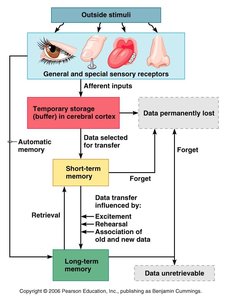
Additional info: The neural basis of memory involves synaptic plasticity, including long-term potentiation (LTP), which strengthens synaptic connections and is essential for learning and memory formation.
