 Back
BackNutrition and Food Supply: Food Security, Sustainability, and Safety
Study Guide - Smart Notes
 Tailored notes based on your materials, expanded with key definitions, examples, and context.
Food Security and Insecurity
Food Availability and Access
Food security is defined as access by all people at all times to enough food for an active, healthy life. Food availability refers to the physical presence of food, while food access is the ability of individuals or households to obtain food through purchase, home production, or social aid. Both are influenced by economic, social, and environmental factors.
Food availability is affected by climate change, conflict, farming techniques, and distribution networks.
Food access can be limited by low income, lack of transportation, or living in "food deserts."
Global and U.S. Food Security
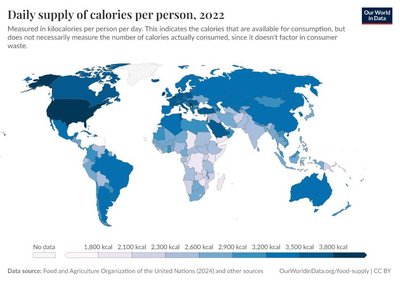
Globally, food availability averages about 2,900–3,000 kcal per person per day, but disparities exist. In 2023, the U.S. reported 3,914 kcal per person per day, yet millions still face hunger and food insecurity.
Between 713 and 757 million people faced hunger worldwide in 2023.
Food insecurity affects over 2 billion people globally, with "hidden hunger" (micronutrient deficiencies) impacting 2 billion.
Consequences of Food Insecurity and Malnutrition
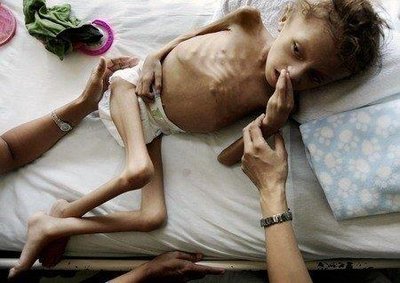
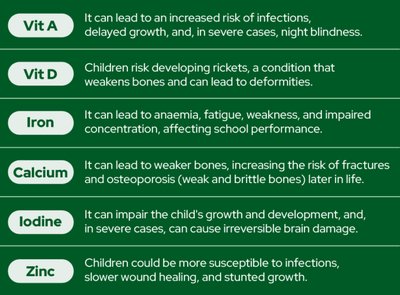
Malnutrition can result from insufficient calorie or nutrient intake, leading to undernourishment, stunted growth, weakened immunity, and increased disease risk. Micronutrient deficiencies are especially harmful to children.
Common deficiencies: Vitamin A, Iodine, Iron, Zinc, Folate.
Physical and mental activity declines, growth slows, and susceptibility to disease increases.
Nutrition Transition and Overnutrition
As countries become more Westernized, diets shift toward higher intake of meat, dairy, sugar, fat, and processed foods, and lower intake of whole grains, vegetables, and fruits. This "nutrition transition" leads to overnutrition, overweight, and obesity.
Over 1 billion people globally are obese; 16% of adults and 8% of youth (5–19) are obese.
In the U.S., adult obesity rates are approximately 40–43%.

Food Security Status in the U.S.
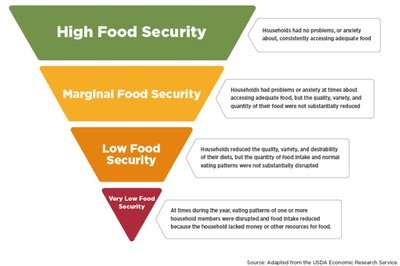
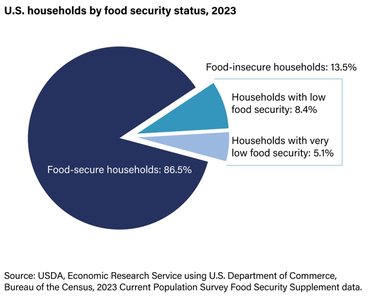
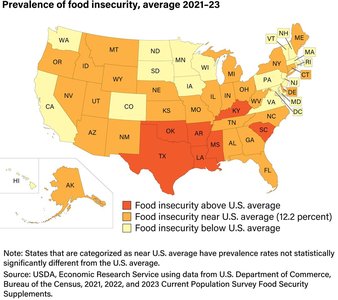
The USDA monitors food security, categorizing households as having high, marginal, low, or very low food security. Food insecurity is closely linked to poverty and can lead to poor diet quality and health outcomes.
Food-insecure individuals often consume fewer nutrient-dense foods and more high-energy, low-nutrient foods.
Food insecurity is associated with higher rates of obesity, especially in low-income populations.
Health Consequences of Food Insecurity in Children
Children in food-insecure households are at greater risk for health and developmental problems, including increased rates of illness, behavioral issues, and lower educational achievement.
Higher rates of asthma, headaches, and psychological distress.
Parents may compromise their own diets to feed their children.
Food Insecurity in College Students
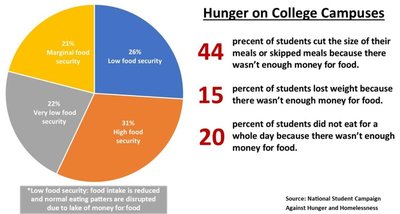
Food insecurity is also prevalent among college students, affecting academic performance and overall well-being.
Fighting Hunger and Increasing Food Security
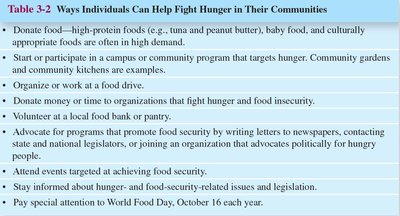
Government and charitable programs play a key role in increasing food security. Major U.S. programs include SNAP, WIC, Child Nutrition Programs, and food banks. Individuals can also help fight hunger in their communities.
Donate food or time to food banks and pantries.
Advocate for policies that promote food security.
Global Hunger and Famine
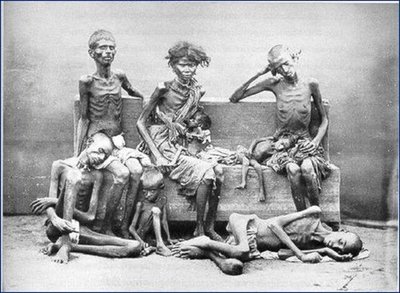
Global hunger is exacerbated by natural disasters, war, and political unrest. The United Nations' Zero Hunger Challenge aims to eliminate hunger and malnutrition worldwide.


Food Sustainability
Sustainable Development Goals
The United Nations Sustainable Development Goals include ending hunger, achieving food security, improving nutrition, and promoting sustainable agriculture by 2030. Achieving these goals requires changes in food production, distribution, and consumption.
Reducing Food Waste
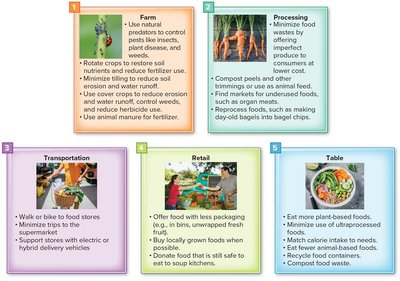
About one-third of all food produced is lost or wasted globally. Strategies to reduce food waste include better inventory management, consumer education, and food donation.
Food Safety
Organic Foods
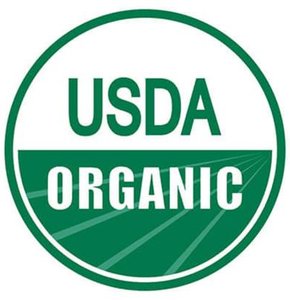
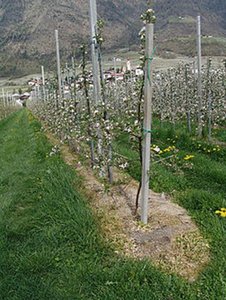
Organic foods are produced without synthetic pesticides, chemical fertilizers, hormones, antibiotics, or GMOs. They must meet strict certification standards and are often chosen for perceived health and environmental benefits.
Organic meat, poultry, eggs, and dairy must come from animals allowed to graze outdoors and fed only organic feed.
Organic foods may have lower pesticide residues but are not consistently higher in nutrients than conventional foods.
Organic Pesticides
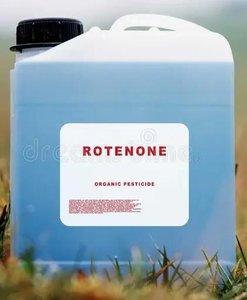
Some natural pesticides, such as rotenone, are permitted in organic farming but may still pose health risks.
Genetically Modified Foods (GMOs)
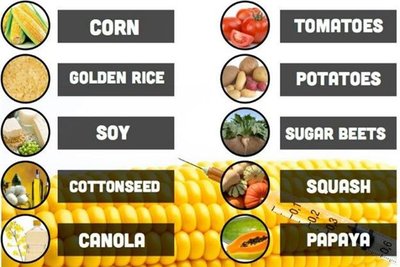
Genetically modified foods are produced from organisms whose DNA has been altered for traits such as pest resistance, herbicide tolerance, or improved nutrition. Common GM foods include corn, soy, canola, and papaya.

Summary Table: Key Micronutrient Deficiencies and Effects
Micronutrient | Health Effects |
|---|---|
Vitamin A | Increased risk of infections, delayed growth, night blindness |
Vitamin D | Rickets, bone deformities |
Iron | Anemia, fatigue, impaired concentration |
Calcium | Weaker bones, risk of fractures |
Iodine | Impaired growth, brain damage |
Zinc | Infections, slow wound healing, stunted growth |
