 Back
BackOverview of Human Organ Systems
Study Guide - Smart Notes
 Tailored notes based on your materials, expanded with key definitions, examples, and context.
Definitions and Concepts
Organ and Organ System
An organ is a structure composed of two or more types of tissues that work together to perform specific, complex functions. An organ system is a group of organs that collaborate to perform broader physiological functions necessary for the survival of the organism.
Organ: Example – the heart (composed of muscle, connective, and nervous tissue).
Organ System: Example – the cardiovascular system (heart, blood vessels, blood).
Integumentary System
Structure and Functions
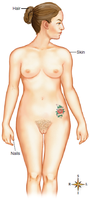
The integumentary system consists primarily of the skin, with appendages such as hair, nails, sweat glands, and oil glands. It serves as the body's first line of defense and plays a vital role in homeostasis.
Protection: Acts as a barrier against mechanical injury, pathogens, and dehydration.
Regulation of Body Temperature: Through sweat production and control of blood flow to the skin.
Synthesis of Chemicals: Produces vitamin D when exposed to sunlight.
Sensory Reception: Contains receptors for touch, pain, temperature, and pressure.
Skeletal System
Structure and Functions
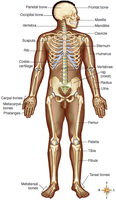
The skeletal system is composed of 206 named bones, cartilage, ligaments, and joints. It provides the framework for the body and supports movement in conjunction with the muscular system.
Support: Framework for the body.
Protection: Shields vital organs (e.g., skull protects the brain).
Movement: Bones act as levers for muscles.
Mineral Storage: Stores calcium and phosphorus.
Blood Cell Formation: Hematopoiesis occurs in bone marrow.
Muscular System
Structure and Functions
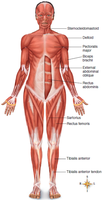
The muscular system consists of skeletal, smooth, and cardiac muscle tissues. It is responsible for movement, posture, and heat production.
Skeletal Muscle: Voluntary muscles attached to bones for movement.
Smooth Muscle: Involuntary muscles in walls of organs (e.g., intestines).
Cardiac Muscle: Involuntary muscle in the heart wall.
Function: Movement, posture, and heat generation.
Nervous System
Structure and Functions
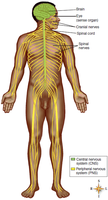
The nervous system is divided into the central nervous system (CNS) and peripheral nervous system (PNS). It coordinates body activities by transmitting electrical signals.
CNS: Brain and spinal cord.
PNS: Cranial and spinal nerves, sense organs.
Functions: Communication, integration, control, and sensory recognition.
Endocrine System
Structure and Functions
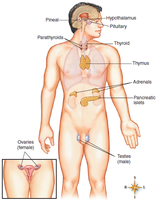
The endocrine system is composed of ductless glands that secrete hormones into the bloodstream, regulating long-term processes such as growth, metabolism, and reproduction.
Major Glands: Pituitary, pineal, hypothalamus, thyroid, parathyroids, thymus, adrenals, pancreas, ovaries, testes.
Functions: Communication, integration, and control (slow and long-lasting compared to the nervous system).
Neuroendocrine System: Interaction between nervous and endocrine systems for coordinated regulation.
Cardiovascular System
Structure and Functions
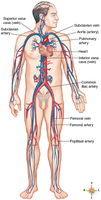
The cardiovascular system (circulatory system) consists of the heart and blood vessels. It is essential for transporting substances throughout the body and maintaining homeostasis.
Heart: Pumps blood through vessels.
Blood Vessels: Arteries, veins, and capillaries transport blood.
Functions: Transport of oxygen, carbon dioxide, nutrients, hormones, and waste; regulation of body temperature; immunity.
Lymphatic and Immune Systems
Structure and Functions
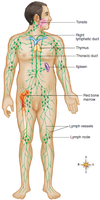
The lymphatic system includes lymphatic vessels, lymph nodes, tonsils, thymus, and spleen. The immune system consists of phagocytes, secretory cells, antibodies, and complements. Together, they defend the body against infection and disease.
Lymphatic System: Transports lymph, absorbs fats, and removes debris.
Immune System: Phagocytosis of pathogens, production of antibodies, and chemical defense mechanisms.
Respiratory System
Structure and Functions
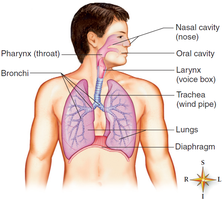
The respiratory system is responsible for gas exchange, filtering air, and regulating acid-base balance. It includes the nose, pharynx, larynx, trachea, bronchi, and lungs.
Gas Exchange: Oxygen is absorbed and carbon dioxide is expelled in the alveoli.
Filtration: Removes irritants from inhaled air.
Acid-Base Balance: Regulates blood pH by controlling CO2 levels.
Digestive System
Structure and Functions
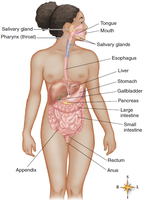
The digestive system consists of the alimentary canal (mouth to anus) and accessory organs. It breaks down food, absorbs nutrients, and eliminates waste.
Primary Organs: Mouth, pharynx, esophagus, stomach, small intestine, large intestine, rectum, anal canal.
Accessory Organs: Teeth, salivary glands, tongue, liver, gallbladder, pancreas, appendix.
Functions: Digestion, absorption, and elimination of waste (feces).
Urinary System
Structure and Functions
The urinary system removes waste products from the blood, regulates electrolyte and water balance, and maintains acid-base balance. It includes the kidneys, ureters, urinary bladder, and urethra.
Kidneys: Filter blood and produce urine.
Ureters: Transport urine to the bladder.
Urinary Bladder: Stores urine.
Urethra: Conducts urine out of the body (also part of the male reproductive system).
Reproductive System
Male and Female Structures and Functions
The reproductive system ensures the survival of the species through the production of sex cells, fertilization, and development of offspring. It also produces sex hormones.
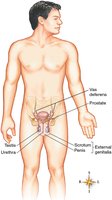
Male Structures: Testes, vas deferens, urethra, prostate, penis, scrotum.
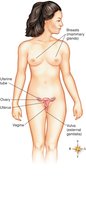
Female Structures: Ovaries, uterus, uterine tubes, vagina, vulva, mammary glands.
Functions: Production and transfer of gametes, fertilization, development, birth, and nourishment of offspring.
Body as a Whole
Integration and Homeostasis
The human body is composed of 11 organ systems, all of which are structurally and functionally interrelated. Homeostasis is maintained through the coordinated activity of these systems. Not all organs are vital for survival (e.g., spleen, appendix, tonsils, eyes, arms, and legs).
Homeostasis: The body's ability to maintain a stable internal environment.
Interdependence: Organ systems rely on each other for optimal function.
Organ Replacement
Approaches and Examples
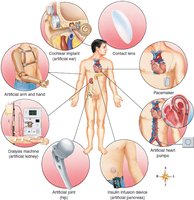
Organ replacement is necessary when vital organs fail. Nonvital organs can be replaced with prostheses, while vital organs may require transplantation, free-flap surgeries, or stem cell treatments.
Prosthesis: Artificial replacement for a nonvital organ (e.g., artificial limb, pacemaker).
Transplantation: Surgical replacement of organs such as kidney, liver, heart.
Free-Flap Surgery: Construction of new organs from the patient's own tissues.
Stem Cell Therapy: Engineering tissues or organs from undifferentiated cells.
Summary Table: Major Human Organ Systems
Organ System | Main Organs | Primary Functions |
|---|---|---|
Integumentary | Skin, hair, nails | Protection, temperature regulation, sensation |
Skeletal | Bones, cartilage, ligaments, joints | Support, movement, protection, blood formation |
Muscular | Skeletal, smooth, cardiac muscles | Movement, posture, heat production |
Nervous | Brain, spinal cord, nerves, sense organs | Control, communication, integration |
Endocrine | Glands (pituitary, thyroid, etc.) | Hormone secretion, regulation |
Cardiovascular | Heart, blood vessels | Transport, temperature regulation, immunity |
Lymphatic/Immune | Lymph nodes, vessels, spleen, thymus | Fluid balance, immunity |
Respiratory | Nose, pharynx, larynx, trachea, lungs | Gas exchange, acid-base balance |
Digestive | Mouth, stomach, intestines, liver, pancreas | Digestion, absorption, waste elimination |
Urinary | Kidneys, ureters, bladder, urethra | Waste removal, water/electrolyte balance |
Reproductive | Testes, ovaries, uterus, penis, vagina | Production of gametes, offspring development |
