 Back
BackOverview of Human Organ Systems
Study Guide - Smart Notes
 Tailored notes based on your materials, expanded with key definitions, examples, and context.
Organ Systems of the Human Body
Introduction to Organ Systems
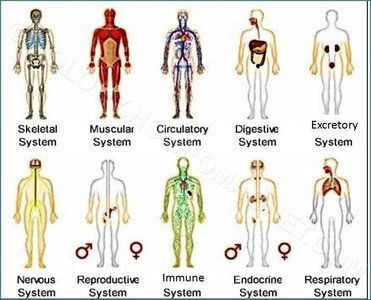
The human body is organized into multiple organ systems, each composed of specialized organs working together to perform complex functions necessary for survival and homeostasis. An organ is a structure made up of two or more kinds of tissue, while an organ system is a group of organs that collectively perform a broader function than any single organ alone.
Integumentary System
Structure
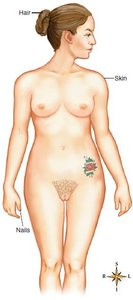
The integumentary system consists primarily of the skin, along with its appendages such as hair, nails, sweat glands, and oil glands. It is the body's first line of defense against the external environment.
Skin: The largest organ, providing a protective barrier.
Hair and Nails: Appendages that aid in protection and sensation.
Microscopic sense receptors: Detect changes in the environment.
Sweat and oil glands: Assist in temperature regulation and lubrication.
Functions
Protection: Shields underlying tissues from injury, infection, and dehydration.
Regulation of body temperature: Through sweat production and blood flow.
Synthesis of chemicals: Such as vitamin D.
Sensory organ: Detects touch, temperature, and pain.
Skeletal System
Structure
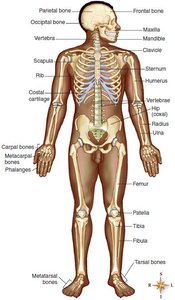
The skeletal system is composed of 206 named bones, cartilage, ligaments, and joints. It provides the rigid framework for the body and supports movement in conjunction with the muscular system.
Bones: Main organs of the system.
Cartilage: Cushions joints and connects bones.
Ligaments: Bands of fibrous tissue connecting bones.
Joints: Allow for movement between bones.
Functions
Support: Framework for the body.
Protection: Shields vital organs (e.g., brain, heart).
Movement: Facilitates movement with muscles.
Mineral storage: Stores calcium and phosphorus.
Blood cell formation: Occurs in bone marrow (hematopoiesis).
Muscular System
Structure
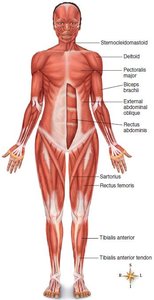
The muscular system consists of three types of muscle tissue: skeletal (voluntary), smooth (involuntary), and cardiac (heart muscle). Muscles are the primary organs responsible for movement.
Skeletal muscles: Attach to bones and produce voluntary movement.
Smooth muscles: Found in walls of organs, control involuntary actions.
Cardiac muscle: Found only in the heart, responsible for pumping blood.
Functions
Movement: Locomotion and manipulation of the environment.
Posture maintenance: Stabilizes joints and maintains posture.
Heat production: Muscle activity generates heat.
Nervous System
Structure
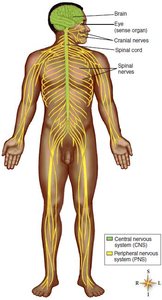
The nervous system is divided into the central nervous system (CNS) and peripheral nervous system (PNS). It is the body's major regulatory and communication network.
CNS: Brain and spinal cord.
PNS: Cranial and spinal nerves, sense organs.
Functions
Communication: Transmits signals between body parts.
Integration: Processes sensory input and coordinates responses.
Control: Regulates body functions and activities.
Recognition of sensory stimuli: Detects changes in the environment.
Endocrine System
Structure
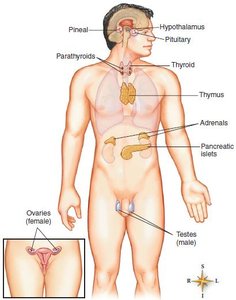
The endocrine system is composed of glands that secrete hormones directly into the bloodstream, regulating various body functions over time.
Pituitary, pineal, hypothalamus, thyroid, parathyroid, thymus, adrenal glands
Pancreas
Ovaries (female), testes (male)
Functions
Hormonal regulation: Controls growth, metabolism, and reproduction.
Long-term control: Effects are slower but longer-lasting than the nervous system.
Neuroendocrine system: Interaction between nervous and endocrine systems.
Cardiovascular System
Structure
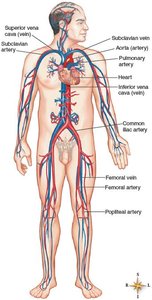
The cardiovascular (circulatory) system consists of the heart and a closed network of blood vessels (arteries, veins, capillaries) that transport blood throughout the body.
Heart: Pumps blood.
Blood vessels: Arteries, veins, capillaries.
Functions
Transportation: Delivers oxygen, nutrients, and hormones; removes waste products.
Regulation: Maintains body temperature and pH balance.
Immunity: Transports immune cells and antibodies.
Lymphatic and Immune Systems
Lymphatic System Structure
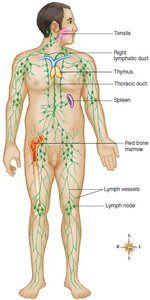
The lymphatic system includes lymphatic vessels, lymph nodes, tonsils, thymus, and spleen. It returns interstitial fluid to the bloodstream and plays a role in immunity.
Lymphatic vessels
Lymph nodes and tonsils
Thymus and spleen
Lymphatic System Functions
Fluid balance: Returns excess tissue fluid to the blood.
Fat absorption: Transports fats from the digestive tract.
Immunity: Filters lymph and houses immune cells.
Immune System Structure and Functions
Phagocytes: Engulf and destroy pathogens.
Secretory cells: Produce antibodies and complement proteins.
Defense: Protects against microorganisms, toxins, and cancerous cells.
Respiratory System
Structure
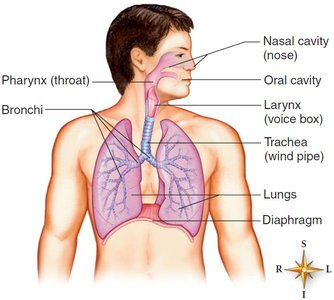
The respiratory system includes the nose, pharynx, larynx, trachea, bronchi, and lungs. It is responsible for gas exchange between the body and the environment.
Nose, pharynx, larynx, trachea, bronchi, lungs
Functions
Gas exchange: Oxygen in, carbon dioxide out.
Filtration: Removes irritants from inhaled air.
Acid-base balance: Regulates blood pH.
Digestive System
Structure
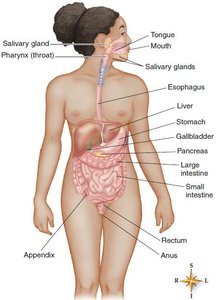
The digestive system consists of the alimentary canal (GI tract) and accessory organs. It breaks down food, absorbs nutrients, and eliminates waste.
Primary organs: Mouth, pharynx, esophagus, stomach, small intestine, large intestine, rectum, anal canal.
Accessory organs: Teeth, salivary glands, tongue, liver, gallbladder, pancreas, appendix.
Functions
Digestion: Mechanical and chemical breakdown of food.
Absorption: Uptake of nutrients into the bloodstream.
Elimination: Removal of undigested waste (feces).
Urinary System
Structure
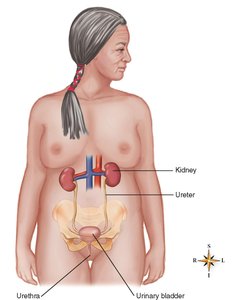
The urinary system consists of the kidneys, ureters, urinary bladder, and urethra. It removes waste products from the blood and maintains fluid and electrolyte balance.
Kidneys
Ureters
Urinary bladder
Urethra
Functions
Excretion: Removes metabolic wastes as urine.
Electrolyte and water balance
Acid-base balance
Reproductive Systems
Male Reproductive System Structure
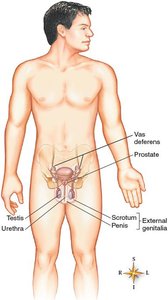
Testes (gonads)
Vas deferens, urethra, prostate, penis, scrotum
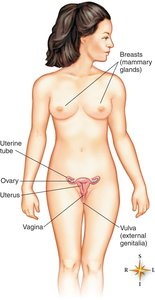
Female Reproductive System Structure
Ovaries (gonads)
Uterus, uterine (fallopian) tubes, vagina, vulva, mammary glands
Functions of the Reproductive Systems
Production of sex cells: Sperm (male), ova (female).
Fertilization and development: Ensures survival of the species.
Hormone production: Regulates sexual characteristics and reproduction.
Nourishment of offspring: Especially in females via mammary glands.
Integration of Body Systems
Body as a Whole
There are 11 major body systems, all of which are structurally and functionally interrelated. Homeostasis is maintained only through the coordinated activity of all systems. No system functions entirely independently.
Organ Replacement and Transplantation
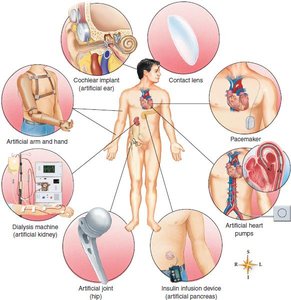
Organ Replacement
Loss of function in nonvital organs can often be managed with prostheses (artificial organs), while loss of vital organs may require transplantation or advanced surgical techniques.
Organ Transplantation and Immune Rejection
Transplantation: Surgical transfer of organs such as kidney, liver, heart, etc.
Immune rejection: The recipient's immune system may attack the transplanted organ, requiring immunosuppressive drugs to prevent rejection, which increases infection risk.
Summary Table: Major Organ Systems
System | General Functions | Principal Organs |
|---|---|---|
Integumentary | Protection, temperature regulation, sensation | Skin, hair, nails, glands |
Skeletal | Support, movement, protection, blood formation | Bones, ligaments, joints |
Muscular | Movement, posture, heat production | Muscles |
Nervous | Regulation, communication, integration | Brain, spinal cord, nerves, sense organs |
Endocrine | Hormonal regulation, metabolism, growth | Pituitary, thyroid, adrenals, pancreas, gonads |
Cardiovascular | Transport, regulation, immunity | Heart, blood vessels |
Lymphatic/Immune | Fluid balance, immunity | Lymph nodes, spleen, thymus, tonsils |
Respiratory | Gas exchange, acid-base balance | Nose, pharynx, larynx, trachea, lungs |
Digestive | Digestion, absorption, elimination | Mouth, stomach, intestines, liver, pancreas |
Urinary | Excretion, fluid/electrolyte balance | Kidneys, ureters, bladder, urethra |
Reproductive | Production of offspring, hormone production | Testes, ovaries, uterus, penis, vagina, breasts |
Key Terms and Concepts
Homeostasis: The maintenance of a stable internal environment.
Prosthesis: Artificial device replacing a missing body part.
Immunosuppressive drugs: Medications that reduce immune response, used in organ transplantation.
Additional info: This summary integrates and expands upon the provided notes, tables, and images to create a comprehensive, self-contained study guide for college-level anatomy and physiology students.
