 Back
BackOverview of the Human Body: Anatomical Orientation and Major Systems
Study Guide - Smart Notes
 Tailored notes based on your materials, expanded with key definitions, examples, and context.
The Human Body: An Orientation
Introduction to Human Anatomy
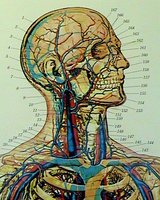
The study of human anatomy provides a foundational understanding of the structure and organization of the human body. Anatomical diagrams are essential for visualizing the relationships between bones, muscles, blood vessels, and nerves. This section introduces the major anatomical regions and highlights the importance of orientation in medical and biological sciences.
Anatomical Position: The standard reference position for the body is standing upright, facing forward, arms at the sides, and palms facing forward.
Major Body Regions: Includes the head, neck, thorax, abdomen, upper limbs, and lower limbs.
Importance: Understanding orientation aids in communication among healthcare professionals and supports accurate diagnosis and treatment.
The Skeletal System
Structure and Function of Bones
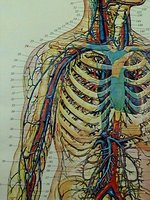
The skeletal system provides structural support, protects vital organs, and enables movement through its interaction with muscles. The rib cage, vertebral column, and limbs are key components of the skeletal framework.
Bone Types: Long bones (e.g., femur), short bones (e.g., carpals), flat bones (e.g., sternum), and irregular bones (e.g., vertebrae).
Functions: Support, protection, movement, mineral storage, and blood cell formation (hematopoiesis).
Example: The rib cage protects the heart and lungs, while the vertebral column supports the body and houses the spinal cord.
The Cardiovascular System
Blood Vessels and Circulation
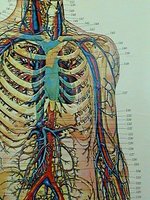
The cardiovascular system consists of the heart and a network of blood vessels that transport blood throughout the body. Arteries, veins, and capillaries are the main types of blood vessels, each with distinct functions.
Arteries: Carry oxygenated blood away from the heart to the tissues (except pulmonary arteries).
Veins: Return deoxygenated blood to the heart (except pulmonary veins).
Capillaries: Facilitate exchange of gases, nutrients, and waste between blood and tissues.
Example: The aorta is the largest artery, distributing blood from the heart to the body.
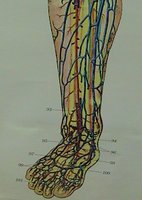
Major Nerves and Their Distribution
Nervous System Overview
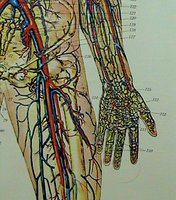
The nervous system is responsible for transmitting signals between different parts of the body. Major nerves are distributed throughout the limbs, head, and torso, enabling sensory and motor functions.
Peripheral Nervous System: Composed of nerves outside the brain and spinal cord, including those in the arms and legs.
Functions: Sensory nerves carry information to the central nervous system; motor nerves transmit commands to muscles.
Example: The median nerve in the arm controls movement and sensation in the hand.
Summary Table: Major Anatomical Systems
System | Main Structures | Primary Functions |
|---|---|---|
Skeletal | Bones, joints, cartilage | Support, protection, movement |
Cardiovascular | Heart, arteries, veins, capillaries | Transport of blood, nutrients, gases |
Nervous | Brain, spinal cord, peripheral nerves | Signal transmission, coordination |
Additional info: The images provided are classic anatomical illustrations, useful for identifying the spatial relationships between major vessels, nerves, and skeletal elements. These diagrams are foundational for students in anatomy and physiology courses.
