 Back
Overview of the Human Organ Systems
Study Guide - Smart Notes
 Tailored notes based on your materials, expanded with key definitions, examples, and context.
Organ System Overview
Introduction
The human body is organized into eleven major organ systems, each with distinct structures and functions that work together to maintain homeostasis and overall health. Understanding these systems is foundational for anatomy and physiology studies, including laboratory identification of organs in humans and comparative anatomy with fetal pigs.
Table: Major Organ Systems, Key Organs, and Functions
Organ System | Major Organs | Main Functions |
|---|---|---|
Integumentary | Skin | Protection, vitamin D synthesis, sensory reception |
Skeletal | Bones, cartilages, joints | Support, protection, movement, blood cell formation, mineral storage |
Muscular | Skeletal muscles | Movement, posture, heat production |
Nervous | Brain, spinal cord, nerves, sensory receptors | Control, response to stimuli, regulation of muscles/glands |
Endocrine | Pituitary, thyroid, adrenal glands, pancreas, gonads | Hormone secretion, growth, metabolism, reproduction |
Cardiovascular | Heart, blood vessels | Transport of gases, nutrients, wastes |
Lymphatic | Lymph nodes, lymphatic vessels, thoracic duct | Fluid return, immunity, debris removal |
Respiratory | Nasal cavity, pharynx, larynx, trachea, bronchi, lungs | Gas exchange (O2/CO2) |
Digestive | Mouth, esophagus, stomach, intestines, liver, pancreas | Food breakdown, nutrient absorption, waste elimination |
Urinary | Kidneys, ureters, bladder, urethra | Waste elimination, water/electrolyte/acid-base balance |
Reproductive | Testes, ovaries, uterus, penis, vagina | Production of offspring |
System-by-System Overview
Integumentary System
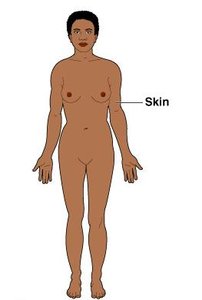
The integumentary system forms the external body covering and is primarily composed of the skin. It serves as the first line of defense against environmental hazards, helps regulate body temperature, and is involved in the synthesis of vitamin D. The skin also contains sensory receptors for touch, pain, and temperature.
Major organ: Skin
Main functions: Protection, vitamin D synthesis, sensory reception
Skeletal System
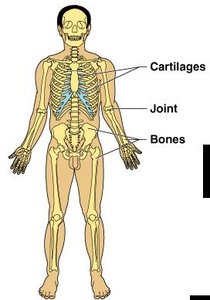
The skeletal system provides the structural framework for the body, protects internal organs, and serves as a site for muscle attachment, enabling movement. It is also responsible for the formation of blood cells (hematopoiesis) and the storage of minerals such as calcium and phosphorus.
Major organs: Bones, cartilages, joints
Main functions: Support, protection, movement, blood cell formation, mineral storage
Muscular System
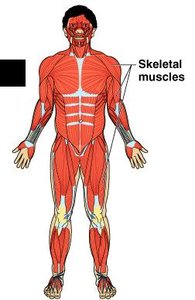
The muscular system consists of skeletal muscles that are responsible for voluntary movements, maintaining posture, and generating heat through muscle contractions.
Major organ: Skeletal muscles
Main functions: Movement, posture, heat production
Nervous System
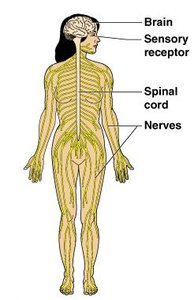
The nervous system is the body's fast-acting control system. It detects and responds to internal and external changes by activating appropriate muscles and glands. It includes the brain, spinal cord, nerves, and sensory receptors.
Major organs: Brain, spinal cord, nerves, sensory receptors
Main functions: Control, response to stimuli, regulation of muscles/glands
Endocrine System
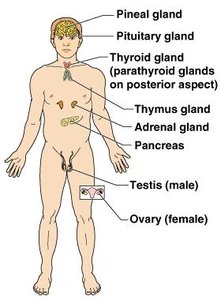
The endocrine system is composed of glands that secrete hormones directly into the bloodstream. These hormones regulate processes such as growth, metabolism, and reproduction.
Major organs: Pituitary gland, thyroid gland, adrenal gland, pancreas, gonads
Main functions: Hormone secretion, growth, metabolism, reproduction
Cardiovascular System
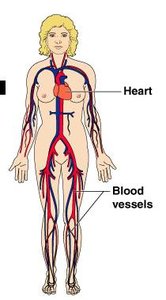
The cardiovascular system consists of the heart and blood vessels. It is responsible for transporting oxygen, carbon dioxide, nutrients, and wastes throughout the body via the blood.
Major organs: Heart, blood vessels
Main functions: Transport of gases, nutrients, wastes
Lymphatic System
The lymphatic system returns excess tissue fluid to the bloodstream, disposes of cellular debris, and is involved in immune responses. It includes lymph nodes, lymphatic vessels, and the thoracic duct.
Major organs: Lymph nodes, lymphatic vessels, thoracic duct
Main functions: Fluid return, immunity, debris removal
Respiratory System
The respiratory system keeps the blood supplied with oxygen and removes carbon dioxide. It includes the nasal cavity, pharynx, larynx, trachea, bronchi, and lungs.
Major organs: Nasal cavity, pharynx, larynx, trachea, bronchi, lungs
Main functions: Gas exchange (O2/CO2)
Digestive System
The digestive system breaks down food into absorbable units that enter the blood for distribution to body cells. It also eliminates indigestible foodstuffs as feces. Major organs include the mouth, esophagus, stomach, intestines, liver, and pancreas.
Major organs: Mouth, esophagus, stomach, small and large intestines, liver, pancreas
Main functions: Food breakdown, nutrient absorption, waste elimination
Urinary System
The urinary system eliminates nitrogenous wastes from the body and regulates water, electrolyte, and acid-base balance of the blood. It includes the kidneys, ureters, urinary bladder, and urethra.
Major organs: Kidneys, ureters, urinary bladder, urethra
Main functions: Waste elimination, water/electrolyte/acid-base balance
Reproductive System
The reproductive system is responsible for producing offspring. It includes the testes and associated structures in males, and the ovaries and associated structures in females.
Major organs: Testes, penis, scrotum (male); ovaries, uterine tubes, uterus, vagina (female)
Main functions: Production of gametes, fertilization, development of offspring
Application: Organ Identification in Laboratory Settings
Fetal Pig and Human Cadaver Identification
In laboratory exercises, students are expected to identify the major organs of each system in both fetal pig specimens and human cadavers. This reinforces understanding of anatomical relationships and comparative anatomy.
Practice identifying organs such as the heart, lungs, kidneys, stomach, intestines, and reproductive organs.
Use provided video links for guided identification of structures in the cardiovascular, respiratory, digestive, and urogenital systems of the fetal pig.
Example: In the cardiovascular system, locate the right and left atria and ventricles, aorta, and vena cavae in the fetal pig. In the respiratory system, identify the trachea, bronchi, and lungs.
Summary Table: Key Organs to Identify in Fetal Pig Lab
System | Key Organs to Identify |
|---|---|
Cardiovascular | Right/Left atrium, Right/Left ventricle, Superior/Inferior vena cava, Pulmonary trunk, Aorta |
Respiratory | External nares, Thymus gland, Thyroid gland, Larynx, Trachea, Primary bronchi, Lungs, Diaphragm |
Digestive | Parotid gland, Submandibular gland, Sublingual gland, Hard/Soft palate, Tongue, Epiglottis, Esophagus, Spleen, Stomach, Pyloric sphincter, Duodenum, Mesentery, Cecum, Spiral colon, Liver, Gall bladder, Pancreas |
Urogenital | Kidney, Kidney cortex, Kidney medulla, Renal pyramids, Ureter, Urinary bladder, Urethra, Scrotum, Testis, Epididymis, Spermatic cord, Penis, Ovary, Uterine horns, Vagina |
Additional info: The above content is foundational for Ch. 1 (The Human Body: An Orientation) and provides a framework for understanding subsequent chapters on individual organ systems.
