Back
BackPeripheral Nervous System: Spinal Nerves, Plexuses, and Special Senses
Study Guide - Smart Notes
 Tailored notes based on your materials, expanded with key definitions, examples, and context.
Spinal Nerves and Their Structure
Anatomy of Spinal Nerves
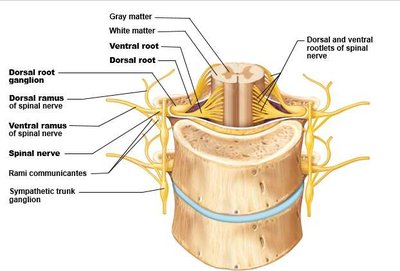
Spinal nerves are mixed nerves that emerge from the spinal cord and are responsible for transmitting motor, sensory, and autonomic signals between the spinal cord and the body. Each spinal nerve is formed by the union of a dorsal (sensory) root and a ventral (motor) root.
Dorsal root: Contains sensory (afferent) fibers and has a dorsal root ganglion.
Ventral root: Contains motor (efferent) fibers.
Spinal nerve: The short segment where dorsal and ventral roots merge; branches into dorsal and ventral rami.
Dorsal ramus: Innervates intrinsic muscles of the back and dorsal skin.
Ventral ramus: Innervates lateral and anterior trunk, limbs, and forms nerve plexuses.
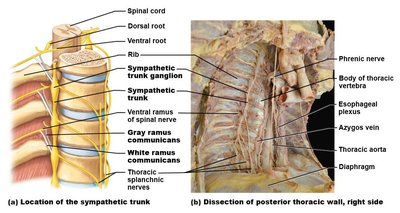
Rami communicantes: Connect spinal nerves to sympathetic trunk ganglia, part of the autonomic nervous system.
Intercostal Nerves and Branches
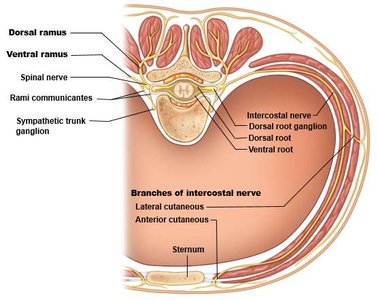
Ventral rami of T2-T12 do not form plexuses but become intercostal nerves, which innervate the thoracic wall.
Intercostal nerves: Run between ribs, innervate muscles and skin of thorax.
Branches: Lateral and anterior cutaneous branches supply skin.
Nerve Plexuses
Cervical Plexus
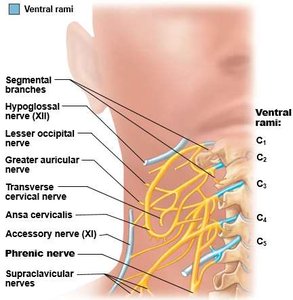
The cervical plexus is formed by ventral rami of C1-C4 (and part of C5), located in the neck. It provides sensory and motor innervation to the neck and diaphragm.
Cutaneous nerves: Supply skin of neck, ear, and shoulder.
Motor nerves: Include the phrenic nerve (C3-C5), which innervates the diaphragm.
Brachial Plexus
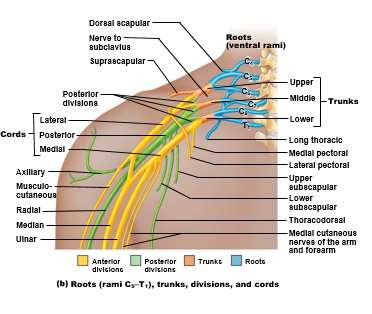
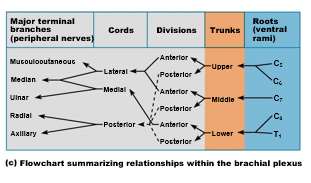
The brachial plexus is formed by ventral rami of C5-T1 and supplies the upper limb. It is organized into roots, trunks, divisions, cords, and terminal branches.
Roots: C5-T1 ventral rami.
Trunks: Upper, middle, lower.
Divisions: Anterior (flexor muscles) and posterior (extensor muscles).
Cords: Lateral, medial, posterior.
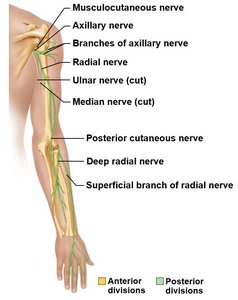
Major nerves: Musculocutaneous, median, ulnar, radial, axillary.
Innervation of the Upper Limb
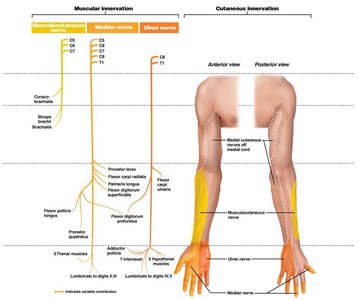
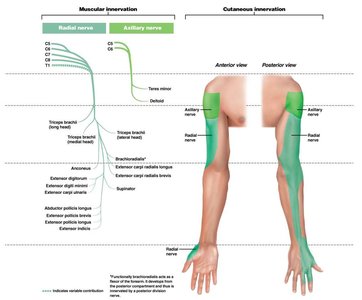
The terminal branches of the brachial plexus provide motor and sensory innervation to the muscles and skin of the upper limb.
Musculocutaneous nerve: Anterior arm muscles, lateral forearm skin.
Median nerve: Anterior forearm, lateral hand.
Ulnar nerve: Medial forearm and hand.
Radial nerve: Posterior arm and forearm, dorsal hand.
Axillary nerve: Deltoid and teres minor, shoulder skin.
Lumbar Plexus
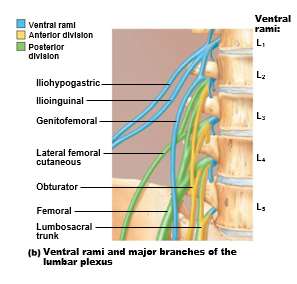
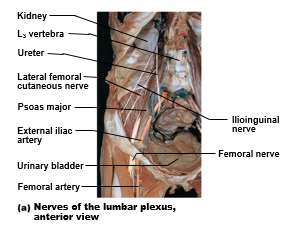
The lumbar plexus is formed by ventral rami of L1-L4 and lies within the psoas major muscle. It innervates the anterior and medial thigh, and parts of the perineum and lower limb.
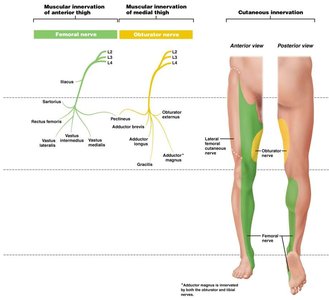
Femoral nerve (L2-L4): Anterior thigh muscles, skin of anterior thigh and medial leg.
Obturator nerve (L2-L4): Medial thigh muscles, skin of medial thigh.
Other branches: Iliohypogastric, ilioinguinal, genitofemoral, lateral femoral cutaneous.
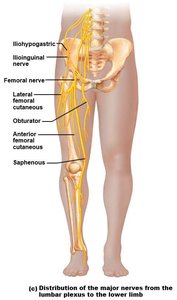
Sacral Plexus
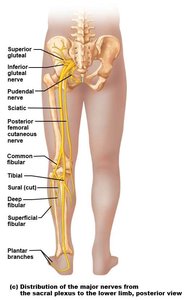
The sacral plexus is formed by ventral rami of L4-S4 and lies caudal to the lumbar plexus. It innervates the posterior thigh, most of the leg and foot, and parts of the pelvis.
Sciatic nerve: Largest nerve, composed of tibial and common fibular nerves; innervates posterior thigh and leg.
Tibial nerve: Posterior leg and plantar foot.
Common fibular nerve: Lateral and anterior leg, dorsal foot.
Other branches: Superior and inferior gluteal, pudendal, posterior femoral cutaneous.
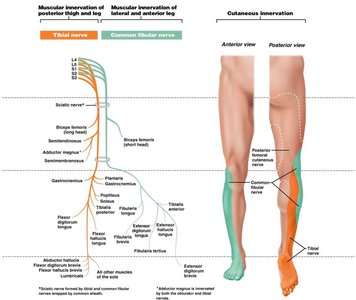
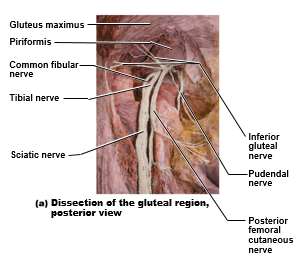
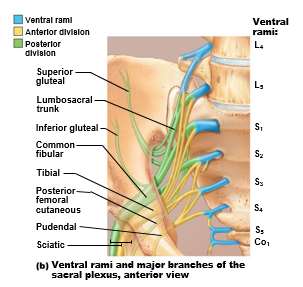
Dermatomes and Clinical Correlates
Dermatomes
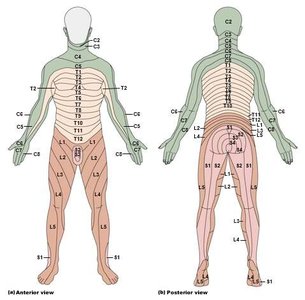
A dermatome is an area of skin innervated by the sensory fibers of a single spinal nerve. Dermatomes are important for diagnosing nerve injuries and viral infections.
All spinal nerves except C1 have dermatomes.
Dermatome maps: Used to localize neurological deficits.
Shingles (Herpes Zoster)
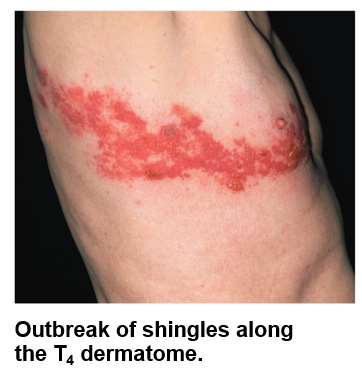
Shingles is a viral infection caused by reactivation of the varicella-zoster virus, which remains dormant in dorsal root ganglia after childhood chickenpox. It affects a single dermatome, causing painful skin eruptions.
Symptoms: Painful rash along the affected dermatome.
Clinical significance: Indicates the distribution of the affected sensory nerve.
Autonomic Nervous System (ANS)
Divisions of the ANS
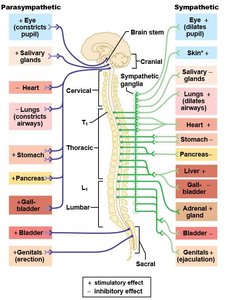
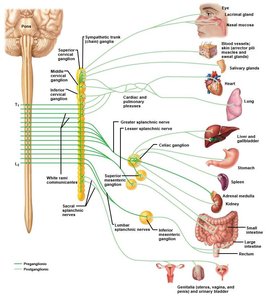
The autonomic nervous system regulates involuntary functions and is divided into sympathetic and parasympathetic divisions.
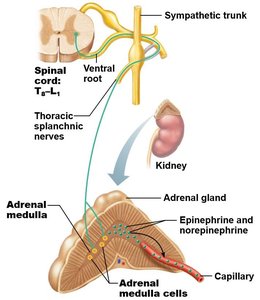
Sympathetic division: Thoracolumbar origin; short preganglionic, long postganglionic fibers; ganglia near vertebral column.
Parasympathetic division: Craniosacral origin; long preganglionic, short postganglionic fibers; ganglia near or within target organs.
2-neuron pathway: Preganglionic neuron synapses with postganglionic neuron in autonomic ganglia.
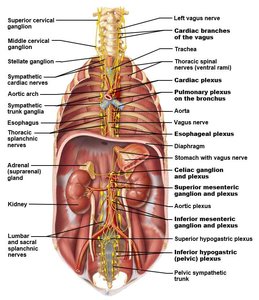
ANS Nerve Plexuses and Ganglia
Autonomic nerves form plexuses and ganglia throughout the body, coordinating visceral functions.
Sympathetic trunk ganglia: Paired ganglia alongside vertebral column.
Collateral (prevertebral) ganglia: Unpaired, located on abdominal aorta.
Parasympathetic plexuses: Include vagus and pelvic splanchnic nerves.
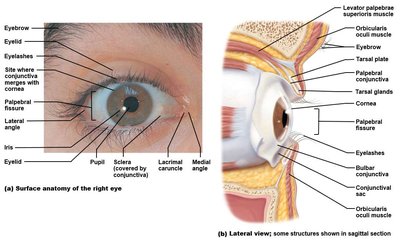
Special Senses: The Eye
External and Accessory Structures
The eye is protected and moved by several external structures, including the eyelids, conjunctiva, and extrinsic muscles.
Protection: Eyebrows, eyelids, conjunctiva, lacrimal apparatus.
Movement: Four rectus and two oblique muscles control eye position.
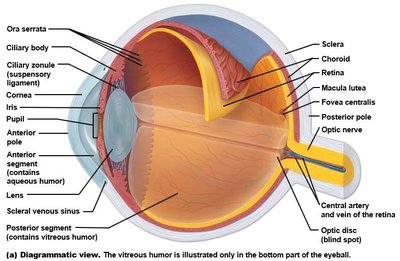
Internal Anatomy of the Eye
The eye is divided into anterior and posterior segments by the lens, and its wall consists of three layers.
Fibrous tunic: Sclera and cornea.
Vascular tunic: Choroid, ciliary body, iris.
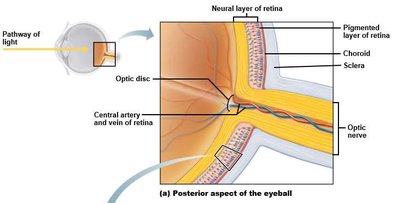
Sensory tunic: Retina and optic nerve.
Retina specializations: Macula lutea, fovea centralis, optic disc.