 Back
BackPlant Diversity and Evolution: Structure, Life Cycles, and Adaptations
Study Guide - Smart Notes
 Tailored notes based on your materials, expanded with key definitions, examples, and context.
Plant Diversity and Evolution
Introduction to Plant Diversity
Plants exhibit a remarkable diversity, ranging from simple mosses to complex flowering plants. Understanding their evolution, structure, and life cycles is essential for grasping how plants adapted to terrestrial environments and diversified into the major groups we see today.
Major Groups of Land Plants
Bryophytes (Mosses)
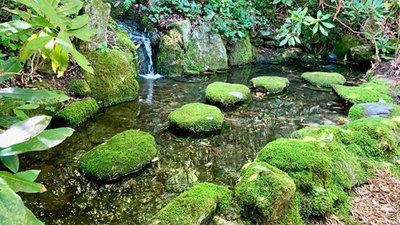
Bryophytes are non-vascular plants, meaning they lack specialized tissues for water and nutrient transport.
They are typically found in moist environments due to their reliance on water for reproduction.
The gametophyte is the dominant, visible stage in their life cycle.
Examples: Mosses, liverworts, hornworts.
Tracheophytes (Vascular Plants)
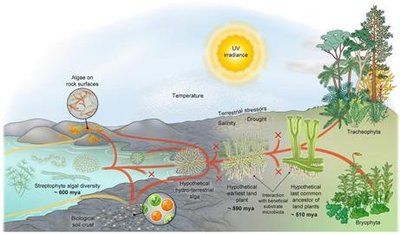
Tracheophytes possess vascular tissues (xylem and phloem) for efficient transport of water, minerals, and nutrients.
Includes ferns, conifers, and flowering plants.
Most have a dominant sporophyte generation.
Alternation of Generations
Life Cycle Overview
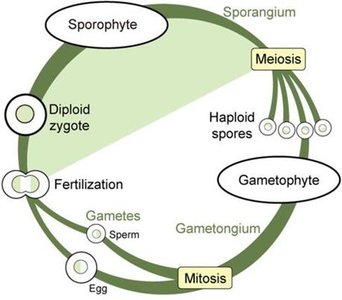
All land plants exhibit alternation of generations, a life cycle that alternates between a multicellular haploid gametophyte and a multicellular diploid sporophyte.
Gametophyte (n): Produces gametes (sperm and egg) by mitosis.
Sporophyte (2n): Produces spores by meiosis, which grow into gametophytes.
Fertilization of gametes forms a diploid zygote, which develops into the sporophyte.
Key Terms and Structures
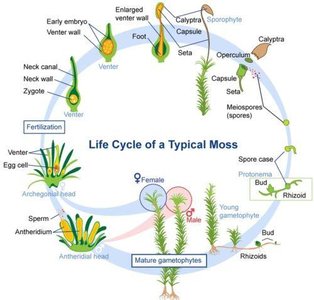
Gametangia: Archegonium and Antheridium
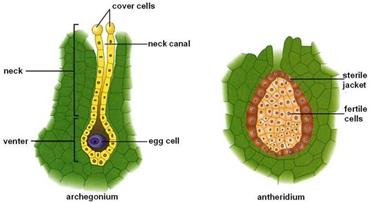
Gametangia are specialized organs where gametes are produced and protected.
Archegonium: Female structure producing eggs.
Antheridium: Male structure producing sperm (often flagellated and motile in lower plants).
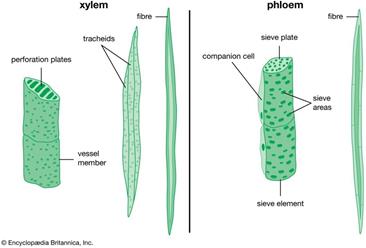
Vascular Tissues: Xylem and Phloem
Vascular tissues are crucial adaptations for terrestrial life, allowing plants to transport water, minerals, and nutrients efficiently.
Xylem: Conducts water and dissolved minerals from roots to shoots; composed of tracheids and vessel elements.
Phloem: Transports sugars and organic nutrients from leaves to other parts of the plant; composed of sieve elements and companion cells.
Adaptations for Terrestrial Life
Seeds and Their Advantages
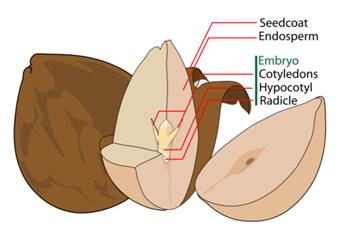
Seeds are a major evolutionary innovation, providing protection and nourishment for the developing embryo and facilitating dispersal.
Seed coat: Protects the embryo from desiccation and damage.
Endosperm: Provides food for the embryo during germination.
Allows plants to colonize a wider range of habitats compared to spore-producing plants.
Homosporous vs. Heterosporous Plants
Homosporous: Produce one type of spore that develops into a bisexual gametophyte (e.g., most ferns).
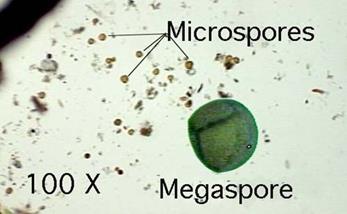
Heterosporous: Produce two types of spores: microspores (male gametophytes) and megaspores (female gametophytes). Found in seed plants and some ferns.
Life Cycles of Major Plant Groups
Ferns (Monilophyta)
Seedless vascular plants with independent, free-living gametophytes.
Require water for fertilization due to motile sperm.
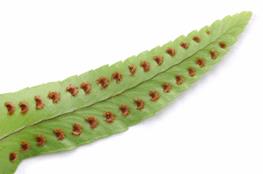
Sporophyte is dominant and produces spores in structures called sori on the underside of leaves.
Mosses (Bryophyta)
Non-vascular, low-growing plants found in damp environments.
Gametophyte is dominant; sporophyte is dependent on the gametophyte.
Require water for sperm motility and fertilization.
Conifers (Coniferophyta)
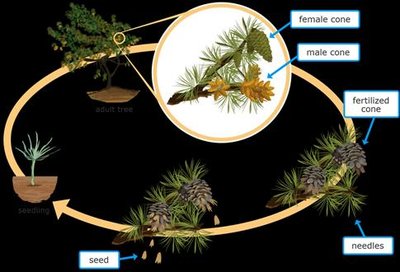
Seed plants with vascular tissue; gymnosperms ("naked seeds").
Produce pollen grains for sperm dispersal, reducing dependence on water for fertilization.
Exhibit heterospory: microspores (male) and megaspores (female).
Flowering Plants (Angiosperms/Anthophyta)
Most diverse group of land plants; possess flowers and fruits.
Double fertilization produces both embryo and endosperm.
Seeds develop inside an ovary, which matures into fruit.
Summary Table: Comparison of Major Plant Groups
Group | Vascular Tissue | Dominant Generation | Seeds | Water for Fertilization? |
|---|---|---|---|---|
Bryophytes | No | Gametophyte | No | Yes |
Ferns | Yes | Sporophyte | No | Yes |
Conifers | Yes | Sporophyte | Yes | No |
Flowering Plants | Yes | Sporophyte | Yes | No |
Key Terms and Definitions
Sporophyte: Diploid, spore-producing phase of the plant life cycle.
Gametophyte: Haploid, gamete-producing phase of the plant life cycle.
Gametangium: Structure where gametes are produced (archegonium for eggs, antheridium for sperm).
Sori: Clusters of sporangia on the underside of fern leaves.
Microspore: Small spore that develops into a male gametophyte.
Megaspore: Large spore that develops into a female gametophyte.
Endosperm: Nutritive tissue in seeds of flowering plants.
Conclusion
Plant evolution is marked by key adaptations such as vascular tissues, seeds, and flowers, which have enabled plants to colonize diverse terrestrial environments. Understanding the structure, life cycles, and reproductive strategies of major plant groups provides a foundation for further study in plant biology and ecology.
