 Back
Respiratory System: Structure, Function, Gas Exchange, and Regulation
Study Guide - Smart Notes
 Tailored notes based on your materials, expanded with key definitions, examples, and context.
Respiratory System Overview
Structure and Function
The respiratory system is essential for providing oxygen to body tissues, removing carbon dioxide, and maintaining acid-base balance. It also supports olfaction and speech production.
Key Organs: Nose, pharynx, larynx, trachea, bronchi, lungs, and diaphragm.
Main Functions: Gas exchange, air conduction, filtration, humidification, and protection against pathogens.
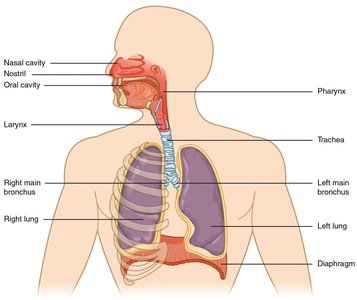
Functional Zones of the Respiratory System
The respiratory system is divided into two main zones:
Conducting Zone: Conducts air to the lungs, filters, warms, and humidifies it. Includes nose, pharynx, larynx, trachea, bronchi, and bronchioles.
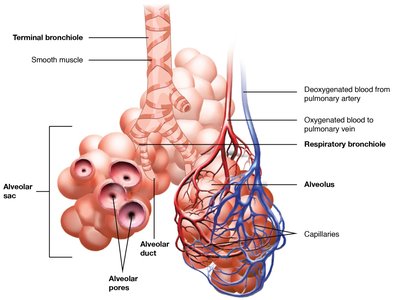
Respiratory Zone: Site of gas exchange. Includes respiratory bronchioles, alveolar ducts, and alveoli.
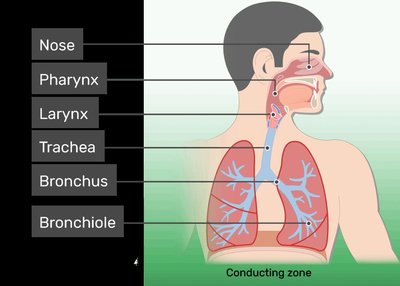
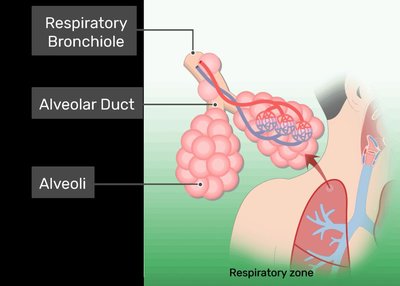
Bronchial Tree and Alveoli
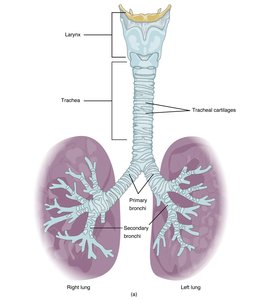
The trachea branches into left and right primary bronchi, which further divide into secondary and tertiary bronchi, then into bronchioles and terminal bronchioles. Terminal bronchioles lead to alveolar ducts and clusters of alveoli, the primary sites of gas exchange.
Bronchioles: Small branches from tertiary bronchi.
Alveoli: Tiny air sacs where oxygen and carbon dioxide are exchanged.
Diseases of the Respiratory System
Asthma
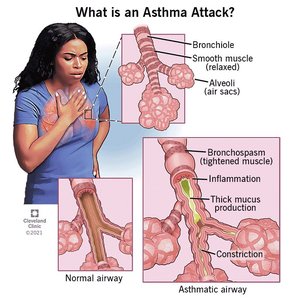
Asthma is a chronic inflammatory disease of the airways, causing bronchospasms, excess mucus, and restricted airflow.
Triggers: Allergies, infections, cold air.
Symptoms: Coughing, shortness of breath, wheezing, chest tightness.
Treatment: Fast-acting inhalers for acute attacks.
Gas Exchange Principles
Partial Pressure and Dalton’s Law
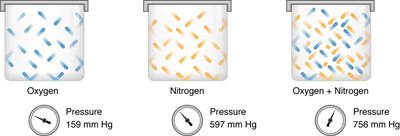
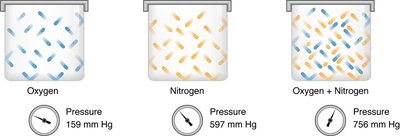
Gas molecules exert pressure; partial pressure refers to the pressure of a single gas in a mixture. Dalton’s law states that total pressure is the sum of all partial pressures.
Movement: Gases move from areas of higher partial pressure to lower partial pressure.
Henry’s Law
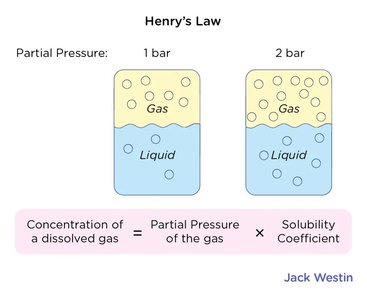
Henry’s law states that the concentration of a gas in a liquid is proportional to its solubility and partial pressure.
Formula:
Example: Nitrogen is abundant in air but dissolves poorly in blood due to low solubility.
Gas Exchange Sites
Gas exchange occurs at two sites:
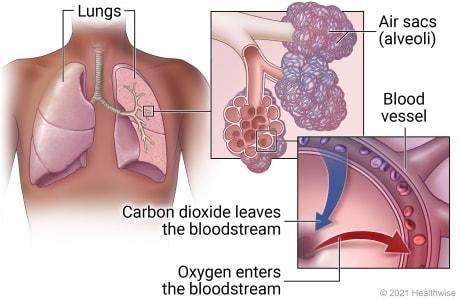
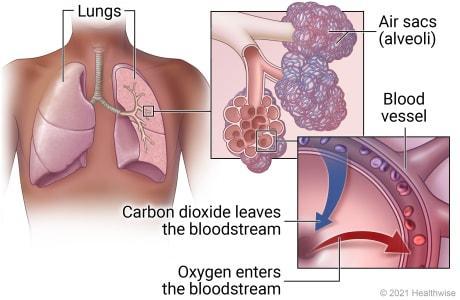
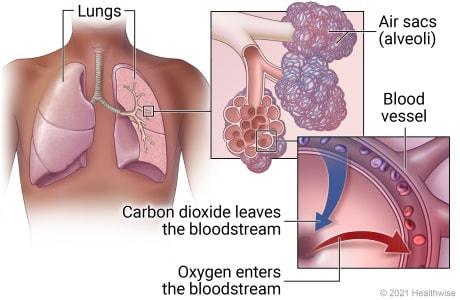
External Respiration: Exchange between alveoli and pulmonary capillaries.
Internal Respiration: Exchange between systemic capillaries and tissues.
Mechanism: Simple diffusion along partial pressure gradients.
External Respiration
Oxygen: High partial pressure in alveoli (104 mm Hg) vs. blood (40 mm Hg) drives rapid diffusion into blood.
Carbon Dioxide: Small gradient (~5 mm Hg) but high solubility allows efficient diffusion into alveoli.
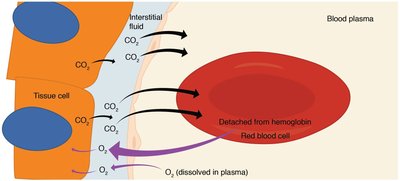
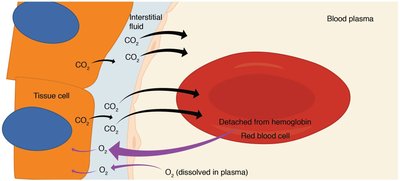
Internal Respiration
Oxygen: Lower partial pressure in tissues causes oxygen to dissociate from hemoglobin and enter cells.
Carbon Dioxide: Higher partial pressure in tissues causes CO2 to diffuse into blood, carried as dissolved gas, bound to hemoglobin, or as bicarbonate.
Transport of Gases
Oxygen Transport in Blood
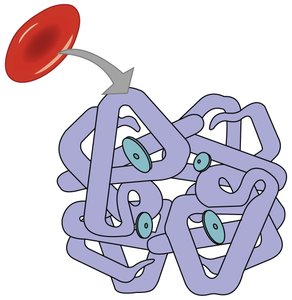
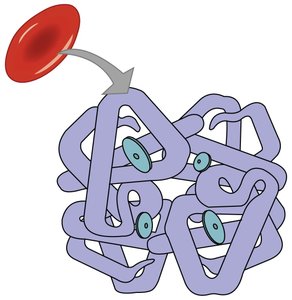
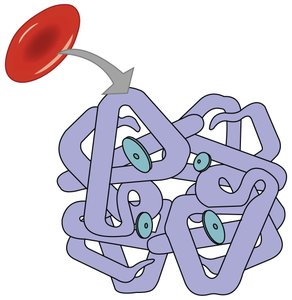
Hemoglobin: Protein in RBCs with four subunits, each binding one O2 molecule via an iron ion.
Positive Cooperativity: Binding of one O2 increases affinity for subsequent O2 molecules.
Saturation: 95-99% of hemoglobin is fully saturated in healthy individuals.
Oxygen-Hemoglobin Dissociation Curve
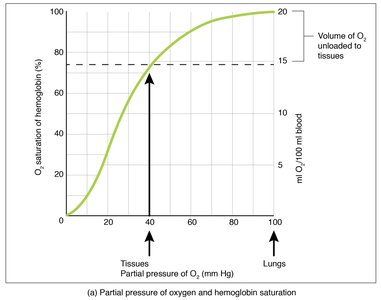
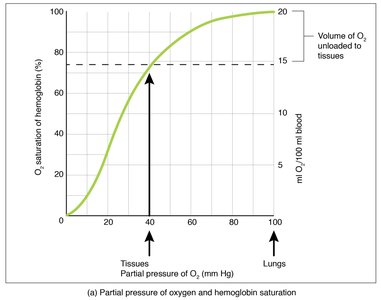
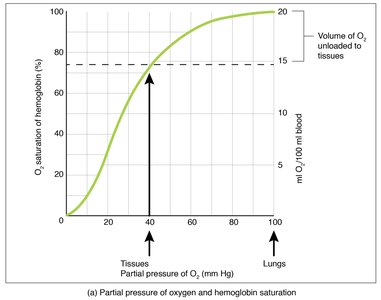
The curve shows the relationship between partial pressure of oxygen and hemoglobin saturation.
High Partial Pressure: Hemoglobin binds oxygen easily (lungs).
Low Partial Pressure: Hemoglobin releases oxygen easily (tissues).
Sigmoidal Shape: Due to cooperative binding.
Curve Shifts: Bohr Effect and Temperature
Bohr Effect: Acidic pH (from CO2 and lactic acid) reduces hemoglobin affinity for O2, promoting oxygen unloading in active tissues.
Temperature: Higher temperatures reduce affinity, promoting dissociation; lower temperatures increase affinity.
Mechanism and Regulation of Breathing
Pulmonary Ventilation
Breathing is the movement of air into and out of the lungs, driven by pressure differences between the atmosphere and alveoli.
Boyle’s Law: Pressure of a gas is inversely proportional to its volume.
Inspiration: Diaphragm and external intercostals contract, thoracic volume increases, alveolar pressure decreases, air flows in.
Expiration: Muscles relax, thoracic volume decreases, alveolar pressure increases, air flows out.
Regulation of Breathing and pH Homeostasis
Medulla Oblongata and Pons: Control respiratory rate and depth.
Major Stimulus: Blood CO2 concentration, not O2.
Chemoreceptors: Detect pH changes caused by CO2 forming carbonic acid in blood.
Response: Increased CO2 (lower pH) stimulates faster, deeper breathing; low CO2 (higher pH) slows breathing.
Measurements of Breathing
Tidal Volume (TV): Volume of air inspired or expired in a single breath (~500ml at rest).
Inspiratory Reserve Volume (IRV): Maximal volume inhaled (~2000-3000ml).
Expiratory Reserve Volume (ERV): Maximal volume exhaled (~700-1000ml).
Residual Volume (RV): Volume remaining after maximal exhalation (~1100-1200ml).
Practice Questions
What is the conducting zone and what is the respiratory zone?
What is asthma?
What is Dalton’s law vs Henry’s law vs Boyle’s law?
Where does the process of internal respiration occur? Where does oxygen flow to/from and where does carbon dioxide flow to/from? Answer the same questions but for external respiration.
What does the oxygen-hemoglobin saturation curve show? What does a left shift vs a right shift represent?
How do temperature changes and the Bohr effect cause shifts in the curve? How do these shifts benefit metabolically active tissues?
During inspiration, do the diaphragm and external intercostals contract or relax? How does this affect thoracic and lung volume? How does this affect alveolar pressure compared to the atmosphere? Answer the same questions for expiration.
Which molecule in the blood is the major factor in signaling the medulla and pons to regulate respiration?
Summary Table: Laws of Gas Exchange
Law | Definition | Application |
|---|---|---|
Dalton's Law | Total pressure is the sum of partial pressures of individual gases. | Predicts movement of gases based on partial pressure gradients. |
Henry's Law | Concentration of gas in liquid is proportional to partial pressure and solubility. | Explains why some gases dissolve more readily in blood. |
Boyle's Law | Pressure of gas is inversely proportional to volume. | Mechanism of breathing: changes in lung volume alter pressure and drive airflow. |
