 Back
South Texas College PTA Program: Student Standards, Professionalism, and Clinical Competency
Study Guide - Smart Notes
 Tailored notes based on your materials, expanded with key definitions, examples, and context.
Physical Therapist Assistant Program Overview
Program Mission and Philosophy
The South Texas College Physical Therapist Assistant (PTA) Program aims to prepare competent, ethical, and safe physical therapist assistants through rigorous academic and clinical education. The program emphasizes lifelong learning, community engagement, and culturally responsive instruction, ensuring graduates are ready to serve diverse populations under the supervision of licensed physical therapists.
Mission: Prepare graduates for licensure and professional practice.
Philosophy: Constructivist, active learning, critical thinking, and reflective practice.
Community Engagement: Partnerships with local healthcare settings for practical experience.
Program Goals and Learning Outcomes
The PTA Program is structured to develop skilled professionals who meet regional healthcare needs and uphold high standards of excellence.
Communication: Effective information exchange with patients, families, and healthcare personnel.
Clinical Skills: Competent implementation of interventions as per the physical therapist's plan of care.
Documentation: Accurate and relevant patient care documentation.
Respect: Recognition of patient/client differences, values, and preferences.
Clinical Decision-Making: Evidence-based practice within PTA scope.
Professional Conduct: Adherence to ethical and legal guidelines.
Human Structure and Function: Integration of anatomy, physiology, and dysfunction for clinical judgment.
Student Standards and Professionalism
Professionalism Performance Expectations
Professionalism encompasses behaviors and attitudes essential for success in physical therapy. Students are assessed on their ability to self-reflect, develop action plans, and demonstrate ongoing improvement in professional behaviors.
Self-Assessment: Completion of Professional Behaviors Self-Assessment Form each semester.
Thresholds: Minimum scores required for progression (75%-85% depending on semester).
Remediation: Action plans and learning contracts for students not meeting standards.
Accountability: Professional behavior grades contribute to course grades.
Critical Professional Behaviors
Commitment to Learning: Self-assessment, motivation, and continuous improvement.
Interpersonal Skills: Respect, cultural competence, group cohesiveness.
Communication Skills: Effective verbal and written communication, assertiveness, active listening.
Effective Use of Time and Resources: Prioritization, preparedness, flexibility.
Constructive Feedback: Seeking, accepting, and utilizing feedback for improvement.
Problem Solving: Analytical thinking, initiative, resource utilization.
Professionalism: Appropriate conduct, appearance, conflict resolution.
Honesty/Integrity: Ethical behavior, confidentiality, compliance with standards.
Responsibility: Timeliness, accountability, preparedness.
Critical Thinking: Logical reasoning, evaluation of information, solution development.
Social Responsibility & Altruism: Service, club participation, community engagement.
Leadership: Initiative, adaptability, positive influence.
Academic and Clinical Standards
Course Completion and Grading
To progress in the PTA Program, students must meet specific academic and practical requirements.
Minimum Passing Grade: 75% for course average, written exams, and lab practicals.
Component Requirements: Separate minimums for written and laboratory components.
Remediation: Structured plans for students below thresholds.
Grading Scale:
Grade
Percentage
A
90-100%
B
80-89%
C
75-79%
D
66-74%
F
65% or below
Lab Practical and Skills Check-Offs
Lab practicals and skills check-offs are essential for demonstrating competency in physical therapy techniques.
Check-Offs: Required for all lab skills; up to three attempts allowed.
Peer Check-Offs: Practice and accountability for skill acquisition.
Remediation: Required for repeated unsuccessful attempts.
Automatic Failure: Breach of safety results in a grade of 74% (D) and failure of the practical.
Clinical Practicum Standards
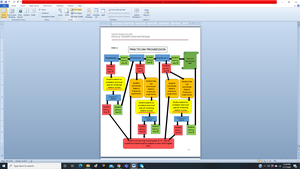
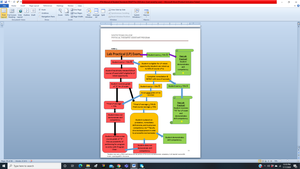
Students participate in three full-time clinical experiences, assessed using the PTA MACS tool. Entry-level performance in designated skills is required for graduation.
Minimum Clinical Skills: Professional behaviors, plan of care implementation, interventions, tests & measures, safety, documentation, billing, and quality assurance.
Progression Criteria: Successful completion of each practicum before advancing.
Attendance: Maximum allowable absences; punctuality required.
Dress Code: Professional attire, tattoo coverage, PPE as required.

Professional Ethics and Standards
APTA Standards of Ethical Conduct
The American Physical Therapy Association (APTA) sets forth ethical standards for PTAs, emphasizing respect, trustworthiness, sound decision-making, integrity, legal compliance, competence, organizational responsibility, and social responsibility.
Respect: Dignity and rights of all individuals.
Trustworthiness: Compassionate care and protection of confidential information.
Sound Decisions: Collaboration with PT, objective decisions, avoidance of conflicts of interest.
Integrity: Truthful information, avoidance of exploitation, reporting misconduct.
Legal Obligations: Compliance with laws, support for PT supervision, research standards.
Competence: Lifelong learning and clinical competence.
Organizational Responsibility: Ethical business practices, accurate documentation.
Social Responsibility: Advocacy for health needs, stewardship of resources.
Minimum Required Skills for PTA Graduates
Core Competencies
PTA graduates must demonstrate foundational skills across all systems and patient care settings, as defined by the APTA and required for licensure.
Plan of Care Review: Understanding indications, contraindications, precautions, and patient goals.
Procedural Interventions: Therapeutic exercise, functional training, manual therapy, device application, airway clearance, integumentary protection, electrotherapeutic modalities, physical agents.
Patient Instruction: Principles of learning, teaching strategies, compliance enhancement.
Patient Progression: Competent progression, communication, problem-solving.
Data Collection: Accurate measurement and documentation of patient status.
Safety and Emergency Procedures: CPR, emergency response, safe environment.
Resource Management: Efficient use of human, fiscal, and system resources.
Behavior Expectations: Accountability, altruism, compassion, duty, integrity, social responsibility.
Communication: Interpersonal skills, conflict management, health promotion.
Dress Code and Professional Appearance
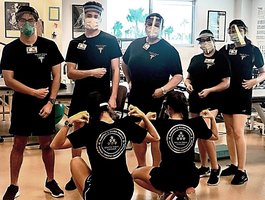
Classroom and Laboratory Dress Code
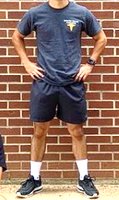
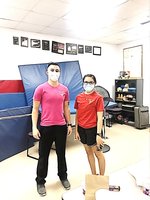
Professional appearance is required for all program activities. Specific guidelines are provided for tops, bottoms, footwear, accessories, hair, tattoos, and personal hygiene.
Everyday Attire: Approved T-shirts, scrub pants, athletic shorts for lab activities.
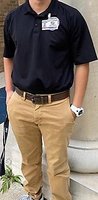
Special Event Attire: Polo shirts with program logo, business-casual pants for events.
Footwear: Non-slip, closed-toe shoes; socks required.
Tattoo Policy: All visible tattoos must be covered unless coverage interferes with safety or infection control.
Accessories: Limited jewelry, professional watch, no visible body piercings.
Hair: Neatly pulled back, conservative clips/headbands, no extreme styles or colors.
Fingernails: Clean, short, no artificial nails.

Clinical Dress Code
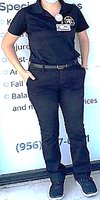
Clinic attire must be professional, clean, and comply with site-specific requirements. All visible tattoos must be covered unless coverage interferes with infection control.
Shirts: Tucked in, no midriff exposure, no jeans or casual pants.
Pants: Solid neutral color, properly fitting, no leggings or yoga pants.
Footwear: Non-slip, closed-toe shoes, socks required.
Accessories: Limited jewelry, professional watch, no visible body piercings.
Hair: Neatly pulled back, no extreme styles or colors.
Fingernails: Clean, short, no artificial nails.
Student Organizations and Social Responsibility
Student PTA (SPTA) Club
The SPTA Club promotes networking, professional development, and community service. All students are expected to participate actively.
Officers: President, Vice President, Secretary, Treasurer, Historians, Community Liaison, Social Media Relations Officer, Hype Squad, Advocacy Representative, Fundraising Chair, PT Moves Me Campaign Ambassadors.
Activities: Fundraising, service projects, professional events, pinning ceremony.
Service Hours: Minimum of 5 documented volunteer hours per semester.
Remediation and Readmission Procedures
Readmission Process and Portfolio
Students who withdraw or fail a course may petition for readmission by completing an exit interview, submitting a written request, and developing a remediation portfolio. The portfolio must demonstrate resolution of identified weaknesses and completion of required activities.
Portfolio Contents: Letter of intent, summary of weaknesses, evidence of remediation, workshop certificates, counseling/medical care documentation, testimonials, test results, relevant articles.
Scoring: Minimum of 80% required for readmission consideration.
Summary Table: Minimum Clinical Skills for Graduation
Skill Category | Required Competency |
|---|---|
Professional Behaviors | Entry-level in all Practicums |
Plan of Care Implementation | Entry-level in at least one Practicum |
Interventions (Therapeutic Exercise, Functional Training, Manual Therapy, Biophysical Agents) | Entry-level in specified number across Practicums |
Tests & Measures (Gait, Muscle Performance, Neuromotor Function, Range of Motion, Sensation, Aerobic Capacity) | Entry-level in specified number across Practicums |
Safety | Entry-level in all Practicums |
Documentation, Billing, Quality Assurance | Entry-level in at least one Practicum |
Conclusion
The South Texas College PTA Program provides a comprehensive framework for academic, clinical, and professional development. Adherence to standards, ethical conduct, and active participation in program activities are essential for successful completion and entry into the physical therapy profession.
