 Back
BackStudy Guidance for Anatomy & Physiology (ANP) - Skeletal System
Study Guide - Smart Notes
 Tailored notes based on your materials, expanded with key definitions, examples, and context.
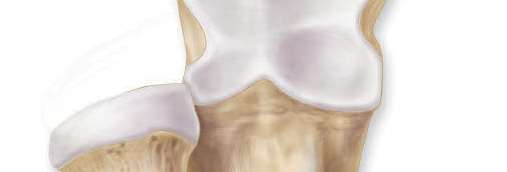
Q1. Identify the bone shown in the image and describe its anatomical features.
Background
Topic: Skeletal System - Bone Identification
This question tests your ability to recognize and describe the anatomical features of bones, which is fundamental in anatomy and physiology courses.
Key Terms:
Anatomical features: Specific parts of a bone, such as processes, condyles, and articulating surfaces.
Bone identification: Recognizing bones based on their shape, location, and distinguishing characteristics.
Step-by-Step Guidance
Observe the overall shape and structure of the bone in the image. Note any unique curves, projections, or surfaces.
Identify any visible anatomical landmarks, such as the head, shaft, or articular surfaces.
Compare the bone's features to known bones in the human body, focusing on those found in the appendicular skeleton (e.g., clavicle, scapula, humerus).
Consider the context provided by adjacent bones or joints, which can help narrow down the identification.
Try solving on your own before revealing the answer!
Final Answer: The bone is the clavicle.
The clavicle is recognized by its S-shaped curve and its location between the sternum and scapula. It serves as a strut to keep the scapula in place so the arm can hang freely.
Q2. What is the function of the ligament shown connecting the two bones?
Background
Topic: Skeletal System - Ligaments and Joint Stability
This question assesses your understanding of the role of ligaments in stabilizing joints and connecting bones.
Key Terms:
Ligament: A band of fibrous connective tissue that connects bones and stabilizes joints.
Joint stability: The ability of a joint to maintain its integrity and resist abnormal movement.
Step-by-Step Guidance
Examine the image to identify the ligament and the bones it connects.
Recall the general function of ligaments in the body, especially in synovial joints.
Consider how the ligament's orientation and attachment points contribute to joint stability and movement.
Think about common injuries or conditions related to ligament damage (e.g., sprains, tears).
Try solving on your own before revealing the answer!
Final Answer: The ligament stabilizes the joint by preventing excessive movement.
Ligaments are crucial for maintaining joint integrity and preventing dislocation or abnormal motion.
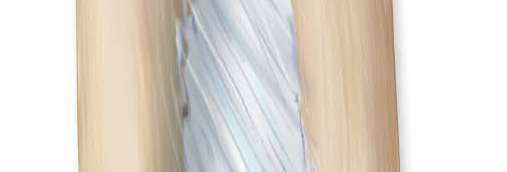
Q3. What type of fracture is shown in the image, and what are the implications for healing?
Background
Topic: Skeletal System - Bone Fractures
This question tests your knowledge of fracture types and their impact on bone healing and treatment.
Key Terms:
Fracture: A break in the continuity of a bone.
Healing: The process by which bone repairs itself after injury.
Step-by-Step Guidance
Analyze the image to determine the location and pattern of the fracture.
Identify whether the fracture is simple (closed) or compound (open), and if it is displaced or non-displaced.
Consider the implications for healing, such as the need for immobilization, surgical intervention, or risk of complications.
Recall the stages of bone healing: hematoma formation, fibrocartilaginous callus, bony callus, and bone remodeling.
Try solving on your own before revealing the answer!
Final Answer: The image shows a displaced fracture of the clavicle.
Displaced fractures require realignment and immobilization for proper healing. Healing time and method depend on the severity and location of the fracture.
