 Back
BackStudy Guide: Introduction to the Endocrine System (ANP)
Study Guide - Smart Notes
 Tailored notes based on your materials, expanded with key definitions, examples, and context.
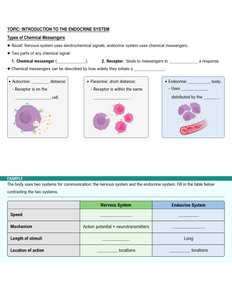
Q1. Compare the nervous system and the endocrine system as communication systems in the body.
Background
Topic: Nervous vs. Endocrine System Communication
This question tests your understanding of how the nervous and endocrine systems transmit signals, their mechanisms, speed, and duration of action.
Key Terms and Concepts:
Nervous system: Uses electrical impulses and neurotransmitters for rapid, short-term communication.
Endocrine system: Uses hormones released into the bloodstream for slower, long-lasting effects.
Step-by-Step Guidance
Identify the main mechanism of signal transmission for each system (e.g., neurotransmitters vs. hormones).
Compare the speed of signal transmission between the two systems.
Consider the duration of the effects produced by each system.
Think about the specificity and location of action for each system (localized vs. widespread effects).
Try solving on your own before revealing the answer!
Q2. What type of chemical messenger is distributed by the bloodstream to distant target cells?
Background
Topic: Types of Chemical Messengers
This question focuses on the classification of chemical messengers based on their distance of action (autocrine, paracrine, endocrine).
Key Terms:
Endocrine: Hormones travel through the bloodstream to distant targets.
Paracrine: Signals act on nearby cells.
Autocrine: Signals act on the same cell that secreted them.
Step-by-Step Guidance
Recall the definitions of autocrine, paracrine, and endocrine signaling.
Identify which type involves hormones traveling via the bloodstream.
Think about examples of hormones that act on distant organs.
Try solving on your own before revealing the answer!
Q3. Epinephrine is released by the adrenal medulla and acts on distant organs. What type of signaling is this?
Background
Topic: Endocrine Signaling
This question tests your ability to classify hormone signaling based on the distance from the site of release to the target organ.
Key Terms:
Epinephrine: A hormone released into the bloodstream.
Endocrine signaling: Hormones act on distant targets via the blood.
Step-by-Step Guidance
Recall where epinephrine is produced and how it travels in the body.
Determine if the target is local or distant from the site of release.
Match the scenario to the correct type of signaling (endocrine, paracrine, autocrine, or intracellular).
Try solving on your own before revealing the answer!
Q4. Which statement best describes a significant difference between the endocrine and nervous systems?
Background
Topic: Comparison of Endocrine and Nervous Systems
This question asks you to identify a key distinction in how these two systems communicate and regulate body functions.
Key Concepts:
Nervous system: Fast, uses synapses and neurotransmitters.
Endocrine system: Slow, uses hormones in the bloodstream.
Step-by-Step Guidance
Review the mechanisms of signal transmission for both systems.
Consider the speed and duration of their effects.
Think about how each system targets cells (direct vs. widespread).
Try solving on your own before revealing the answer!
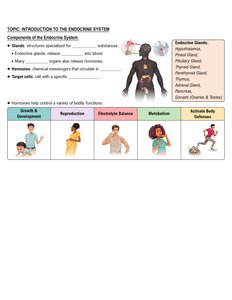
Q5. Fill in the blanks: Glands are specialized for the secretion of ______ substances. The endocrine glands release ______ into the bloodstream.
Background
Topic: Components of the Endocrine System
This question tests your knowledge of the basic structure and function of endocrine glands and hormones.
Key Terms:
Glands: Organs that secrete substances.
Hormones: Chemical messengers released into the blood.
Step-by-Step Guidance
Recall what substances glands typically secrete (e.g., hormones, enzymes).
Identify what the endocrine glands specifically release into the bloodstream.
Think about the role of hormones in the body.
Try solving on your own before revealing the answer!
