 Back
Study Guide: The Endocrine System (Human Anatomy & Physiology, Chapter 16)
Study Guide - Smart Notes
 Tailored notes based on your materials, expanded with key definitions, examples, and context.
The Endocrine System Overview
Introduction to the Endocrine System
The endocrine system works alongside the nervous system to coordinate and integrate the activity of body cells. It influences metabolic activities through hormones transported in the blood, with responses that are slower but longer lasting than those of the nervous system. The study of hormones and endocrine organs is known as endocrinology.
Hormones: Chemical messengers released into the blood to regulate various physiological processes.
Endocrine system functions: Reproduction, growth and development, maintenance of electrolyte, water, and nutrient balance, regulation of cellular metabolism and energy balance, mobilization of body defenses.

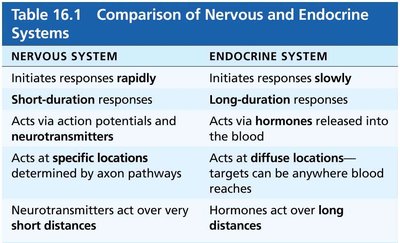
Comparison of Nervous and Endocrine Systems
The nervous and endocrine systems both regulate body functions, but differ in their mechanisms and speed of action.
Nervous System | Endocrine System |
|---|---|
Initiates responses rapidly | Initiates responses slowly |
Short-duration responses | Long-duration responses |
Acts via action potentials and neurotransmitters | Acts via hormones released into the blood |
Acts at specific locations determined by axon pathways | Acts at diffuse locations—targets can be anywhere blood reaches |
Neurotransmitters act over very short distances | Hormones act over long distances |
Endocrine and Exocrine Glands
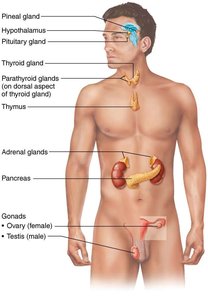
Glands are classified as either endocrine or exocrine based on their products and method of secretion.
Exocrine glands: Produce nonhormonal substances (e.g., sweat, saliva) and have ducts to carry secretion to membrane surface.
Endocrine glands: Produce hormones and lack ducts.
Major endocrine glands: Pituitary, thyroid, parathyroid, adrenal, pineal glands.
Neuroendocrine organ: Hypothalamus.
Mixed function organs: Pancreas and gonads (both endocrine and exocrine functions).
Other hormone-producing tissues: Adipose cells, thymus, cells in walls of small intestine, stomach, kidneys, and heart.
Hormones: Types and Mechanisms
Classes of Hormones
Hormones are classified based on their chemical structure:
Amino acid–based hormones: Includes amino acid derivatives, peptides, and proteins.
Steroid hormones: Synthesized from cholesterol; includes gonadal and adrenocortical hormones.
Target Cells and Hormone Action
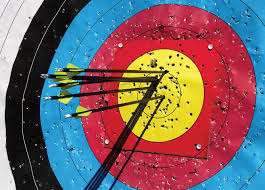
Although hormones circulate systemically, only cells with specific receptors (target cells) are affected. Hormones alter target cell activity in several ways:
Alter plasma membrane permeability and/or membrane potential by opening or closing ion channels
Stimulate synthesis of enzymes or other proteins
Activate or deactivate enzymes
Induce secretory activity
Stimulate mitosis
Hormone Mechanisms: Water-Soluble vs. Lipid-Soluble
Hormones act in one of two ways, depending on their chemical nature and receptor location:
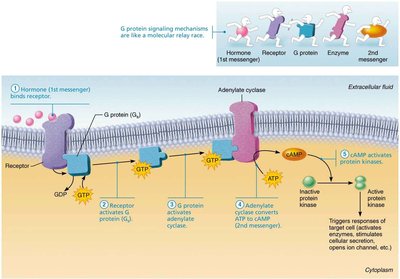
Water-soluble hormones: (All amino acid–based hormones except thyroid hormone) act on plasma membrane receptors via G protein second messengers; cannot enter the cell.
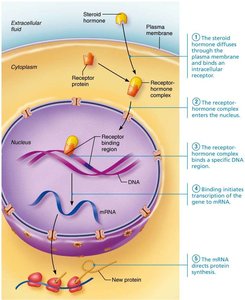
Lipid-soluble hormones: (Steroid and thyroid hormones) act on intracellular receptors that directly activate genes; can enter the cell.

Second Messenger Systems
Amino acid–based hormones (except thyroid hormone) exert effects through second-messenger systems. Two main systems are:
Cyclic AMP (cAMP)
PIP2-calcium

Cyclic AMP (cAMP) Signaling Mechanism
The cAMP pathway involves several steps:
Hormone (first messenger) binds to receptor
Receptor activates a G protein
G protein activates or inhibits effector enzyme adenylate cyclase
Adenylate cyclase converts ATP to cAMP (second messenger)
cAMP activates protein kinases that phosphorylate other proteins
Intracellular Receptors and Direct Gene Activation
Lipid-soluble steroid hormones and thyroid hormone diffuse into target cells and bind with intracellular receptors. The receptor-hormone complex enters the nucleus and binds to specific regions of DNA, initiating transcription to produce mRNA, which is then translated into specific proteins.
Proteins synthesized may have metabolic, structural, or export functions.
Hormone Release and Regulation
Control of Hormone Release
Blood levels of hormones are controlled by negative feedback systems, keeping levels within a narrow, desirable range. Hormone release is triggered by:
Endocrine gland stimuli (humoral, neural, hormonal)
Nervous system modulation
Endocrine Gland Stimuli
Endocrine glands are stimulated to synthesize and release hormones in response to three types of stimuli:
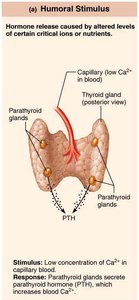
Humoral stimuli: Changing blood levels of ions and nutrients directly stimulate hormone secretion (e.g., low Ca2+ stimulates parathyroid hormone release).
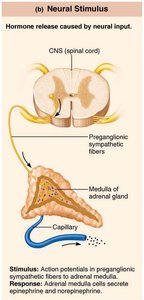
Neural stimuli: Nerve fibers stimulate hormone release (e.g., sympathetic nervous system stimulates adrenal medulla to secrete catecholamines).
Hormonal stimuli: Hormones stimulate other endocrine organs to release their hormones (e.g., hypothalamic hormones stimulate anterior pituitary hormones).
Nervous System Modulation
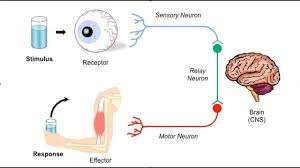
The nervous system can adjust hormone levels as needed, overriding normal endocrine controls, especially under stress (e.g., hypothalamus and sympathetic nervous system override insulin to increase blood glucose for "fight or flight").
Target Cell Specificity and Hormone Activity
Target Cell Specificity
Target cells must have specific receptors for a hormone to bind. Activation depends on:
Blood levels of hormone
Relative number of receptors on/in target cell
Affinity (strength) of binding between receptor and hormone
Regulation of Receptor Number
Up-regulation: Target cells form more receptors in response to low hormone levels.
Down-regulation: Target cells lose receptors in response to high hormone levels, preventing overreaction.
Half-Life, Onset, and Duration of Hormone Activity
Hormones circulate in blood either free or bound. Steroids and thyroid hormone are attached to plasma proteins; others circulate freely. The concentration reflects rate of release and speed of inactivation/removal (by degrading enzymes, kidneys, or liver).
Half-life: Time required for hormone level in blood to decrease by half.
Response times vary: immediate to hours/days.
Duration ranges from seconds to hours.
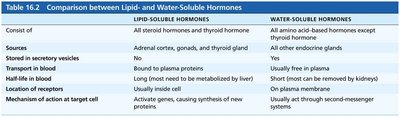
Comparison between Lipid- and Water-Soluble Hormones
Lipid-Soluble Hormones | Water-Soluble Hormones |
|---|---|
All steroid hormones and thyroid hormone | All amino acid–based hormones except thyroid hormone |
Adrenal cortex, gonads, thyroid gland | Other endocrine glands |
Bound to plasma proteins | Usually free in plasma |
Long half-life (must be metabolized by liver) | Short half-life (can be removed by kidneys) |
Usually inside cell | On plasma membrane |
Activate genes, causing synthesis of new proteins | Usually act through second-messenger systems |
Hormone Interactions at Target Cells
Types of Hormone Interactions
Permissiveness: One hormone cannot exert its effects without another hormone being present (e.g., reproductive hormones need thyroid hormone).
Synergism: More than one hormone produces the same effects, causing amplification (e.g., glucagon and epinephrine both cause liver to release glucose).
Antagonism: One or more hormones oppose the action of another (e.g., insulin and glucagon).
The Hypothalamus and Pituitary Gland
Hypothalamus-Pituitary Relationships
The hypothalamus is connected to the pituitary gland (hypophysis) via the infundibulum. The pituitary has two major lobes:
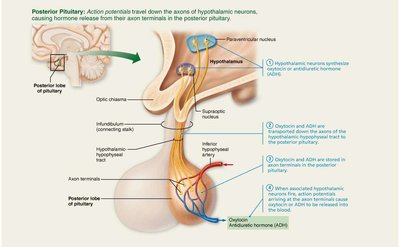
Posterior pituitary: Neural tissue, secretes neurohormones (oxytocin and ADH).
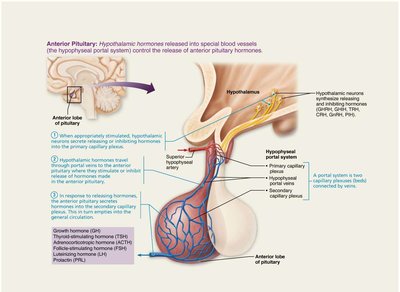
Anterior pituitary: Glandular tissue, secretes hormones regulated by hypothalamic releasing and inhibiting hormones.
Posterior Pituitary and Hypothalamic Hormones
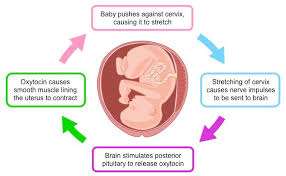
Oxytocin: Strong stimulant of uterine contractions during childbirth; triggers milk ejection. Both are positive feedback mechanisms.
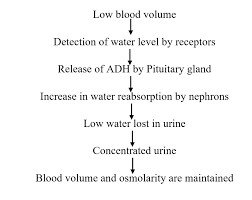
Antidiuretic hormone (ADH): Targets kidney tubules to reabsorb more water, inhibiting urine formation. Inhibited by alcohol and diuretics; high concentrations cause vasoconstriction (vasopressin).
Clinical Homeostatic Imbalances
Diabetes insipidus: ADH deficiency due to damage to hypothalamus or posterior pituitary; requires hydration.
SIADH: Syndrome of inappropriate ADH secretion; causes fluid retention, headache, disorientation.
Anterior Pituitary Hormones
Overview of Anterior Pituitary Hormones
All six hormones are peptide hormones.
All but growth hormone (GH) activate target cells via cAMP second-messenger system.
All but two are tropic hormones (regulate secretion of other hormones): GH, TSH, ACTH, FSH, LH, PRL.
Growth Hormone (GH)
GH has direct actions on metabolism and indirect growth-promoting actions. It stimulates most cells to enlarge and divide, with major targets being bone and skeletal muscle.
Increases blood levels of fatty acids for use as fuel
Encourages cellular protein synthesis

Clinical Imbalances of GH
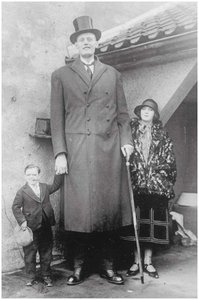
Hypersecretion: Causes gigantism in children (heights up to 8 feet) and acromegaly in adults (overgrowth of hands, feet, face).
Hyposecretion: Causes pituitary dwarfism in children (height up to 4 feet); usually no problems in adults.
Thyroid-Stimulating Hormone (TSH)
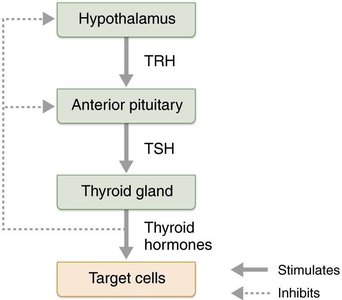
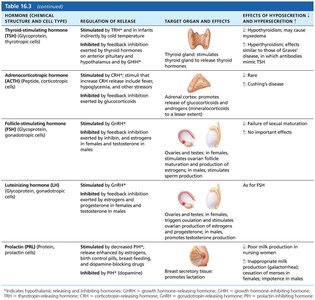
TSH (thyrotropin) stimulates normal development and secretory activity of the thyroid. Release is triggered by thyrotropin-releasing hormone from the hypothalamus and inhibited by rising blood levels of thyroid hormones.
Adrenocorticotropic Hormone (ACTH)
ACTH stimulates the adrenal cortex to release corticosteroids. Release is triggered by hypothalamic corticotropin-releasing hormone (CRH) in a daily rhythm, with highest levels in the morning. Factors such as fever, hypoglycemia, and stressors alter CRH release.
Gonadotropins (FSH and LH)
FSH: Stimulates production of gametes (egg or sperm).
LH: Promotes production of gonadal hormones; in females, triggers ovulation and release of estrogen/progesterone; in males, stimulates testosterone production.
Absent from blood in prepubertal boys and girls.
Prolactin (PRL)
PRL stimulates milk production in females; its role in males is not well understood. Increased estrogen levels stimulate PRL, causing breast swelling and tenderness during the menstrual cycle. Blood levels rise toward the end of pregnancy, and suckling stimulates PRL release for continued milk production.

Clinical Imbalances of Prolactin
Hypersecretion: Most frequent abnormality of anterior pituitary tumors; causes inappropriate lactation, lack of menses, infertility in females, and impotence in males.
Hyposecretion: Not a problem except in women who choose to nurse.
Summary Tables of Pituitary Hormones
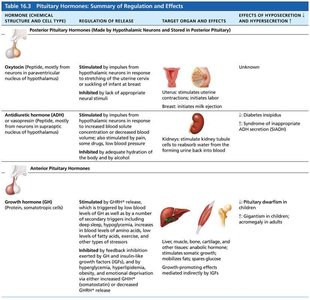
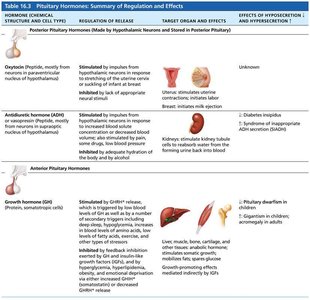
The following tables summarize the regulation, target organs, effects, and clinical imbalances of pituitary hormones:
Hormone | Regulation of Release | Target Organ and Effects | Effects of Hyposecretion and Hypersecretion |
|---|---|---|---|
Oxytocin | Stimulated by impulses from hypothalamic neurons | Uterus: stimulates contractions; Breast: initiates milk ejection | Unknown |
Antidiuretic hormone (ADH) | Stimulated by impulses from hypothalamic neurons in response to increased blood solute concentration or decreased blood volume | Kidneys: stimulate kidney tubule cells to reabsorb water | Diabetes insipidus (hyposecretion); SIADH (hypersecretion) |
Growth hormone (GH) | Stimulated by GHRH release; inhibited by GHIH | Liver, muscle, bone, cartilage, other tissues: stimulates growth | Pituitary dwarfism (hyposecretion); Gigantism/acromegaly (hypersecretion) |
Additional info: This guide covers the core concepts and regulatory mechanisms of the endocrine system, including hormone types, actions, feedback, and clinical relevance, as outlined in Chapter 16 of Human Anatomy & Physiology.
