 Back
BackStudy Guide: The Prokaryotes – Bacteria and Archaea
Study Guide - Smart Notes
 Tailored notes based on your materials, expanded with key definitions, examples, and context.
The Prokaryotes: Bacteria and Archaea
Overview of Prokaryotes
Prokaryotes are unicellular organisms lacking a membrane-bound nucleus and organelles. They are divided into two domains: Bacteria and Archaea, as recognized by the Three Domain System of phylogenetic relationships. - Bacteria: Includes a wide variety of species, many of which are pathogenic. - Archaea: Distinct from bacteria, often found in extreme environments. 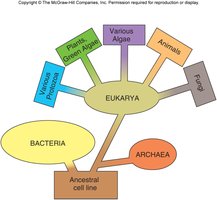
Three Domain System
The Three Domain System classifies all life into three domains: Bacteria, Archaea, and Eukarya. This system is based on differences in ribosomal RNA and other molecular features. - Bacteria: Prokaryotic, single circular chromosome. - Archaea: Prokaryotic, single circular chromosome, unique membrane lipids. - Eukarya: Eukaryotic, multiple linear chromosomes. 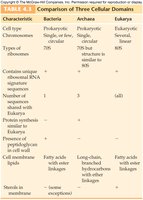
Characteristic | Bacteria | Archaea | Eukarya |
|---|---|---|---|
Cell type | Prokaryotic | Prokaryotic | Eukaryotic |
Chromosomes | Single, circular | Single, circular | Several, linear |
Membrane lipids | Ester linkages | Ether linkages | Ester linkages |
Ribosomal RNA | Unique | Unique | Unique |
Cell wall | Peptidoglycan | No peptidoglycan | Cellulose/chitin (if present) |
Domain Bacteria
Bacterial Diversity
The domain Bacteria contains 18 different phyla, with only half containing pathogenic species. Bacteria are classified based on cell wall structure, metabolism, and genetic characteristics. 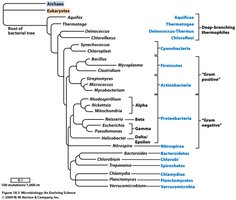
Representative Groups of Bacteria
Bacteria are grouped into several major phyla, each with unique characteristics.
Deep-Branching Thermophiles
- Aquificae: Hyperthermophiles, grow at high temperatures. - Thermotogae: Thermophiles, anaerobic, grow in hot environments. 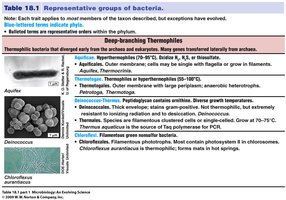
Cyanobacteria
- Oxygenic photosynthetic bacteria with thylakoid membranes. - Examples: Anabaena, Spirulina. 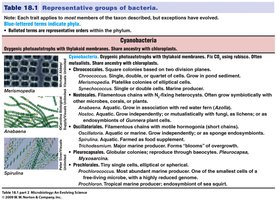
Firmicutes and Actinobacteria (Gram-positive)
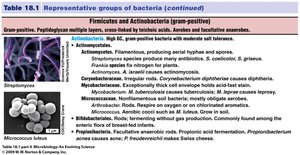
- Firmicutes: Low GC, gram-positive, includes Bacillus and Clostridium. - Actinobacteria: High GC, gram-positive, includes Streptomyces and Mycobacterium. 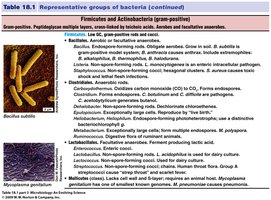
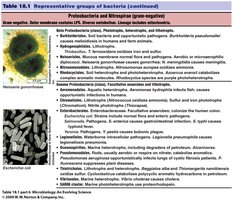
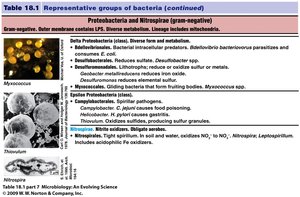
Proteobacteria and Nitrospirae (Gram-negative)
- Proteobacteria: Diverse metabolism, includes Escherichia, Salmonella, Rhizobium. - Nitrospirae: Nitrile oxidizers, obligate aerobes. 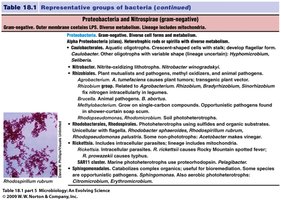
Bacteroidetes/Chlorobi Group
- Bacteroidetes: Anaerobes, important in gut microbiota. - Chlorobi: Green sulfur bacteria, phototrophic. 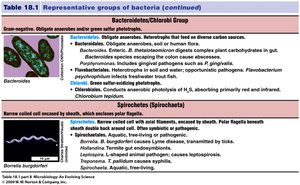
Spirochetes
- Narrow coiled cells, motile with axial filaments. - Includes Treponema (syphilis), Borrelia (Lyme disease).
Chlamydiae, Planctomycetes, and Verrucomicrobia
- Chlamydiae: Intracellular pathogens. - Planctomycetes: Unique cell structure, budding reproduction. - Verrucomicrobia: Cells with prosthecae. 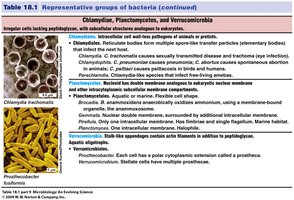
Domain Archaea
Characteristics of Archaea
Archaea are prokaryotic organisms with unique membrane lipids (ether linkages) and cell wall structures. They are often found in extreme environments and were first identified as a distinct domain by Carl Woese in the 1970s. 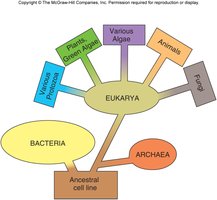
Major Phyla of Archaea
The domain Archaea is divided into four main phyla: - Euryarchaeota - Crenarchaeota - Korarchaeota - Nanoarchaeota 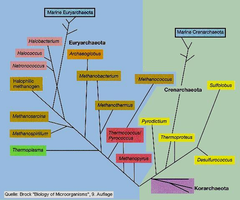
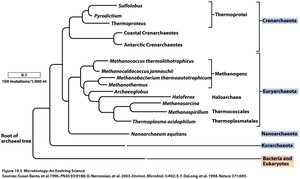
Representative Groups of Archaea
Crenarchaeota
- Includes hyperthermophiles and acidophiles. - Found in hot springs and marine vents. 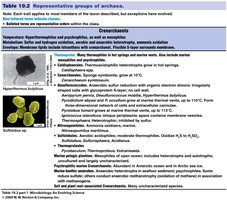
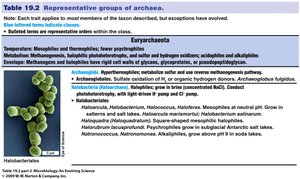
Euryarchaeota
- Includes methanogens, halophiles, and thermophiles. - Methanogens produce methane in anaerobic environments. 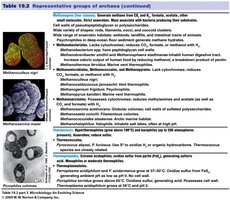
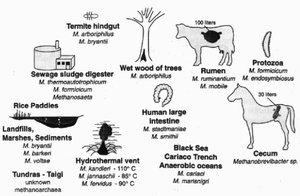
Methanogens
Methanogens are archaea that produce methane as a metabolic byproduct in anaerobic conditions. They are found in environments such as wetlands, digestive tracts of animals, and sewage digesters.
Halophiles
Halophiles are archaea that thrive in highly saline environments, such as salt lakes and salt mines.
Summary Table: Comparison of Bacteria and Archaea
Feature | Bacteria | Archaea |
|---|---|---|
Cell wall | Peptidoglycan | No peptidoglycan |
Membrane lipids | Ester linkages | Ether linkages |
Habitat | Wide range | Often extreme environments |
Pathogenicity | Many pathogenic species | Few pathogenic species |
Key Terms and Concepts
- Prokaryote: Organism lacking a nucleus and membrane-bound organelles. - Domain: Highest taxonomic rank in biological classification. - Phylogenetic tree: Diagram showing evolutionary relationships. - Gram-positive: Bacteria with thick peptidoglycan cell wall. - Gram-negative: Bacteria with thin peptidoglycan and outer membrane. - Methanogen: Archaea producing methane in anaerobic conditions. - Halophile: Organism thriving in high salt concentrations.
Additional info:
Some details about metabolic pathways, environmental adaptations, and pathogenicity were inferred from standard microbiology knowledge to provide a complete study guide.
