 Back
Study Guide: The Reproductive System (ANP College Level)
Study Guide - Smart Notes
 Tailored notes based on your materials, expanded with key definitions, examples, and context.
The Reproductive System
Introduction: Continuity of Life
The reproductive system ensures the continuity of life by producing offspring through the processes of gamete formation, fertilization, and development. Both male and female systems are specialized for the production, maturation, and transport of gametes, as well as the support of embryonic and fetal development.
26.1 Overview of the Reproductive System and Meiosis
The reproductive system consists of primary sex organs (gonads) and accessory structures. Gonads produce gametes via meiosis and secrete sex hormones. Meiosis is a specialized cell division that reduces chromosome number by half, producing haploid gametes.
Gonads: Testes (male), Ovaries (female)
Sex hormones: Testosterone (male), Estrogens (female)
Gametes: Sperm (male), Ova (female)
Accessory organs: Ducts, glands, and support structures
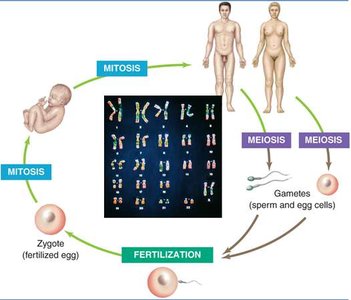
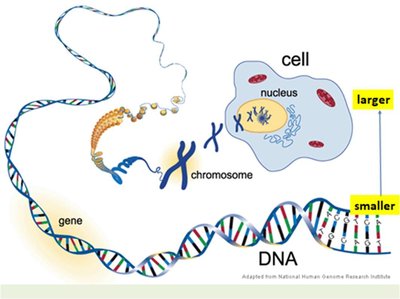
Chromosome Number and Ploidy
Diploid (2n): Two sets of chromosomes (somatic cells)
Haploid (n): One set of chromosomes (gametes)
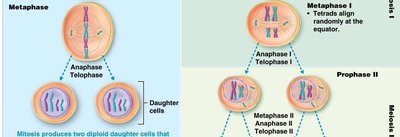
Mitosis vs. Meiosis
Mitosis: Produces two genetically identical diploid cells
Meiosis: Produces up to four genetically unique haploid cells


26.2 Anatomy of the Male Reproductive System
Structure and Function
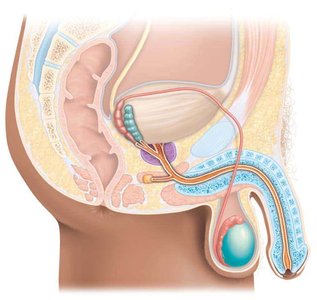
The male reproductive system is specialized for sperm production, maturation, and delivery. It includes the testes, ducts, accessory glands, and support structures.
Testes: Produce sperm and secrete testosterone
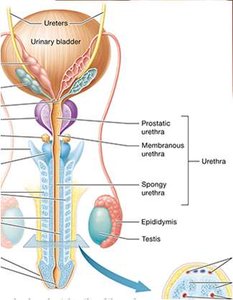
Ducts: Epididymis, vas deferens, ejaculatory ducts, urethra
Accessory glands: Seminal vesicles, prostate, bulbourethral glands
Support structures: Penis, scrotum
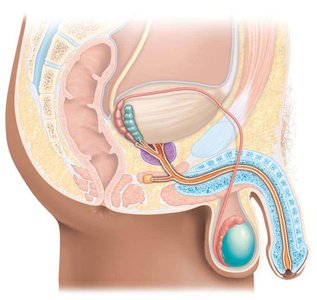
Scrotum and Testes
Scrotum: External pouch, regulates testis temperature
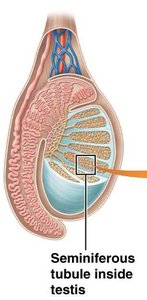
Testes: Descend during fetal development, contain seminiferous tubules (site of spermatogenesis)
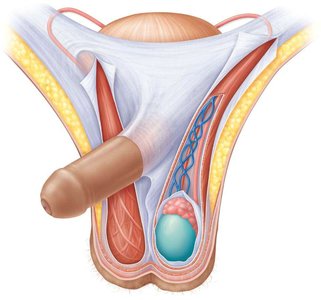
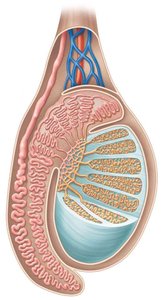
Internal Anatomy of Testes
Tunica vaginalis: Protective covering
Tunica albuginea: Divides testis into lobules
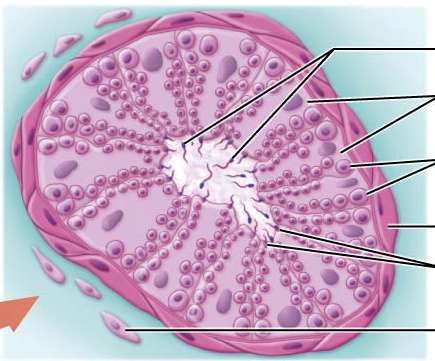
Seminiferous tubules: Site of sperm production
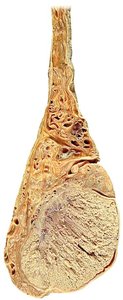
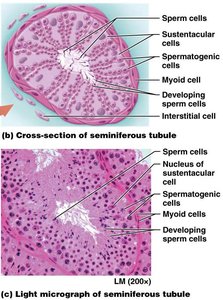
Testes Histology
Interstitial (Leydig) cells: Secrete testosterone
Sustentacular (Sertoli) cells: Support sperm production
Reproductive Ducts
Epididymis: Sperm maturation and storage
Vas deferens: Transports sperm
Urethra: Shared duct for urine and semen
Accessory Glands
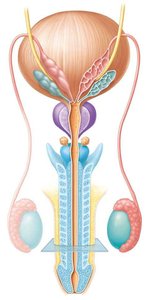
Seminal vesicles: Secrete fructose-rich, alkaline fluid
Prostate gland: Secretes citrate, PSA, antimicrobial chemicals
Bulbourethral glands: Secrete mucus and alkaline fluid
26.3 Physiology of the Male Reproductive System
Spermatogenesis
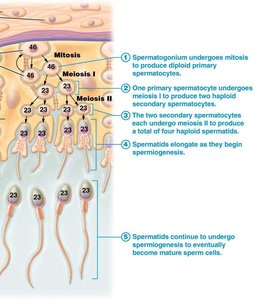
Spermatogenesis is the process of sperm production, involving mitosis, meiosis, and spermiogenesis. It occurs in the seminiferous tubules and is regulated by hormones.
Spermatogonia: Diploid stem cells
Primary spermatocytes: Undergo meiosis I
Secondary spermatocytes: Undergo meiosis II
Spermatids: Mature into sperm
Structure of Sperm
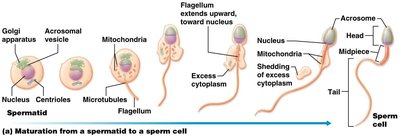
Head: Contains nucleus and acrosomal enzymes
Midpiece: Packed with mitochondria
Tail: Flagellum for motility
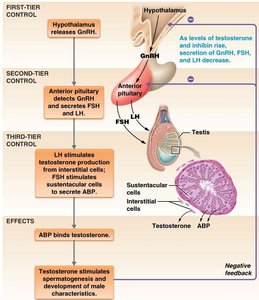
Hormonal Regulation
GnRH: From hypothalamus, stimulates LH and FSH release
FSH: Stimulates spermatogenesis
LH: Stimulates testosterone secretion
26.4 Anatomy of the Female Reproductive System
Structure and Function
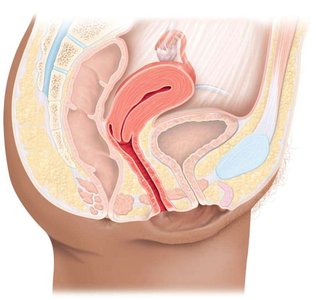
The female reproductive system is specialized for oocyte production, fertilization, gestation, and lactation. It includes the ovaries, uterine tubes, uterus, external genitalia, and mammary glands.
Ovaries: Produce oocytes and hormones
Uterine tubes: Transport oocytes and fertilized zygotes
Uterus: Site of implantation and fetal development
External organs: Vulva, perineum
Mammary glands: Milk production
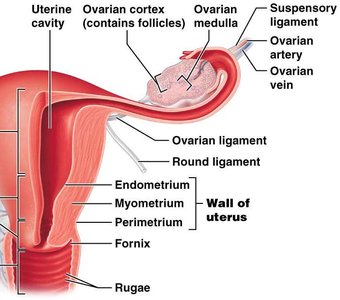
Ovaries
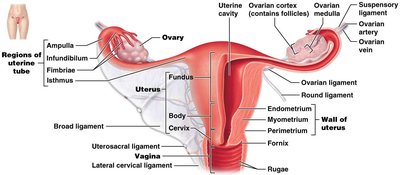
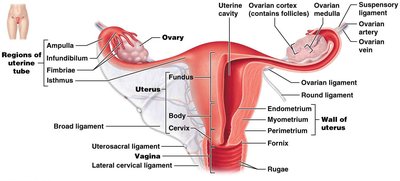
Anchored by ligaments: Broad, ovarian, suspensory
Cortex: Contains follicles
Medulla: Vascular and nervous supply
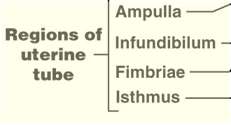
Uterine Tubes
Fimbriae: Envelop but do not attach to ovaries
Layers: Mucosa (cilia), muscularis (peristalsis), serosa
Uterus
Functions: Menstruation, sperm transport, implantation, fetal development, labor
Regions: Fundus, body, isthmus, cervix
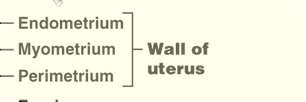
Layers: Endometrium, myometrium, perimetrium
Vagina, Vulva, and Perineum
Vagina: Passage for sperm, menstrual flow, intercourse, childbirth
Vulva: External genitalia
Perineum: Area containing genitals and anus
Mammary Glands
Lactation: Synthesis, secretion, and ejection of milk
Lobes and lobules: Milk-secreting cells (alveoli)
26.5 Physiology of the Female Reproductive System
Oogenesis
Oogenesis is the process of oocyte formation, beginning before birth and continuing cyclically from puberty to menopause. It involves the maturation of follicles and the release of oocytes during ovulation.
Primordial follicles: Resting oocytes surrounded by follicular cells
Primary follicles: Granulosa cells increase, secrete fluid
Secondary follicles: Formation of zona pellucida, antrum, corona radiata
Vesicular (Graafian) follicle: LH induces ovulation, corpus luteum forms
Female Reproductive Cycle
Ovarian cycle: Events associated with ovum maturation
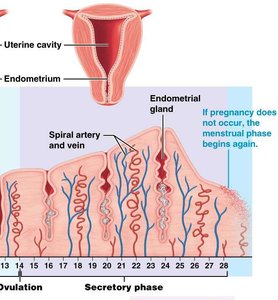
Uterine cycle: Endometrial changes for implantation
Hormonal regulation: FSH, LH, estrogen, progesterone
Phases of the Female Cycle
Menstruation: Shedding of endometrium (~5 days)
Pre-ovulatory (follicular/proliferative): Endometrial proliferation (days 6-13)
Ovulation: LH surge induces follicle rupture (~day 14)
Postovulatory (luteal/secretory): Progesterone prepares endometrium (days 15-28)
26.6 Methods of Birth Control
Birth Control Methods
Barrier methods: Prevent sperm from reaching oocyte (condoms, diaphragm)
Hormonal methods: Prevent oocyte production (oral pills, injections, vaginal ring)
Sterilization: Permanent barrier (vasectomy, tubal ligation)
IUDs: Prevent implantation
Chemical methods: Destroy sperm (spermicides)
Behavioral methods: Rhythm, sympto-thermal methods
26.7 Sexually Transmitted Infections (STIs)
Types and Effects
Bacterial and parasitic STIs: Chlamydia, Gonorrhea, Syphilis, Trichomoniasis (cause inflammation, discharge)
Viral STIs: HPV, Genital Herpes (viruses invade host cells)
Comparison: Spermatogenesis vs. Oogenesis
Process | Timing | Production |
|---|---|---|
Spermatogenesis | Starts at puberty, continuous | Millions per day |
Oogenesis | Starts before birth, cyclic, stops at menopause | One per month |
Summary
The reproductive system is essential for the production of gametes, fertilization, and the continuation of life. Understanding its anatomy, physiology, and regulation is fundamental for health sciences and clinical practice.
