 Back
BackStudy Guide: The Reproductive System (Human Anatomy & Physiology)
Study Guide - Smart Notes
 Tailored notes based on your materials, expanded with key definitions, examples, and context.
Reproductive System Overview
Introduction
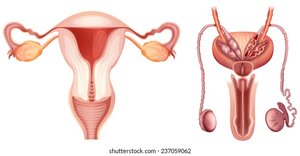
The human reproductive system consists of male and female organs and glands responsible for producing, nurturing, and transporting sex cells. These organs also secrete hormones that regulate reproductive processes and develop secondary sex characteristics.
Primary function: Production and nurturing of sex cells (sperm in males, oocytes in females)
Hormonal regulation: Hormones control reproductive processes and secondary sex characteristics
Fertilization: Sex cells unite to restore the diploid chromosome number
Meiosis and Sex Cell Production
Sex Cells and Chromosome Number
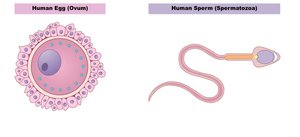
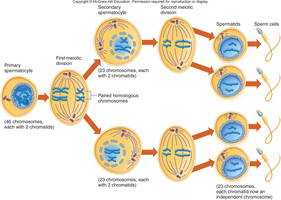
Sex cells are produced by meiosis, a specialized cell division process. Sperm (male) and oocytes (female) each have one set of genetic instructions (23 chromosomes), compared to two sets (46 chromosomes) in somatic cells.
Sperm: Male gamete
Oocyte (egg): Female gamete
Meiosis: Reduces chromosome number by half
Key Terms in Meiosis
Chromosome: Structure carrying genetic information
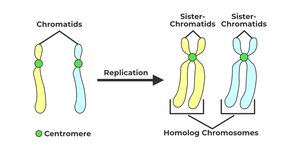
Chromatid: One of two identical halves of a replicated chromosome
Homologous Chromosomes: Chromosome pairs, one from each parent
Sister Chromatids: Identical chromatids from the same chromosome
Diploid: Two sets of chromosomes (2n = 46 in humans)
Haploid: One set of chromosomes (n = 23 in humans)
Phases of Meiosis
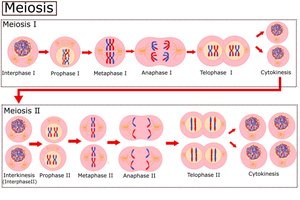
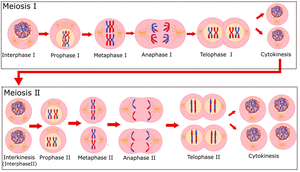
Meiosis consists of two successive divisions: Meiosis I and Meiosis II. Each division has distinct phases.
Meiosis I: Separates homologous chromosome pairs, resulting in haploid cells with replicated chromosomes
Meiosis II: Similar to mitosis, separates sister chromatids, resulting in four haploid daughter cells
Genetic Variability
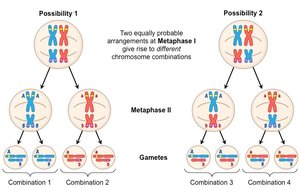
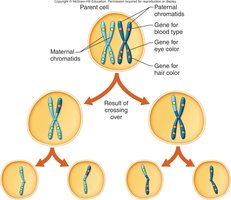
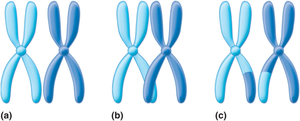
Meiosis increases genetic variability through independent assortment and crossing over.
Independent Assortment: Random alignment of chromosomes during metaphase I
Crossing Over: Exchange of genetic material between non-sister chromatids during prophase I
Male Reproductive System
Organs and Functions
The male reproductive system includes primary and accessory organs responsible for sperm production, maturation, and transport, as well as hormone secretion.
Primary sex organs: Testes (produce sperm and hormones)
Accessory organs: Internal (epididymis, ductus deferens, ejaculatory ducts, urethra, seminal vesicles, prostate gland, bulbourethral glands) and external (scrotum, penis)
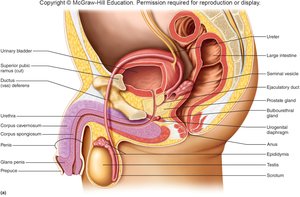
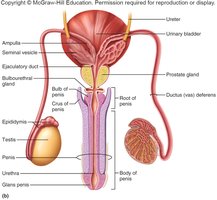
Descent of the Testes
Testes originate near the kidneys and descend into the scrotum before birth, aided by the gubernaculum and triggered by testosterone.
Spermatic cord: Contains ductus deferens, blood vessels, nerves
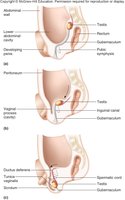
Structure of the Testes
Testes are composed of lobules containing seminiferous tubules, which produce sperm. Interstitial cells between tubules produce male sex hormones.
Seminiferous tubules: Site of spermatogenesis
Rete testis: Connects tubules to epididymis
Interstitial cells: Produce testosterone
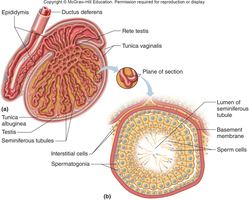
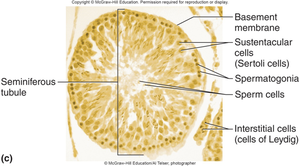
Formation of Sperm Cells (Spermatogenesis)
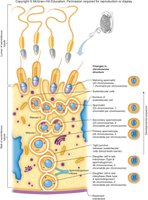
Spermatogenesis is the process of sperm cell formation, starting with spermatogonia and resulting in mature sperm. Each primary spermatocyte produces four sperm cells.
Sustentacular cells: Support and nourish spermatogenic cells
Spermatogenic cells: Give rise to spermatogonia
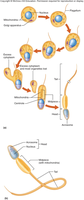
Structure of a Sperm Cell
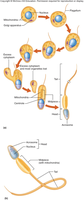
Sperm cells are specialized for fertilization and motility.
Head: Contains nucleus (23 chromosomes) and acrosome (enzymes for fertilization)
Midpiece: Contains mitochondria for ATP production
Tail (flagellum): Propels sperm toward egg
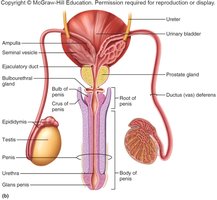
Male Internal Accessory Organs
These organs nurture and transport sperm cells.
Epididymis: Stores and matures sperm
Ductus deferens: Transports sperm to urethra
Seminal vesicles: Secrete alkaline fluid with nutrients
Prostate gland: Secretes fluid enhancing sperm motility
Bulbourethral glands: Lubricate penis
Semen
Semen is composed of sperm and secretions from accessory glands. It is slightly alkaline and contains nutrients and prostaglandins.
Volume: 2-5 mL per ejaculation
Sperm count: ~120 million/mL
Male External Reproductive Organs
The scrotum and penis are the main external organs.
Scrotum: Regulates temperature for sperm production
Penis: Conveys urine and semen; specialized for erection
Erection, Orgasm, and Ejaculation
Sexual stimulation triggers erection, followed by orgasm and ejaculation.
Erection: Parasympathetic impulses release nitric oxide, dilating arteries
Orgasm: Emission (movement of semen into urethra) and ejaculation (movement out)
Hormonal Control of Male Reproductive Function
Hormones from the hypothalamus, pituitary, and testes regulate male reproductive functions.
GnRH: Stimulates pituitary to release LH and FSH
LH: Stimulates interstitial cells to produce testosterone
FSH: Stimulates sustentacular cells for spermatogenesis
Negative feedback: Testosterone and inhibin regulate hormone levels
Male Sex Hormones and Actions of Testosterone
Testosterone is the primary androgen, responsible for development of male reproductive organs and secondary sex characteristics.
Primary sex characteristics: Enlargement of testes and accessory organs
Secondary sex characteristics: Body hair, deepening voice, increased muscle and bone growth
Female Reproductive System
Organs and Functions
The female reproductive system produces oocytes, transports them, provides an environment for offspring, and produces hormones.
Primary sex organs: Ovaries
Accessory organs: Internal (uterine tubes, uterus, vagina) and external (vulva)
Ovaries and Ovarian Attachments
Ovaries are held in place by several ligaments and descend to their final position during fetal development.
Broad ligament: Largest, attaches to uterus and uterine tubes
Suspensory ligament: Holds ovary at upper end
Ovarian ligament: Attaches ovary to uterus
Ovary Structure
Ovaries have an inner medulla (connective tissue, blood vessels) and outer cortex (contains ovarian follicles).
Ovarian follicles: Site of oocyte development
Egg Development and Oogenesis
Oogenesis is the process of egg cell formation. Primordial follicles are produced during fetal development, and oocytes undergo meiosis at puberty.
Primary oocyte: Undergoes meiosis I to form secondary oocyte and polar body
Secondary oocyte: May be fertilized to form zygote
Follicle Maturation and Ovulation
Follicles mature through several stages, culminating in ovulation, where the secondary oocyte is released.
Granulosa cells: Surround oocyte
Zona pellucida: Glycoprotein layer around oocyte
Corona radiata: Mass of follicular cells around oocyte
Female Internal Accessory Reproductive Organs
These organs include the uterine tubes, uterus, and vagina.
Uterine tubes: Transport oocyte; site of fertilization
Uterus: Receives and sustains embryo
Vagina: Channel for birth, receives penis during intercourse
Female External Reproductive Organs
The vulva includes labia majora, labia minora, clitoris, and vestibule.
Labia majora: Protects other external parts
Labia minora: Protects vaginal and uterine openings
Clitoris: Erectile tissue, produces pleasure
Vestibule: Space between labia minora, contains glands
Erection, Lubrication, and Orgasm in Females
Erectile tissues respond to stimulation, vestibular glands secrete mucus, and orgasm involves rhythmic muscle contractions aiding sperm transport.
Hormonal Control of Female Reproductive Functions
Hormones and Their Actions
Hormones from the hypothalamus, pituitary, and ovaries regulate female reproductive processes.
GnRH: Stimulates pituitary to release FSH and LH
FSH and LH: Control oocyte maturation and hormone production
Estrogens: Stimulate accessory organ growth, secondary sex characteristics
Progesterone: Stimulates uterine changes, regulates gonadotropin secretion
Female Reproductive Cycle
The cycle involves recurring changes in the uterine lining, culminating in menstruation. It consists of proliferative, secretory, and menstrual phases.
Proliferative phase: Follicle maturation, endometrial thickening
Secretory phase: Corpus luteum secretes hormones, endometrium becomes vascular
Menstrual phase: Corpus luteum degenerates, uterine lining sloughs off
Menopause
Menopause occurs when ovaries cease responding to FSH, leading to decreased estrogen and progesterone production and cessation of the reproductive cycle.
Symptoms: May include headaches, backaches, fatigue
Mammary Glands
Structure and Function
Mammary glands are specialized for milk secretion following pregnancy. Located in the breasts, they consist of lobes, alveolar glands, and ducts.
Lobes: 15-20 per gland
Alveolar glands: Drain into lactiferous ducts
Areola: Pigmented area around nipple
