 Back
BackStudy Notes: Musculoskeletal System (Skeletal and Muscular Systems)
Study Guide - Smart Notes
 Tailored notes based on your materials, expanded with key definitions, examples, and context.
Musculoskeletal System
Introduction
The musculoskeletal system is essential for providing structural support, protection, movement, and various physiological functions in the human body. It consists of the skeletal system (bones and joints) and the muscular system (muscles and associated tissues).
Skeletal System: Provides framework, protection, and facilitates movement.
Muscular System: Enables movement, maintains posture, and generates heat.
Skeletal System
Functions of the Skeletal System
The skeletal system is perfectly adapted for its functions of protecting the body and allowing motion.
Support: Provides structural framework for the body.
Protection: Shields vital organs (e.g., brain, heart, lungs).
Movement: Acts as levers for muscles to produce movement.
Storage: Stores minerals such as calcium and phosphorus.
Blood Cell Formation: Houses bone marrow for hematopoiesis.
Composition and Function of Bone Tissue
Bones, also called osseous tissue, are among the hardest materials in the body.
Ossification: Gradual process of bone formation beginning before birth.
Extracellular Matrix: Contains specialized cells: osteoblasts (build bone), osteoclasts (break down bone), and osteocytes (maintain bone).
Mineral Supply: Adequate calcium (Ca) and phosphorus (P) are essential for strong bones.
Classification of Bones
Bones are classified by shape and tissue type.
Types of Bone Tissue: Compact bone (dense, hard exterior) and spongy bone (porous, interior).
Shape Classification:
Long bones: e.g., femur, humerus
Flat bones: e.g., skull, sternum
Irregular bones: e.g., vertebrae
Short bones: e.g., carpals, tarsals
Structure of the Bone
Diaphysis: Central shaft of long bones.
Epiphysis: Ends of long bones, covered by articular cartilage.
Periosteum: Thin connective tissue membrane covering diaphysis.
Compact Bone: Hard exterior surface.
Spongy Bone: Found inside bones, contains marrow.
Bone Formation, Growth, and Remodeling
Bone formation involves ossification, growth, and continuous remodeling throughout life.
Ossification: Replacement of cartilage with bone.
Remodeling: Ongoing process involving osteoblasts and osteoclasts.
Fractures
Fractures are breaks in bone integrity, commonly classified by their pattern and severity.
Common Types: Simple, compound, comminuted, greenstick, etc.
Axial Skeleton
The axial skeleton forms the central axis of the body and protects internal organs.
Includes: Skull, vertebral column, ribs, sternum.
Skull:
Cranium: Frontal, parietal, temporal, ethmoid, sphenoid, occipital bones.
Facial Bones: Mandible, maxilla, zygomatic, vomer, palatine, nasal, lacrimal bones.
Vertebral Column: Extends from skull to pelvis, separated by intervertebral discs.
Ribs: 12 pairs; true ribs (first 7 pairs), false ribs (next 5 pairs), floating ribs (last 2 pairs).
Conditions of the Spine
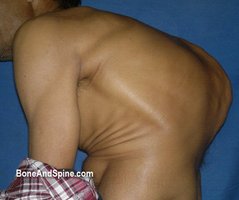
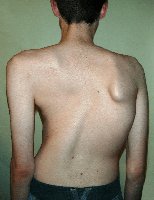
Various conditions can affect the vertebral column, including abnormal curvatures and deformities.
Scoliosis: Lateral curvature of the spine.
Kyphosis: Excessive outward curvature (humpback).
Lordosis: Excessive inward curvature (swayback).
Appendicular Skeleton
The appendicular skeleton includes the limbs and girdles.
Pectoral Girdle: Clavicle and scapula.
Upper Extremity: Humerus, ulna, radius, carpals, metacarpals, phalanges.
Pelvic Girdle: Os coxae (hipbone).
Lower Extremity: Femur, patella, tibia, fibula, tarsals, metatarsals, phalanges.
Joints
Joints are the sites where two or more bones meet, allowing movement and flexibility.
Types: Fibrous, cartilaginous, synovial.
Function: Range from immovable (skull sutures) to freely movable (shoulder, hip).
Muscular System
Functions of the Muscular System
The muscular system is responsible for movement, posture, stabilization, protection, and heat generation.
Produces Movement: Muscles contract to move body parts.
Maintains Posture: Keeps body upright.
Stabilizes Joints: Supports joint integrity.
Protects Internal Organs: Shields organs from injury.
Generates Heat: Muscle activity produces heat.
Types of Muscles
There are three main types of muscle tissue, each with distinct structure and function.
Skeletal Muscle: Voluntary, striated, attached to bones, responsible for movement.
Smooth Muscle: Involuntary, non-striated, found in walls of internal organs and blood vessels.
Cardiac Muscle: Involuntary, striated, found only in the heart, responsible for pumping blood.
Skeletal Muscle
Structure: Bundles of parallel muscle fibers wrapped in fascia.
Tendon: Connects muscle to bone.
Myoneural Junction: Site where motor neuron contacts muscle fiber.
Voluntary Movement: Controlled by nervous system.
Smooth Muscle
Location: Walls of hollow organs (stomach, intestines), blood vessels, respiratory airways.
Function: Involuntary actions (churning, constriction, contractions).
Cardiac Muscle
Location: Heart wall (myocardium).
Function: Involuntary contractions pump blood through the circulatory system.
How Muscles Contract
Muscle contraction is a complex process involving interaction between actin and myosin filaments, triggered by nerve impulses.
Sliding Filament Theory: Actin and myosin slide past each other to shorten muscle fibers.
ATP: Provides energy for contraction.
References
Tortora and Derrickson's Principles of Anatomy and Physiology (2021)
Ross and Wilson Anatomy and Physiology in Health and Illness (2022)
Human Anatomy & Physiology by Marieb and Hoehn (2019)
National Health Service (2023) Musculoskeletal system information
