 Back
The Cell: Structure, Function, and Division
Study Guide - Smart Notes
 Tailored notes based on your materials, expanded with key definitions, examples, and context.
The Cell
Overview of the Cell
The cell is the basic structural and functional unit of all living organisms. In the human body, there are approximately 100 trillion cells, grouped into about 200 different types, which are further organized into four primary tissue types. Each cell type has a unique structure and function that contributes to the overall physiology of the body.
Major Components: Plasma membrane, cytoplasm, and nucleus
Cell Diversity: Includes red blood cells, nerve cells, epithelial cells, and skeletal muscle cells
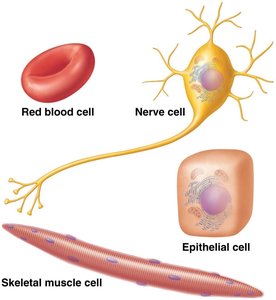
Generalized Cell Structure
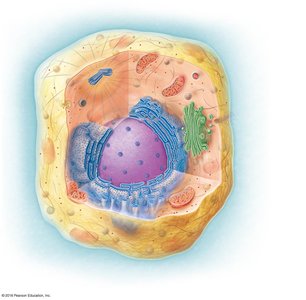
All cells share certain structural features, including a plasma membrane, cytoplasm (containing cytosol, organelles, and cytoskeleton), and a nucleus. These components work together to maintain cellular function and integrity.
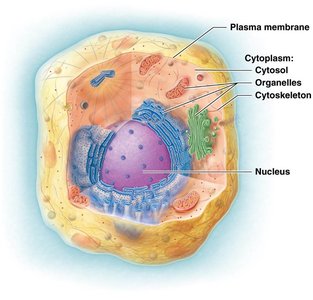
Plasma Membrane
Structure and Function
The plasma membrane is a selectively permeable barrier composed primarily of a phospholipid bilayer with embedded proteins, cholesterol, and carbohydrates. It separates the internal environment of the cell from the external environment and regulates the movement of substances in and out of the cell.
Phospholipid Bilayer: Hydrophilic heads face outward, hydrophobic tails face inward
Membrane Proteins: Integral (span the membrane) and peripheral (attached to the surface)
Carbohydrates: Attached to proteins and lipids, function in cell recognition
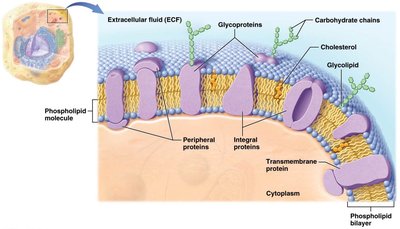
Types of Membrane Proteins and Their Functions
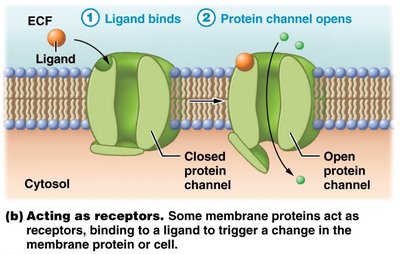
Ion Channels: Allow specific ions to cross the membrane
Carrier Proteins: Change shape to transport substances
Receptor Proteins: Bind specific molecules to initiate cell responses
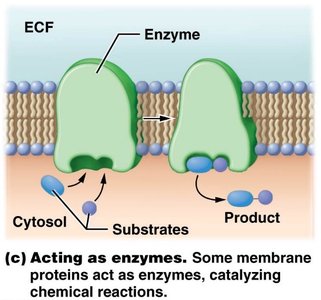
Enzymes: Catalyze metabolic reactions
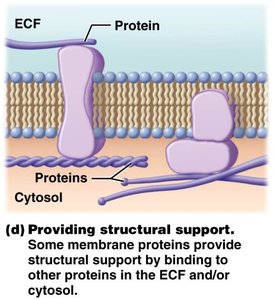
Structural Proteins: Provide and maintain cell shape
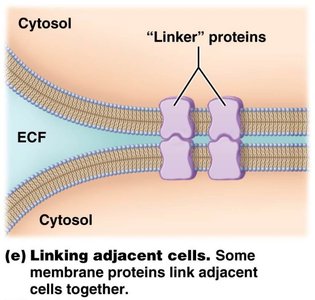
Linking Proteins: Attach cells to each other
Cell Identity Markers: Enable cell recognition
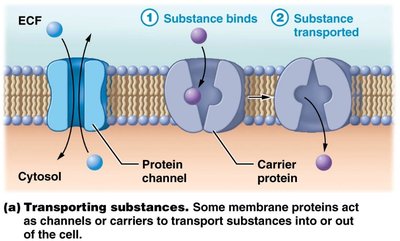
Transport Across the Plasma Membrane
Passive Transport
Passive transport does not require cellular energy and moves substances from areas of high concentration to low concentration.
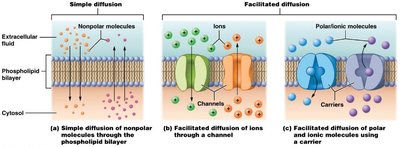
Simple Diffusion: Movement of nonpolar molecules directly through the lipid bilayer
Facilitated Diffusion: Movement of polar or charged molecules via membrane proteins (channels or carriers)
Osmosis and Tonicity
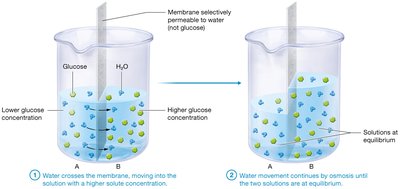
Osmosis is the diffusion of water across a selectively permeable membrane. Water moves down its own concentration gradient, often through channel proteins called aquaporins. Tonicity refers to the effect of osmotic pressure on cell volume, distinguishing between isotonic, hypotonic, and hypertonic solutions.
Osmotic Pressure: The force associated with water movement
Tonicity: Determines whether a cell shrinks, swells, or remains the same size
Active Transport
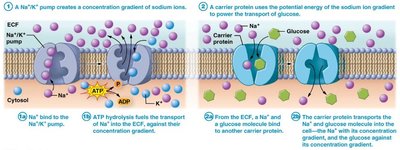
Active transport requires energy (usually from ATP) to move substances against their concentration gradients.
Primary Active Transport: Direct use of ATP to transport molecules (e.g., Na+/K+ pump)
Secondary Active Transport: Uses energy stored in ion gradients created by primary active transport
Vesicular Transport
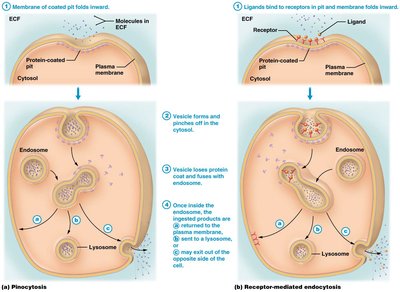
Vesicular transport involves the movement of large particles or fluids via vesicles formed from the plasma membrane.
Endocytosis: Uptake of materials into the cell (includes phagocytosis, pinocytosis, and receptor-mediated endocytosis)
Exocytosis: Release of materials from the cell
Transcytosis: Combination of endocytosis and exocytosis to move substances across a cell
Cytoplasm and Organelles
Cytosol and Cytoskeleton
The cytoplasm consists of cytosol (the fluid portion), organelles, and the cytoskeleton. The cytoskeleton is a network of protein filaments that provides structural support and facilitates cell movement and division.
Major Organelles and Their Functions
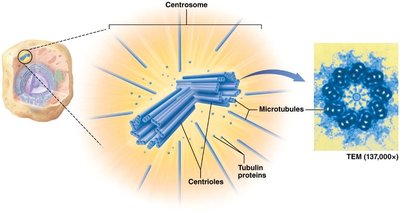
Centrosomes: Contain centrioles; organize microtubules for cell division
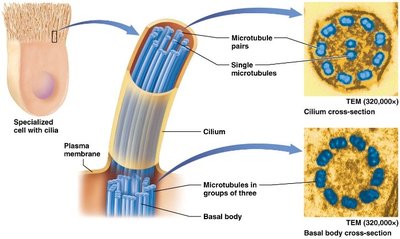
Cilia and Flagella: Motile surface projections for movement
Lysosomes: Vesicles containing digestive enzymes
Peroxisomes: Smaller vesicles involved in detoxification
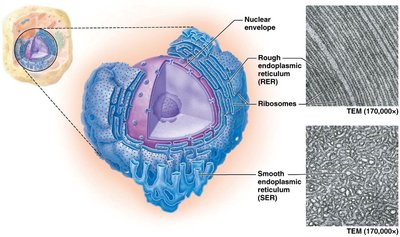
Ribosomes: Sites of protein synthesis
Endoplasmic Reticulum (ER): Network of membranes; rough ER has ribosomes for protein synthesis, smooth ER is involved in lipid synthesis and detoxification
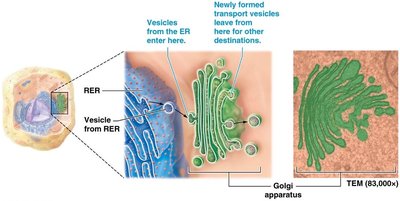
Golgi Complex: Modifies, sorts, and packages proteins for transport
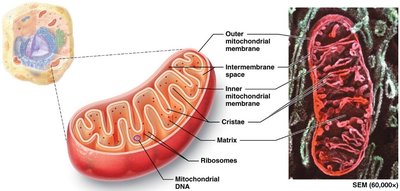
Mitochondria: Site of ATP production; contains its own DNA
Nucleus
Structure and Function
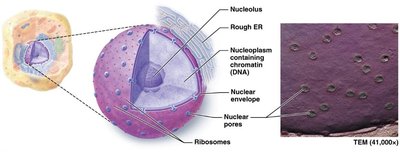
The nucleus is the control center of the cell, containing most of the cell's genetic material in the form of chromosomes. It is surrounded by a nuclear envelope with pores that regulate the movement of molecules between the nucleus and cytoplasm.
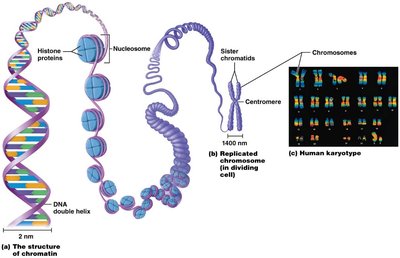
Chromosomes: Long, coiled DNA molecules containing genes
Nucleolus: Site of ribosome synthesis
Human Cells: Contain 46 chromosomes (23 pairs)
Cell Cycle and Division
Phases of the Cell Cycle
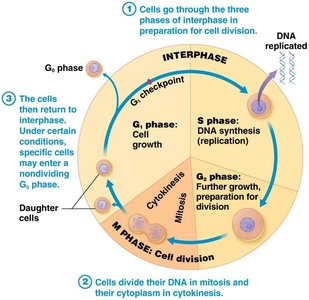
The cell cycle is a series of events that cells go through as they grow and divide. It consists of interphase (cell growth and DNA replication) and the M phase (mitosis and cytokinesis).
Interphase: Includes G1 (growth), S (DNA synthesis), and G2 (preparation for division)
M Phase: Mitosis (nuclear division) and cytokinesis (cytoplasmic division)
DNA Replication
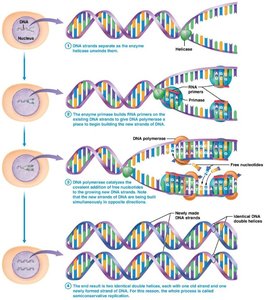
During the S phase of interphase, DNA is replicated in a semi-conservative manner, meaning each new DNA molecule consists of one old strand and one new strand.
Somatic Cell Division (Mitosis)
Somatic cell division results in two genetically identical daughter cells. Mitosis consists of four stages: prophase, metaphase, anaphase, and telophase, followed by cytokinesis.
Additional info: The cell cycle is tightly regulated to ensure accurate DNA replication and division. Errors in these processes can lead to diseases such as cancer.
