 Back
The Cell: Structure, Function, and Key Processes in Human Anatomy & Physiology
Study Guide - Smart Notes
 Tailored notes based on your materials, expanded with key definitions, examples, and context.
The Cell
Basic Processes of Cells
Cells are the fundamental units of life, carrying out essential processes to maintain homeostasis and support organismal function.
Cell Metabolism: Chemical reactions within the cell, including anabolic (building), catabolic (breaking down), and oxidation-reduction reactions, sustain life.
Substance Transport: Cells transport compounds internally, ingest substances, and release products.
Communication: Cells communicate with their environment and other cells via signaling molecules.
Cell Reproduction: Most cells undergo division to produce new cells for growth, repair, and maintenance.
Overview of Cell Structure
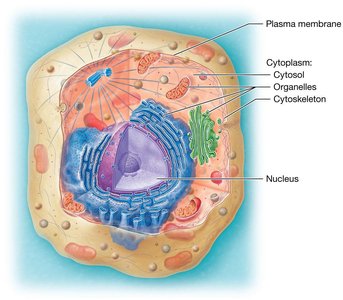
Most animal cells share three basic components: plasma membrane, cytoplasm, and nucleus.
Plasma Membrane: The boundary separating the cell from its environment, regulating transport and communication.
Cytoplasm: Includes cytosol (fluid), organelles (specialized structures), and cytoskeleton (structural support).
Nucleus: Contains genetic material and directs cellular activities.
Common Elements Making Up the Human Body
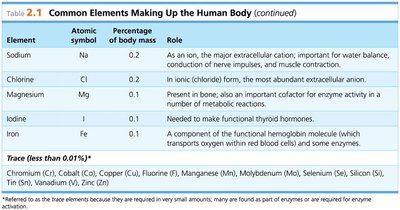
Elements are the building blocks of cellular and molecular structures. The human body is composed of major, lesser, and trace elements, each with specific roles.
Element | Atomic Symbol | Percentage of Body Mass | Role |
|---|---|---|---|
Oxygen | O | 65.0 | Component of organic/inorganic molecules; essential for cellular respiration. |
Carbon | C | 18.5 | Primary element in organic molecules (carbohydrates, lipids, proteins, nucleic acids). |
Hydrogen | H | 9.5 | Component of most organic molecules; influences pH. |
Nitrogen | N | 3.2 | Component of proteins and nucleic acids. |
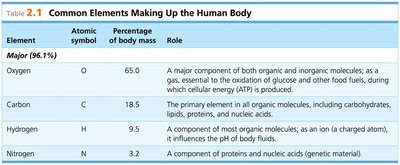
Element | Atomic Symbol | Percentage of Body Mass | Role |
|---|---|---|---|
Calcium | Ca | 1.5 | Bone/teeth structure; muscle contraction; blood clotting. |
Phosphorus | P | 1.0 | Component of ATP, nucleic acids, bones/teeth. |
Potassium | K | 0.4 | Major intracellular cation; nerve/muscle function. |
Sulfur | S | 0.3 | Component of proteins (muscle contraction). |
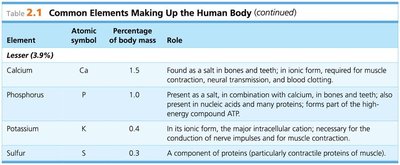
Element | Atomic Symbol | Percentage of Body Mass | Role |
|---|---|---|---|
Sodium | Na | 0.2 | Major extracellular cation; water balance; nerve/muscle function. |
Chlorine | Cl | 0.2 | Major extracellular anion. |
Magnesium | Mg | 0.1 | Bone structure; enzyme activity. |
Iodine | I | 0.1 | Thyroid hormone production. |
Iron | Fe | 0.1 | Hemoglobin component; oxygen transport. |
Organic Compounds: Carbohydrates and Lipids
Carbohydrates
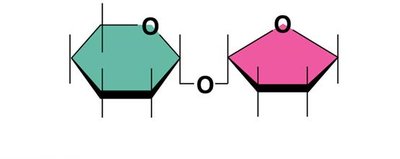
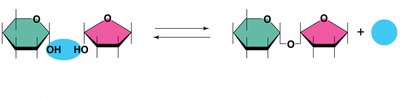
Carbohydrates are organic molecules composed of carbon, hydrogen, and oxygen. They serve as energy sources and structural components.
Monosaccharides: Simple sugars (e.g., glucose, fructose).
Disaccharides: Two monosaccharides joined (e.g., sucrose).
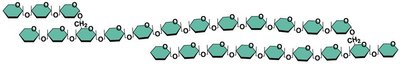
Polysaccharides: Long chains of monosaccharides (e.g., starch, glycogen).
Lipids
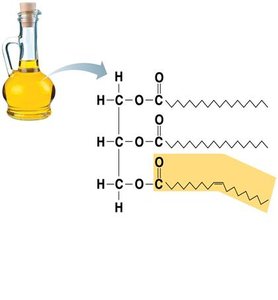
Lipids are hydrophobic molecules, including fats, phospholipids, and steroids. They function in energy storage, membrane structure, and signaling.
Unsaturated Fats: Have double bonds, causing kinks; liquid at room temperature (e.g., olive oil).
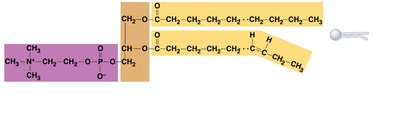
Phospholipids: Composed of two fatty acid tails (hydrophobic) and a phosphate-containing head (hydrophilic); form cell membranes.
Cytoplasmic Organelles
Major Organelles and Their Functions
Organelles are specialized structures within cells, each performing distinct functions.
Organelle | Structure | Function |
|---|---|---|
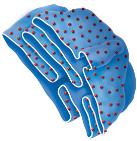
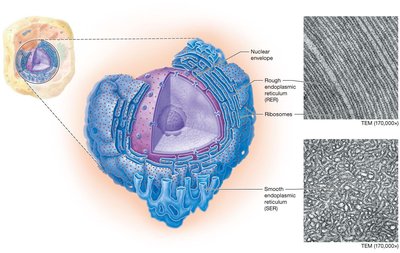
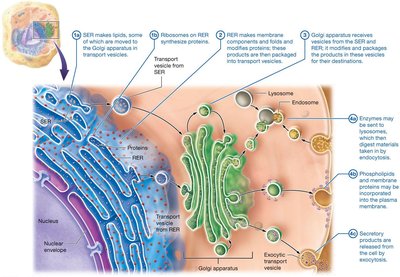
Rough Endoplasmic Reticulum (RER) | Membranous sacs with ribosomes | Protein modification, folding, and membrane assembly |
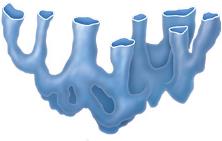
Smooth Endoplasmic Reticulum (SER) | Tubular membranes without ribosomes | Calcium storage, lipid synthesis, detoxification |
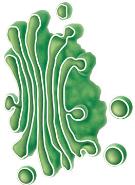
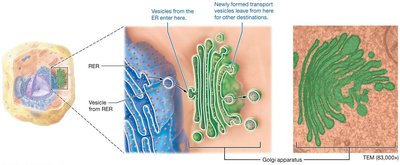
Golgi Apparatus | Stacked, flattened sacs | Sorting, modifying, packaging proteins/lipids |
Lysosome | Membrane-bound vesicle with enzymes | Digestion, recycling of cell components |
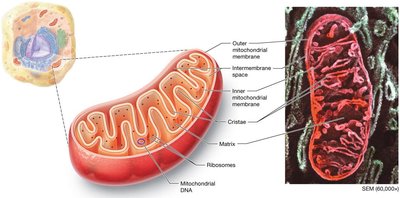
Mitochondrion | Double membrane, inner folds (cristae) | ATP synthesis |
Peroxisome | Membrane-bound vesicle | Detoxification, fatty acid metabolism, phospholipid synthesis |
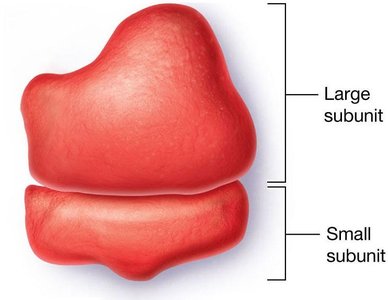
Ribosome | Two protein/RNA subunits | Protein synthesis |
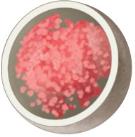
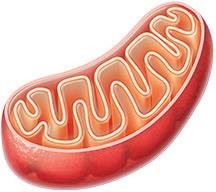
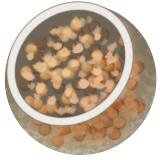
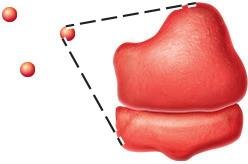
Mitochondria
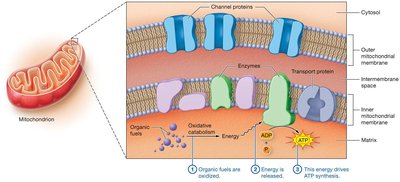
Mitochondria are the cell's powerhouses, producing most ATP via oxidative catabolism. Cells with high energy demands have more mitochondria.
Structure: Double membrane; inner membrane forms cristae; contains DNA and ribosomes.
Function: Breakdown of organic fuels to produce ATP.
Ribosomes
Ribosomes are the sites of protein synthesis, composed of two subunits made of ribosomal RNA and proteins.
Free Ribosomes: Suspended in cytosol; synthesize proteins for the cell.
Bound Ribosomes: Attached to ER; synthesize proteins for export or membranes.
The Endomembrane System
The endomembrane system includes organelles that synthesize, modify, and transport substances via vesicles.
Components: Plasma membrane, ER, Golgi apparatus, lysosomes, nuclear envelope.
Function: Coordination of protein and lipid processing and transport.
The Cytoskeleton
Types of Cytoskeletal Filaments
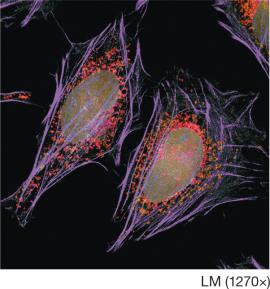
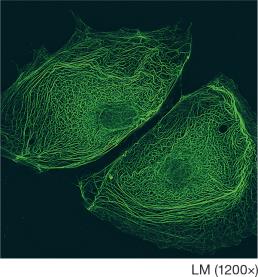
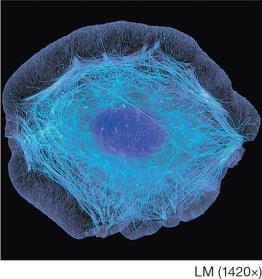
The cytoskeleton provides structural support, maintains cell shape, and enables movement.
Property | Actin Filaments | Intermediate Filaments | Microtubules |
|---|---|---|---|
Location | Near plasma membrane | Around nucleus | Throughout cytosol |
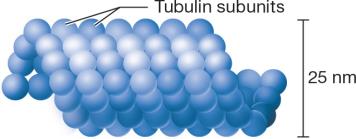
Structure | Two intertwined strands; 5-9 nm diameter | Long strands twisted together; 10 nm diameter | Hollow rods of tubulin; 25 nm diameter |
Functions | Support membrane, core of microvilli, cell motion/division | Framework, nuclear support, cell strength | Support, organelle positioning, motor protein movement, core of cilia/flagella |

Centrosome and Centrioles
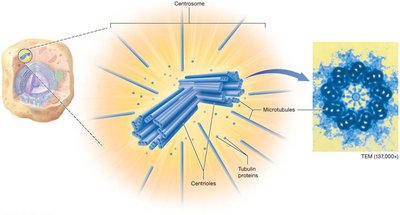
The centrosome is a region containing tubulin proteins and centrioles, which organize microtubules for cell division.
Summary
Cells are composed of plasma membrane, cytoplasm, and nucleus.
Major elements and organic compounds are essential for cell structure and function.
Organelles perform specialized tasks, including energy production, protein synthesis, and waste removal.
The cytoskeleton maintains cell integrity and enables movement.
