 Back
The Cell: Structure, Function, and Membrane Transport
Study Guide - Smart Notes
 Tailored notes based on your materials, expanded with key definitions, examples, and context.
Cells and Tissues
Overview of the Cellular Basis of Life
The cell is the fundamental structural and functional unit of all living organisms. The activities of an organism depend on the collective activities of its cells, and the structure of each cell determines its function. The continuity of life is based on the cellular level, with the human body containing approximately 50 to 100 trillion cells.
Cell Theory: All living things are composed of cells; cells are the basic units of structure and function in living things; new cells are produced from existing cells.
Principle of Complementarity: The biochemical activities of cells are dictated by their structure, which determines their function.
Chemical Composition of Cells
Most cells are composed of four main elements: carbon, hydrogen, oxygen, and nitrogen. Cells are approximately 60% water, which is essential for cellular processes.
Water: Acts as a solvent and medium for biochemical reactions.
Organic Molecules: Such as proteins, lipids, carbohydrates, and nucleic acids, are vital for cell structure and function.
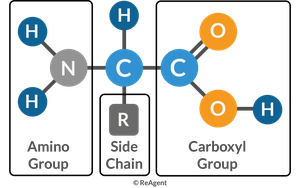
Anatomy of a Generalized Cell
Main Regions of a Cell
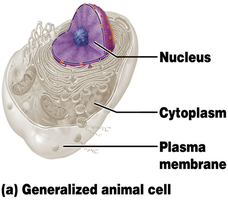
All animal cells share three main regions: the plasma membrane, the cytoplasm, and the nucleus. Each region has specialized structures and functions.
Plasma Membrane: The outer boundary that separates the cell from its environment.
Cytoplasm: The intracellular fluid containing organelles.
Nucleus: The control center containing genetic material (DNA).
The Plasma Membrane
Structure and Function
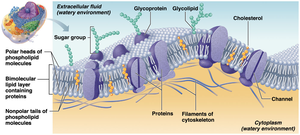
The plasma membrane is a dynamic, selectively permeable barrier that encloses cell contents and regulates the movement of substances into and out of the cell. It is described by the fluid mosaic model, which depicts the membrane as a double layer of phospholipids with embedded proteins, cholesterol, and carbohydrates.
Phospholipid Bilayer: Hydrophilic heads face outward, hydrophobic tails face inward, creating a semi-permeable barrier.
Proteins: Serve as enzymes, receptors, and transport channels or carriers.
Cholesterol: Stabilizes membrane fluidity.
Carbohydrates: Glycoproteins and glycolipids contribute to cell recognition and adhesion.
Membrane Junctions
Cells are bound together by specialized junctions that provide structural integrity and communication between cells.
Tight Junctions: Impermeable junctions that bind cells together into leakproof sheets.
Desmosomes: Anchoring junctions that prevent cells from being pulled apart by mechanical stress.
Gap Junctions: Communicating junctions that allow ions and small molecules to pass between cells.
The Nucleus
Structure and Function
The nucleus is the control center of the cell, containing DNA, which provides instructions for protein synthesis and cell reproduction. It is surrounded by a double membrane called the nuclear envelope, which contains nuclear pores for material exchange.
Nucleolus: Site of ribosome assembly.
Chromatin: DNA wound around histone proteins; condenses into chromosomes during cell division.
The Cytoplasm
Components of the Cytoplasm
The cytoplasm is the site of most cellular activities and consists of cytosol (fluid), inclusions (stored nutrients or cell products), and organelles (specialized structures performing specific functions).
Cytosol: Fluid that suspends organelles and contains nutrients and electrolytes.
Inclusions: Stored nutrients or cell products.
Organelles: Metabolic machinery of the cell.
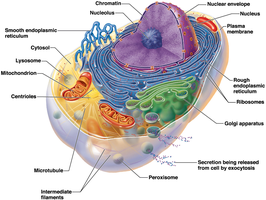
Major Organelles and Their Functions
Mitochondria: "Powerhouses" of the cell; site of ATP production via aerobic respiration.
Ribosomes: Sites of protein synthesis; found free in cytoplasm or attached to rough ER.
Endoplasmic Reticulum (ER): Network of membranes; rough ER synthesizes proteins, smooth ER synthesizes lipids and detoxifies chemicals.
Golgi Apparatus: Modifies, sorts, and packages proteins and lipids for secretion or delivery to other organelles.
Lysosomes: Contain digestive enzymes to break down waste and cellular debris.
Peroxisomes: Detoxify harmful substances and break down free radicals.
Cytoskeleton: Provides structural support and facilitates cell movement; composed of microfilaments, intermediate filaments, and microtubules.
Centrioles: Organize microtubules and are essential for cell division.
Cell Extensions
Surface Extensions and Their Functions
Some cells possess surface extensions that aid in movement or increase surface area for absorption.
Cilia: Move materials across the cell surface (e.g., in the respiratory tract).
Flagella: Propel the cell (e.g., sperm cell).
Microvilli: Increase surface area for absorption (e.g., in the intestines).
Cell Diversity
Specialized Cell Types
The human body contains over 200 different cell types, each specialized for particular functions. Cell shape and structure reflect their roles in the body.
Fibroblasts: Connect body parts by secreting fibers.
Erythrocytes (Red Blood Cells): Carry oxygen in the bloodstream.
Epithelial Cells: Cover and line body organs.
Muscle Cells: Move organs and body parts.
Adipocytes: Store nutrients as fat.
White Blood Cells: Fight disease.
Neurons: Gather information and control body functions.
Oocytes and Sperm: Cells of reproduction.
Cell Physiology
Basic Functions of Cells
Cells carry out essential life processes, including metabolism, digestion, waste disposal, reproduction, growth, movement, and response to stimuli.
Membrane Transport
Solutions and Fluid Compartments
A solution is a homogeneous mixture of a solvent (usually water in the body) and solutes. Intracellular fluid (nucleoplasm and cytosol) and extracellular fluid (interstitial fluid, plasma, etc.) are the main fluid compartments in the body.
Selective Permeability of the Plasma Membrane
The plasma membrane is selectively permeable, allowing some substances to pass while excluding others. This property is essential for maintaining cellular homeostasis.
Methods of Membrane Transport
Passive Processes: Do not require cellular energy (ATP). Include diffusion (simple, facilitated, osmosis) and filtration.
Active Processes: Require ATP to move substances against concentration gradients or in bulk (active transport, vesicular transport).
Passive Transport
Diffusion: Movement of molecules from high to low concentration. Includes simple diffusion (lipid-soluble or small molecules), facilitated diffusion (requires protein carriers or channels), and osmosis (diffusion of water).
Filtration: Water and solutes are forced through a membrane by hydrostatic pressure; important in kidney function.
Active Transport
Active Transport: Uses solute pumps and ATP to move substances against their gradients (e.g., sodium-potassium pump).
Vesicular Transport: Bulk movement of substances via vesicles. Includes exocytosis (secretion of materials) and endocytosis (engulfing materials, including phagocytosis and pinocytosis).
Key Equations
Osmosis: Where is the flux, is the hydraulic conductivity, is the pressure difference, is the reflection coefficient, and is the osmotic pressure difference.
Sodium-Potassium Pump:
Summary Table: Types of Membrane Transport
Type | Energy Required? | Direction | Examples |
|---|---|---|---|
Simple Diffusion | No | High to Low | O2, CO2 |
Facilitated Diffusion | No | High to Low | Glucose, Ions |
Osmosis | No | High to Low (water) | Water |
Filtration | No | High to Low (pressure) | Kidney filtration |
Active Transport | Yes (ATP) | Low to High | Na+/K+ pump |
Vesicular Transport | Yes (ATP) | Bulk movement | Endocytosis, Exocytosis |
