 Back
BackThe Cell: Structure, Membrane, and Transport Mechanisms
Study Guide - Smart Notes
 Tailored notes based on your materials, expanded with key definitions, examples, and context.
The Cell
Basic Processes of Cells
Cells are the fundamental units of life, carrying out essential processes to maintain homeostasis and support the organism.
Cell Metabolism: The sum of all chemical reactions in a cell, including anabolic (building), catabolic (breaking down), and oxidation-reduction reactions.
Substance Transport: Movement of compounds into, out of, or within the cell.
Communication: Cells interact with their environment and other cells via signaling mechanisms.
Cell Reproduction: Many cells divide to produce new cells, essential for growth and repair.
Overview of Cell Structure
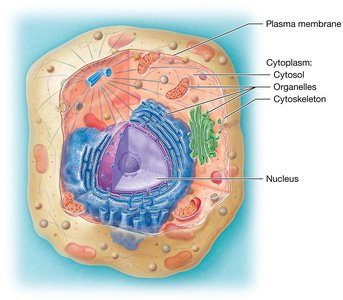
Most animal cells share three basic components:
Plasma Membrane: The outer boundary that separates the cell from its environment.
Cytoplasm: The internal fluid (cytosol), organelles, and cytoskeleton.
Nucleus: The control center containing DNA and the site of RNA synthesis.
Cell Size and Diversity
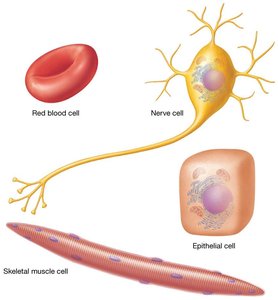
Cells vary greatly in size and shape, allowing for specialized functions. Examples include red blood cells, nerve cells, epithelial cells, and skeletal muscle cells.
The Plasma Membrane
The Phospholipid Bilayer
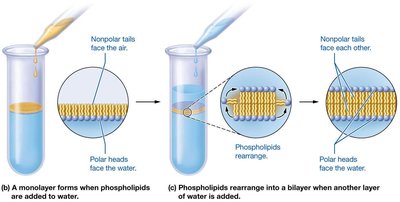
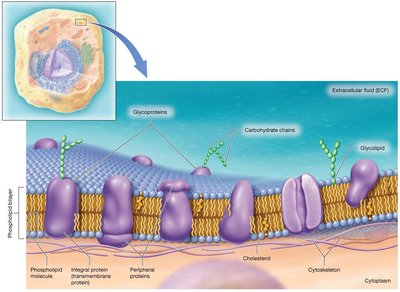
The plasma membrane is primarily composed of a phospholipid bilayer, which forms a selective barrier between the extracellular fluid (ECF) and the cytosol.
Phospholipids: Have hydrophilic (water-loving) polar heads and hydrophobic (water-fearing) nonpolar tails.
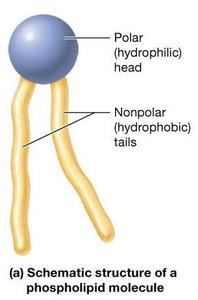
When exposed to water, phospholipids arrange themselves so that the hydrophilic heads face water and the hydrophobic tails are shielded from water, forming a bilayer.
The Fluid Mosaic Model
The plasma membrane is described by the fluid mosaic model, which highlights its dynamic nature and the presence of various proteins, lipids, and carbohydrates.
Fluidity: Phospholipids and proteins move laterally, allowing the membrane to be flexible and self-healing.
Mosaic: The membrane contains a variety of proteins (integral and peripheral), cholesterol, glycolipids, and glycoproteins.
Membrane Proteins
Integral Proteins: Span the membrane; if they reach both sides, they are called transmembrane proteins.
Peripheral Proteins: Located on one side of the membrane, often attached to the cytoskeleton.
Functions of Membrane Proteins
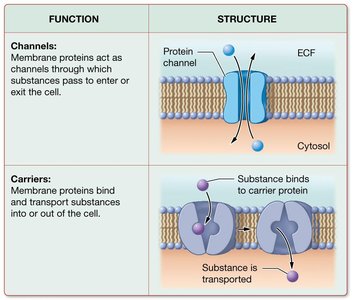
Channels: Allow substances to pass through the membrane.
Carriers: Transport substances across the membrane.
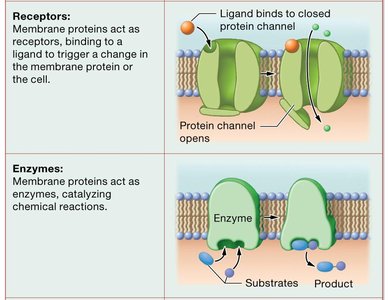
Receptors: Bind ligands to trigger cellular changes.
Enzymes: Catalyze chemical reactions.
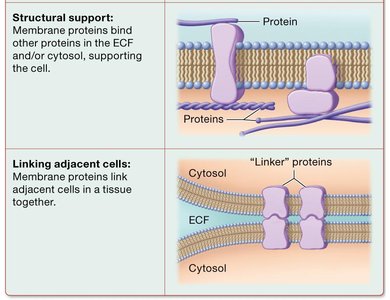
Structural Support: Maintain cell shape and integrity.
Linker Proteins: Connect adjacent cells in tissues.
Other Membrane Components
Cholesterol: Stabilizes membrane structure, especially with temperature changes.
Glycolipids and Glycoproteins: Involved in cell recognition and found on the membrane's exterior.
Transport Across the Plasma Membrane
Passive Transport
Passive transport does not require energy and relies on concentration gradients.
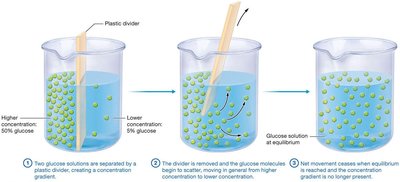
Diffusion: Movement of solute from high to low concentration.
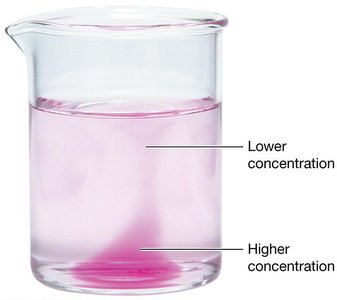
Driven by the kinetic energy of molecules until equilibrium is reached.
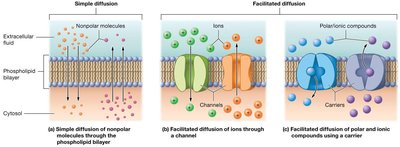
Simple Diffusion: Nonpolar molecules (e.g., O2, CO2, lipids) pass directly through the bilayer.
Facilitated Diffusion: Polar or charged molecules (e.g., ions, glucose) cross via channel or carrier proteins.
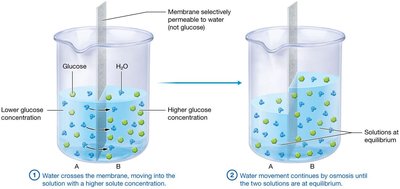
Osmosis: Movement of water across a selectively permeable membrane from low to high solute concentration, often via aquaporins.
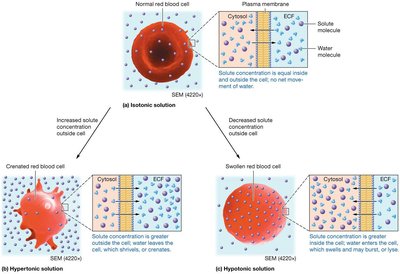
Tonicity: Describes the ability of a solution to cause a cell to gain or lose water.
Isotonic: No net water movement; cell volume remains stable.
Hypertonic: Cell loses water and shrivels (crenates).
Hypotonic: Cell gains water, swells, and may burst (lyse).
Active Transport
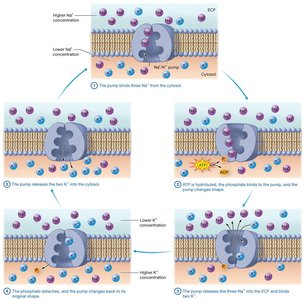
Active transport requires energy (ATP) to move substances against their concentration gradients.
Primary Active Transport: Direct use of ATP to transport molecules (e.g., Na+/K+ pump moves 3 Na+ out and 2 K+ in).
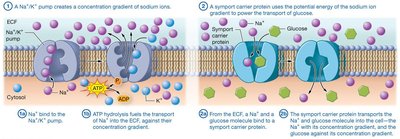
Secondary Active Transport: Uses the energy from a concentration gradient created by primary active transport to move another substance.
Vesicular Transport
Large particles and macromolecules are transported via vesicles, requiring ATP.
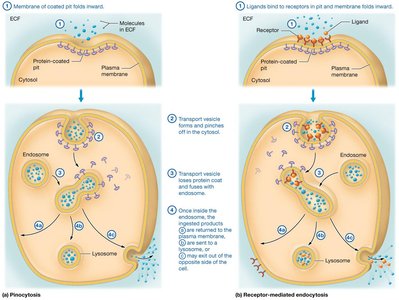
Endocytosis: Bringing substances into the cell.
Phagocytosis: "Cell eating" of large particles by phagocytes.
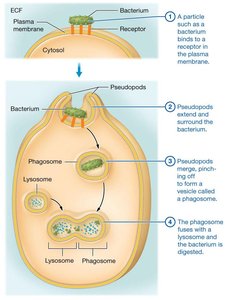
Pinocytosis: "Cell drinking" of extracellular fluid and dissolved substances.
Receptor-Mediated Endocytosis: Specific uptake of substances via receptors.
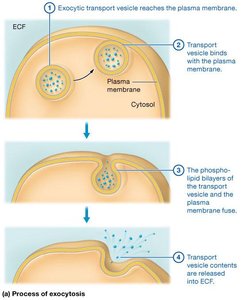
Exocytosis: Release of substances from the cell; also replenishes the plasma membrane.
Summary Table: Plasma Membrane Transport
Type of Transport | Definition | Example(s) |
|---|---|---|
Simple Diffusion | Movement of solute with its concentration gradient through the plasma membrane unaided by a transport protein; energy source is the solute’s own kinetic energy. | Oxygen, Carbon dioxide, Lipids |
Facilitated Diffusion | Movement of solute with its concentration gradient with the help of a carrier or channel protein; energy source is the solute’s own kinetic energy. | Sodium ions, Potassium ions, Calcium ions, Glucose, Amino acids |
Osmosis | Movement of solvent (water) from a solution of lower solute concentration to one of higher solute concentration through a selectively permeable membrane. | Water absorption from the intestinal lining, Water reabsorption from the kidneys |
Primary Active Transport | Movement of solute against its concentration gradient using ATP. | Na+/K+ ATPase pump |
Secondary Active Transport | ATPase pump drives a solute out of (or into) the cell against its concentration gradient. Movement of this solute with its concentration gradient back into the cell is used to power the transport of another solute against its concentration gradient. | Symporters use sodium ion gradient to bring glucose, chloride ions, and bicarbonate ions into the cell. |
Phagocytosis | "Cell eating"; bringing large substances or particles into the cell via a phagosome; ATP required. | Ingestion of bacteria and cell debris by phagocytes |
Pinocytosis | "Cell drinking"; bringing substances in the ECF into the cell via a transport vesicle formed from a protein-coated pit; ATP required. | Nutrient transport |
Receptor-Mediated Endocytosis | Bringing a specific substance into a transport vesicle using receptors on the plasma membrane; ATP required. | Cholesterol, iron, and hormone transport |
Exocytosis | Release of a substance from the cell via an exocytic transport vesicle; ATP required. | Secretion of hormones, neurotransmitters, and enzymes |
Key Equations
Osmotic Pressure: Where is osmotic pressure, is the van 't Hoff factor, is molarity, is the gas constant, and is temperature in Kelvin.
Additional info:
Electrophysiology: The resting membrane potential is typically -70 mV in neurons, maintained by the Na+/K+ pump and selective permeability of the plasma membrane.
Clinical relevance: Disruption of membrane transport can lead to diseases such as cystic fibrosis, diabetes, and neurological disorders.
