 Back
The Cellular Level of Organization: Structure and Function of Cells
Study Guide - Smart Notes
 Tailored notes based on your materials, expanded with key definitions, examples, and context.
The Cellular Level of Organization
Introduction to Cells
Cells are the fundamental units of life, forming the building blocks of all plants and animals. Each cell is capable of performing all vital physiological functions and maintaining homeostasis at the cellular level.
Definition: A cell is the smallest structural and functional unit of an organism.
Homeostasis: Each cell regulates its internal environment to maintain stable conditions.
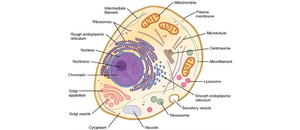
Cell Structure and Components
Major Components of a Cell
Cells are composed of three main parts: the plasma membrane, cytoplasm, and nucleus.
Plasma Membrane: Separates the cytoplasm from the extracellular fluid.
Cytoplasm: Contains cytosol (intracellular fluid) and organelles.
Nucleus: The control center containing genetic material.
Plasma Membrane
The plasma membrane is a selectively permeable barrier that regulates the movement of substances into and out of the cell.
Physical Isolation: Separates intracellular and extracellular environments.
Regulation: Controls entry and exit of ions, nutrients, and waste products.
Environmental Monitoring: Senses changes in extracellular and intracellular fluid composition.
Structural Support: Anchors cells and tissues.
Membrane Composition
Lipids: Phospholipids (form bilayer), cholesterol (membrane stability), glycolipids.
Proteins: Integral (span membrane, transporters), peripheral (surface, enzymes, receptors).
Phospholipid Bilayer
Hydrophilic Heads: Face watery environments inside and outside the cell.
Hydrophobic Tails: Face inward, forming a barrier to water-soluble substances.
Membrane Proteins
Anchoring Proteins: Stabilize cell position.
Recognition Proteins: Identify cells as normal or abnormal.
Enzymes: Catalyze chemical reactions.
Receptor Proteins: Bind ligands (e.g., hormones).
Carrier Proteins: Transport specific solutes.
Channels: Regulate water and solute flow.
Cytoplasm and Organelles
Cytoplasm
The cytoplasm includes all cellular material between the plasma membrane and the nucleus. It consists of cytosol (fluid), organelles, and inclusions (insoluble materials such as pigments and glycogen).
Types of Organelles
Non-membranous: Cytoskeleton, microvilli, centrioles, cilia, ribosomes, proteasomes.
Membranous: Endoplasmic reticulum (ER), Golgi apparatus, lysosomes, peroxisomes, mitochondria.
Endoplasmic Reticulum (ER)
Rough ER: Studded with ribosomes; synthesizes and modifies proteins.
Smooth ER: Lacks ribosomes; synthesizes lipids, detoxifies toxins, metabolizes carbohydrates, and produces steroid hormones (e.g., estrogen).
Golgi Apparatus
Sorts, modifies, and ships proteins from the ER.
Produces lysosomes and packages materials for export (exocytosis).
Lysosomes and Peroxisomes
Lysosomes: Contain digestive enzymes for breaking down waste and cellular debris (phagocytosis).
Peroxisomes: Break down fatty acids and detoxify harmful substances (e.g., hydrogen peroxide via catalase).
Mitochondria
Double-membraned organelles responsible for aerobic metabolism (cellular respiration).
Produce ATP, the cell’s main energy currency.
Contain their own DNA.
Ribosomes
Sites of protein synthesis.
Free ribosomes synthesize proteins for the cytosol; fixed ribosomes (on rough ER) synthesize proteins for export or membranes.
Cytoskeleton
Network of microtubules, microfilaments, and intermediate filaments.
Maintains cell shape, enables movement, and assists in cell division.
The Nucleus
Structure and Function
The nucleus is the largest organelle and serves as the cell’s control center, housing genetic material (DNA).
Nuclear Envelope: Double membrane surrounding the nucleus.
Nuclear Pores: Allow communication between nucleus and cytoplasm.
Nucleolus: Site of ribosome assembly.
Genetic Material
DNA: Contains instructions for protein synthesis.
Gene: Segment of DNA coding for one protein.
Chromatin: Loosely coiled DNA (non-dividing cells).
Chromosomes: Tightly coiled DNA (dividing cells).
DNA and Protein Synthesis
DNA Structure
Composed of nucleotides: deoxyribose sugar, phosphate group, and nitrogenous base (A, T, C, G).
Double helix structure with complementary base pairing (A-T, C-G).
DNA Replication
DNA replication is the process of copying DNA before cell division.
Initiation: DNA strands separate (helicase).
Elongation: New complementary strands synthesized (DNA polymerase).
Termination: Two identical DNA molecules formed.
Protein Synthesis
Transcription: DNA is transcribed into mRNA in the nucleus.
Translation: Ribosomes read mRNA in the cytoplasm to assemble amino acids into proteins.
Membrane Transport
Types of Transport
Passive Transport: No energy required (diffusion, facilitated diffusion, osmosis).
Active Transport: Requires energy (ATP) to move substances against their concentration gradient (e.g., sodium-potassium pump).
Vesicular Transport: Endocytosis and exocytosis for bulk movement of materials.
Diffusion
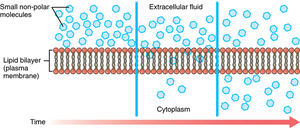
Diffusion is the movement of molecules from an area of high concentration to low concentration. Simple diffusion allows small, non-polar molecules (e.g., O2, CO2) to pass through the lipid bilayer.
Facilitated Diffusion
Uses membrane proteins (channels or carriers) for water-soluble or polar molecules.
Osmosis and Tonicity
Osmosis: Diffusion of water across a semipermeable membrane via aquaporins.
Tonicity: The effect of a solution on cell volume (isotonic, hypertonic, hypotonic).
Cell Cycle and Division
Phases of the Cell Cycle
Interphase: G1 (growth), S (DNA replication), G2 (preparation for division).
Mitosis: Prophase, metaphase, anaphase, telophase (nuclear division).
Cytokinesis: Division of cytoplasm, forming two daughter cells.
Mitosis vs. Meiosis
Mitosis: Produces two genetically identical diploid cells (body cells).
Meiosis: Produces four genetically unique haploid cells (gametes: sperm and egg).
Tumors and Cancer
Cell Growth and Cancer
Tumor (Neoplasm): Abnormal cell growth and division.
Benign Tumor: Contained, not life-threatening.
Malignant Tumor: Invades tissues, can metastasize (spread).
Cancer: Uncontrolled mitosis, loss of normal growth regulation.
Chemotherapy: Blocks cell division (mitosis).
Summary Table: Membranous vs. Non-Membranous Organelles
Membranous Organelles | Non-Membranous Organelles |
|---|---|
Endoplasmic Reticulum (Rough & Smooth) | Cytoskeleton |
Golgi Apparatus | Microvilli |
Lysosomes | Centrioles |
Peroxisomes | Cilia |
Mitochondria | Ribosomes |
Proteasomes |
