 Back
The Chemical Level of Organization: Foundations for Anatomy & Physiology
Study Guide - Smart Notes
 Tailored notes based on your materials, expanded with key definitions, examples, and context.
The Chemical Level of Organization
An Introduction to Chemistry in Anatomy & Physiology
Chemistry is the science that studies the structure of matter, including atoms, molecules, and the ways they interact to form the substances essential for life. Understanding chemistry is fundamental to grasping physiological processes at the molecular and cellular levels.
Atoms and Atomic Structure
Basic Structure of Atoms
Matter: Anything that occupies space and has mass; composed of atoms.
Atoms: The smallest units of matter that retain the properties of an element.
Subatomic Particles:
Protons: Positively charged, 1 mass unit.
Neutrons: Neutral, 1 mass unit.
Electrons: Negatively charged, very low mass.
Atomic Number: Number of protons in the nucleus; determines the element.
Nucleus: Central region containing protons and neutrons.
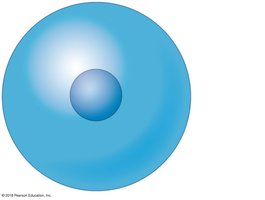
Electron Cloud: Spherical area around the nucleus where electrons are found.
Electron Shells: Energy levels where electrons reside; the outermost shell (valence shell) determines chemical bonding.
Principal Elements in the Human Body
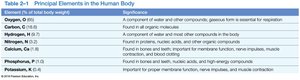
The human body is composed of several key elements, each with specific physiological roles.
Element (% body weight) | Significance |
|---|---|
Oxygen (O, 65%) | Component of water and other compounds; essential for respiration |
Carbon (C, 18.6%) | Found in all organic molecules |
Hydrogen (H, 9.7%) | Component of water and most other compounds in the body |
Nitrogen (N, 3.2%) | Found in proteins, nucleic acids, and other organic compounds |
Calcium (Ca, 1.8%) | Found in bones and teeth; important for membrane function, nerve impulses, muscle contraction, and blood clotting |
Phosphorus (P, 1.0%) | Found in bones and teeth, nucleic acids, and high-energy compounds |
Potassium (K, 0.4%) | Important for proper membrane function, nerve impulses, and muscle contraction |
Element (% body weight) | Significance |
|---|---|
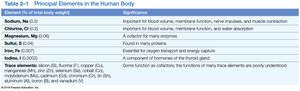
Sodium (Na, 0.2%) | Important for blood volume, membrane function, nerve impulses, muscle contraction |
Chlorine (Cl, 0.2%) | Important for blood volume, membrane function, water absorption |
Magnesium (Mg, 0.06%) | Cofactor for many enzymes |
Sulfur (S, 0.04%) | Found in many proteins |
Iron (Fe, 0.007%) | Essential for oxygen transport and energy capture |
Iodine (I, 0.0002%) | A component of hormones of the thyroid gland |
Trace elements | Some function as cofactors; the functions of many trace elements are poorly understood |
Isotopes and Atomic Mass
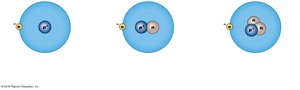
Isotopes: Atoms of the same element with different numbers of neutrons (different mass numbers).
Mass Number: Sum of protons and neutrons in the nucleus.
Electrons and Energy Levels
Electrons occupy energy levels (shells) around the nucleus.
Lower shells fill first; the outermost shell (valence shell) determines chemical reactivity and bonding.
Molecules and Compounds
Chemical Bonds
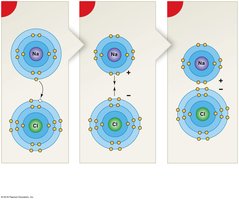
Chemical bonds are forces that hold atoms together in molecules and compounds. They involve the sharing, gaining, or losing of electrons.
Ionic Bonds: Formed when one atom donates electrons (becoming a cation) and another accepts them (becoming an anion). The resulting opposite charges attract.
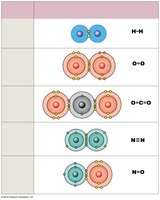
Covalent Bonds: Formed when atoms share electrons. Can be single, double, or triple bonds depending on the number of shared electron pairs.
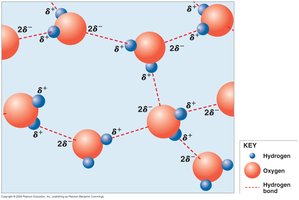
Hydrogen Bonds: Weak attractions between a slightly positive hydrogen atom and a slightly negative atom (often oxygen or nitrogen) in another molecule.
Polar and Nonpolar Covalent Bonds
Nonpolar Covalent Bonds: Electrons are shared equally between atoms.
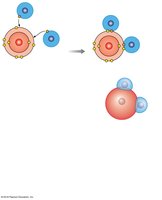
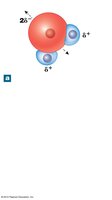
Polar Covalent Bonds: Electrons are shared unequally, resulting in partial charges (e.g., water molecules).
Hydrogen Bonds and Water Properties
Hydrogen bonds between water molecules create surface tension and influence the structure of biological molecules.
Chemical Reactions
Types of Chemical Reactions
Decomposition (Catabolism): Breaks chemical bonds (e.g., AB → A + B).
Synthesis (Anabolism): Forms chemical bonds (e.g., A + B → AB).
Exchange: Involves both decomposition and synthesis (e.g., AB + CD → AD + CB).
Reversible: Can proceed in both directions (e.g., A + B ↔ AB).
Metabolism is the sum of all chemical reactions in the body.
Enzymes and Activation Energy
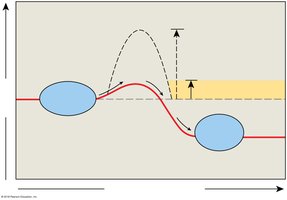
Enzymes: Protein catalysts that lower the activation energy required for reactions, allowing them to proceed rapidly at body temperature.
Activation Energy: The minimum energy required to start a chemical reaction.
Inorganic and Organic Compounds
Classification
Inorganic Compounds: Do not contain both carbon and hydrogen (e.g., water, oxygen, carbon dioxide, salts).
Organic Compounds: Contain carbon and hydrogen; include carbohydrates, lipids, proteins, and nucleic acids.
Properties of Water
Importance of Water
Accounts for up to two-thirds of body weight.
Acts as a solvent, reactant, and temperature buffer.
Provides lubrication to reduce friction.
Solubility and Hydration Spheres
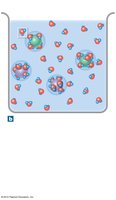
Solubility: Water dissolves many substances due to its polarity.
Hydration Spheres: Water molecules surround ions and polar molecules, keeping them in solution.
Hydrophilic and Hydrophobic Substances
Hydrophilic: Substances that dissolve in water (polar or ionic).
Hydrophobic: Substances that do not dissolve in water (nonpolar, e.g., oils).
Electrolytes
Electrolytes: Inorganic ions that conduct electricity in solution; essential for nerve and muscle function.
pH and Homeostasis
pH Scale
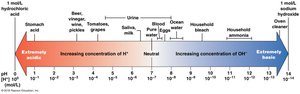
pH: A measure of hydrogen ion concentration; lower pH = more acidic, higher pH = more basic.
Neutral pH: pH 7 (pure water).
Acidic: pH < 7; Basic (Alkaline): pH > 7.
Human blood pH: 7.35–7.45.
Acids, Bases, Salts, and Buffers
Acids: Proton donors; release H+ in solution.
Bases: Proton acceptors; remove H+ from solution.
Salts: Compounds that dissociate into ions other than H+ or OH–.
Buffers: Compounds that stabilize pH by removing or replacing H+; essential for homeostasis (e.g., carbonic acid–bicarbonate system).
Organic Molecules: Carbohydrates, Lipids, Proteins, and Nucleic Acids
Carbohydrates
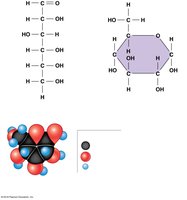
Composed of C, H, and O in a 1:2:1 ratio.
Monosaccharides: Simple sugars (e.g., glucose, fructose).
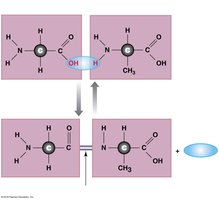
Disaccharides: Two monosaccharides joined by dehydration synthesis (e.g., sucrose).
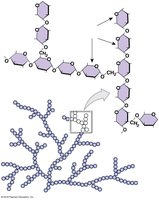
Polysaccharides: Long chains of monosaccharides (e.g., glycogen, starch, cellulose).
Lipids
Mainly hydrophobic molecules such as fats, oils, and waxes.
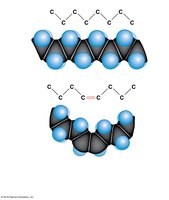
Fatty Acids: Long hydrocarbon chains with a carboxyl group; can be saturated (no double bonds) or unsaturated (one or more double bonds).
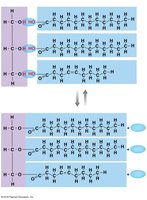
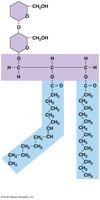
Glycerides: Fatty acids attached to glycerol; includes monoglycerides, diglycerides, and triglycerides (energy storage, insulation, protection).
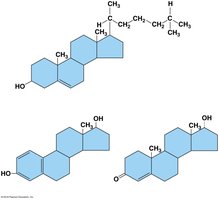
Steroids: Four-ringed carbon structures; include cholesterol, sex hormones, and steroid hormones.
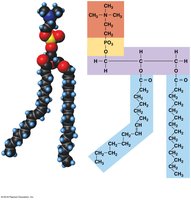
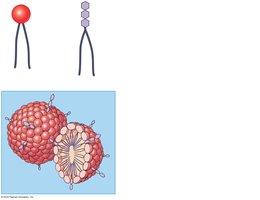
Phospholipids and Glycolipids: Structural lipids with hydrophilic heads and hydrophobic tails; form cell membranes and micelles in water.
Proteins
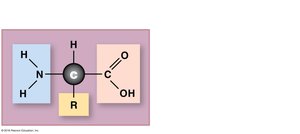
Most abundant and functionally diverse organic molecules; composed of amino acids (20 types).
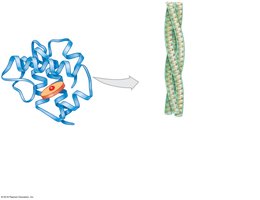
Functions: Support, movement, transport, buffering, metabolic regulation (enzymes), coordination and control (hormones), defense (antibodies).
Structure:
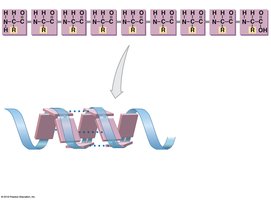
Primary: Sequence of amino acids.
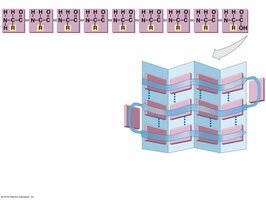
Secondary: Hydrogen bonding forms alpha helices or beta sheets.
Tertiary: Three-dimensional folding.
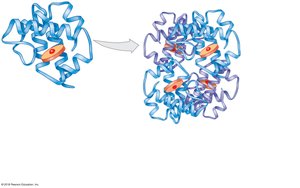
Quaternary: Multiple polypeptide chains interact.
Enzymes
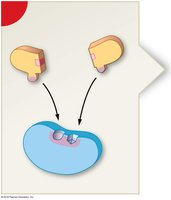
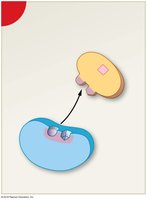
Proteins that catalyze specific biochemical reactions by lowering activation energy.
Enzyme activity is affected by substrate concentration, temperature, and pH.
Glycoproteins and Proteoglycans
Glycoproteins: Large proteins with small carbohydrate groups; important in cell membranes and mucus.
Proteoglycans: Large polysaccharides linked to polypeptides; increase fluid viscosity.
Nucleic Acids
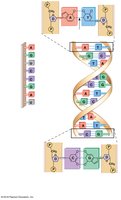
Store and process genetic information; two types: DNA (deoxyribonucleic acid) and RNA (ribonucleic acid).
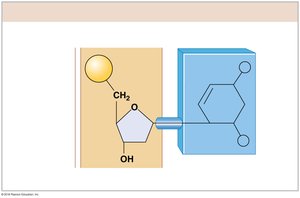
Composed of nucleotides (pentose sugar, phosphate group, nitrogenous base).
DNA: Double-stranded helix; bases are adenine (A), thymine (T), cytosine (C), guanine (G).
RNA: Single-stranded; bases are adenine (A), uracil (U), cytosine (C), guanine (G).
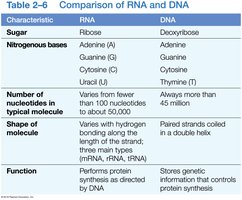
Characteristic | RNA | DNA |
|---|---|---|
Sugar | Ribose | Deoxyribose |
Nitrogenous bases | A, G, C, U | A, G, C, T |
Number of nucleotides | Fewer than 100 to about 50,000 | Always more than 45 million |
Shape | Single strand | Double helix |
Function | Protein synthesis | Genetic information storage |
High-Energy Compounds
High-energy compounds (e.g., ATP) store and transfer energy for cellular processes.
ATP (Adenosine Triphosphate): Main energy currency of the cell; formed by adding phosphate groups to adenosine.
ATPase: Enzyme that catalyzes the conversion of ATP to ADP, releasing energy.
Additional info: This summary provides foundational chemical concepts essential for understanding anatomy and physiology, including atomic structure, chemical bonding, water properties, pH, and the major classes of biomolecules.
