 Back
BackThe Chemical Level of Organization: Foundations for Anatomy & Physiology
Study Guide - Smart Notes
 Tailored notes based on your materials, expanded with key definitions, examples, and context.
Chapter 2: The Chemical Level of Organization
Atoms and Atomic Structure
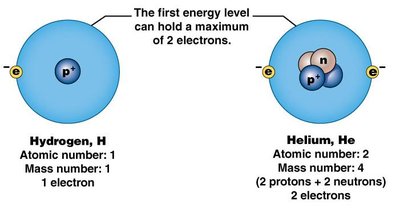
The atom is the smallest stable unit of matter, composed of subatomic particles: protons (positively charged), neutrons (neutral), and electrons (negatively charged). Protons and neutrons are similar in size and mass and are located within the nucleus at the center of the atom, while electrons are much lighter and orbit the nucleus in an electron cloud.
Atomic number: The number of protons in an atom, unique for each element.
Atoms typically have equal numbers of protons and electrons, making them electrically neutral (except for ions).
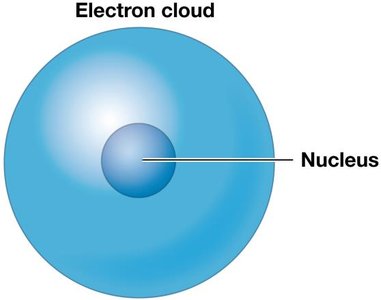
Electron cloud: The region around the nucleus where electrons travel at high speed. Electron shells are two-dimensional representations of these clouds, with electrical attraction keeping electrons in their shells.
Elements and Isotopes
An element is a pure substance composed of atoms with the same number of protons. Each element has a unique atomic number and a chemical symbol (e.g., O for oxygen, Na for sodium). The human body is primarily composed of a few principal elements, each with specific biological roles.
Element | % Body Weight | Significance |
|---|---|---|
Oxygen (O) | 65 | Component of water, essential for respiration |
Carbon (C) | 18.6 | Found in all organic molecules |
Hydrogen (H) | 9.7 | Component of water and most compounds |
Nitrogen (N) | 3.2 | Found in proteins, nucleic acids |
Calcium (Ca) | 1.8 | Bones, teeth, nerve impulses, muscle contraction |
Phosphorus (P) | 1.0 | Bones, teeth, nucleic acids |
Potassium (K) | 0.4 | Membrane function, nerve impulses |
Sodium (Na) | 0.2 | Blood volume, nerve impulses |
Chlorine (Cl) | 0.2 | Blood volume, water absorption |
Magnesium (Mg) | 0.06 | Cofactor for enzymes |
Sulfur (S) | 0.04 | Found in proteins |
Iron (Fe) | 0.007 | Oxygen transport |
Iodine (I) | 0.0002 | Thyroid hormones |
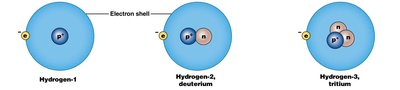
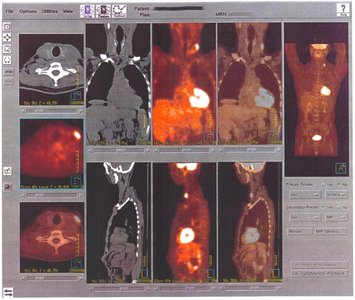
Isotopes are forms of the same element with different numbers of neutrons, resulting in different mass numbers but similar chemical properties. Radioisotopes have unstable nuclei and emit radiation as they decay, a process measured by half-life. Some radioisotopes are used in medical diagnostics, such as PET scans.
Electrons and Energy Levels
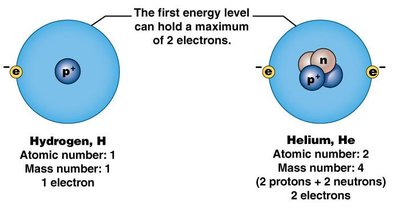
Electrons occupy energy levels or shells around the nucleus. The first shell holds up to two electrons, while the second and third can each hold up to eight. The valence shell is the outermost shell, and its electron count determines an atom's chemical reactivity. Atoms with unfilled valence shells are reactive, while those with filled shells are stable (inert).
Molecules and Compounds
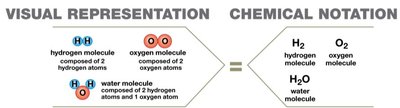
Molecules are formed when two or more atoms share electrons. Compounds are chemical substances composed of atoms of two or more different elements. Not all molecules are compounds (e.g., O2), and not all compounds are molecules (e.g., NaCl, which is held together by ionic bonds rather than shared electrons).
Ions and Ionic Bonds
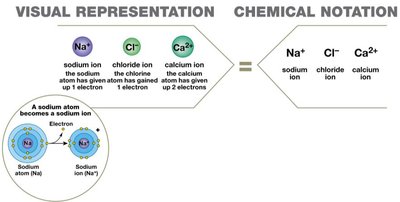
An ion is an atom or group of atoms with an electrical charge, formed by gaining or losing electrons. Cations are positively charged (loss of electrons), and anions are negatively charged (gain of electrons). Ionic bonds are formed by the attraction between cations and anions, such as in sodium chloride (NaCl).
Covalent Bonds
Covalent bonds involve the sharing of electrons between atoms. Single, double, or triple covalent bonds are formed depending on the number of shared electron pairs. Nonpolar covalent bonds involve equal sharing, while polar covalent bonds involve unequal sharing, resulting in partial charges (e.g., water molecules).
Hydrogen Bonds
Hydrogen bonds are weak attractions between the partial positive charge of a hydrogen atom in a polar covalent bond and the partial negative charge of another atom (O, N, or F) in a different polar covalent bond. These bonds are crucial in stabilizing the structures of proteins and nucleic acids.
Chemical Reactions
Chemical reactions involve the formation or breaking of bonds between atoms. They are represented by chemical equations, with reactants on the left and products on the right. Major types include:
Decomposition reactions: AB → A + B
Hydrolysis: AB + H2O → AH + BOH
Synthesis reactions: A + B → AB
Dehydration synthesis: AH + BOH → AB + H2O
Exchange reactions: AB + CD → AD + CB
Reversible reactions: A + B ↔ AB
pH and Homeostasis
pH measures the concentration of hydrogen ions (H+) in a solution. A pH of 7 is neutral, below 7 is acidic, and above 7 is basic (alkaline). The body tightly regulates blood pH (7.35–7.45) to maintain homeostasis; deviations can cause acidosis or alkalosis, affecting cellular function and survival.
Macromolecules
There are four major classes of macromolecules essential for life:
Carbohydrates: Composed of carbon, hydrogen, and oxygen (1:2:1 ratio). Main energy source. Monomer: monosaccharide (e.g., glucose).
Lipids: Composed mainly of carbon and hydrogen, with less oxygen. Includes fatty acids, triglycerides, phospholipids, and steroids. Functions: energy storage, insulation, membrane structure.
Proteins: Polymers of amino acids. Functions: structure, movement, transport, buffering, metabolic regulation (enzymes), coordination, defense.
Nucleic acids: DNA and RNA, composed of nucleotide monomers. Store and process genetic information.
Carbohydrates
Carbohydrates are classified as monosaccharides (simple sugars), disaccharides (two monosaccharides joined), and polysaccharides (long chains of monosaccharides). Examples include glucose, fructose (isomers), sucrose (disaccharide), starch, cellulose, and glycogen (polysaccharides).
Lipids
Lipids include fatty acids (saturated and unsaturated), glycerides (mono-, di-, and triglycerides), steroids (e.g., cholesterol, hormones), and phospholipids (major component of cell membranes). Triglycerides serve as energy reserves, insulation, and protection.
Proteins
Proteins are polymers of 20 different amino acids, linked by peptide bonds. They have four levels of structure: primary (sequence), secondary (alpha helix, beta sheet), tertiary (3D folding), and quaternary (multiple polypeptides). Protein function depends on proper folding; denaturation disrupts function. Many proteins are enzymes, which catalyze biochemical reactions by lowering activation energy.
Nucleic Acids
Nucleic acids (DNA and RNA) are polymers of nucleotides, each consisting of a pentose sugar, phosphate group, and nitrogenous base (A, G, C, T, U). DNA stores genetic information; RNA translates it into proteins. DNA is double-stranded (A-T, C-G base pairs), while RNA is single-stranded (A, U, C, G).
High-Energy Compounds
Cells use high-energy compounds, such as ATP (adenosine triphosphate), to store and transfer energy. ATP is generated from ADP and phosphate via phosphorylation and is broken down by ATPase to release energy for cellular processes.
