 Back
The Chemistry of Life: Foundations for Anatomy & Physiology
Study Guide - Smart Notes
 Tailored notes based on your materials, expanded with key definitions, examples, and context.
Ch. 2 The Chemistry of Life
Atoms: The Smallest Unit of Matter
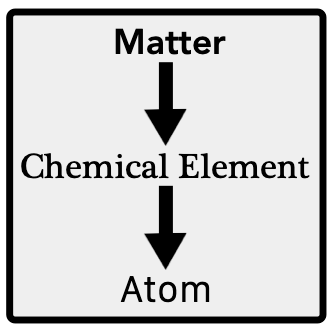
All matter is composed of atoms, which are the fundamental building blocks of chemical elements. Atoms combine to form all substances, both living and nonliving.
Matter: Anything that occupies space and has mass (e.g., organisms, rocks, water).
Chemical Element: A pure substance consisting of only one type of atom.
Atom: The smallest unit of an element that retains its chemical properties.
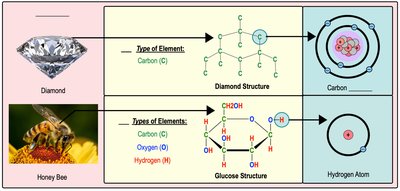
Atoms make up both organic and inorganic matter.
Example: A diamond (pure carbon) and glucose (C6H12O6) are both composed of atoms.
Atomic Structure
Atoms are composed of three subatomic particles, each with distinct properties:
Protons: Positively charged particles found in the nucleus; each has a mass of 1 atomic mass unit (AMU).
Neutrons: Neutral particles (no charge) also located in the nucleus; each has a mass of 1 AMU.
Electrons: Negatively charged particles with negligible mass, found in orbitals (energy shells) around the nucleus.
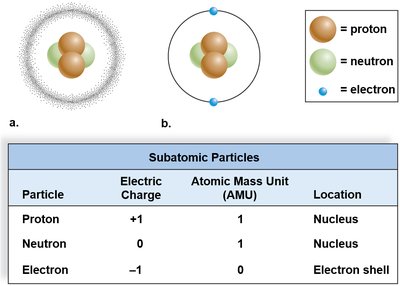
Subatomic Particle | Electric Charge | Atomic Mass Unit (AMU) | Location |
|---|---|---|---|
Proton | +1 | 1 | Nucleus |
Neutron | 0 | 1 | Nucleus |
Electron | -1 | 0 | Electron shell |
Elements of Life
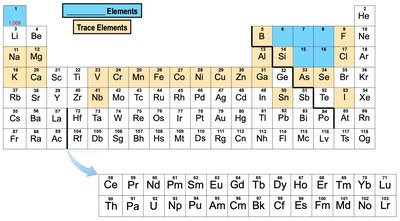
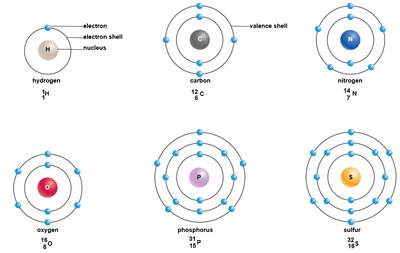
Only a small subset of elements are essential for life. The majority of living matter is composed of six elements: Carbon, Hydrogen, Nitrogen, Oxygen, Phosphorus, and Sulfur (CHNOPS).
Periodic Table: Organizes elements by their chemical properties.
Trace Elements: Required in minute amounts for life.
Atomic Properties
Each atom has unique properties that distinguish one element from another:
Atomic Number: Number of protons in the nucleus; defines the element.
Mass Number: Total number of protons and neutrons in the nucleus.
Atomic Mass: The weighted average mass of all isotopes of an element.
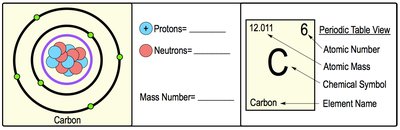
Property | Definition |
|---|---|
Atomic Number | Number of protons |
Mass Number | Number of protons + neutrons |
Atomic Mass | Average mass of all isotopes |
Electron Orbitals & Energy Shells
Electrons occupy orbitals, which are three-dimensional regions around the nucleus. These are visualized as energy shells:
Shells closer to the nucleus are lower in energy; distant shells are higher in energy.
Valence Electrons: Electrons in the outermost shell; determine chemical reactivity.
1st shell holds up to 2 electrons; 2nd shell up to 8; higher shells hold more.
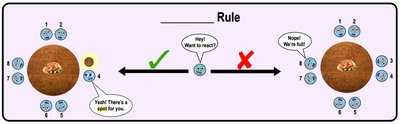
The Octet Rule
Atoms are most stable when their valence shell is full (usually 8 electrons, except for the first shell which is full at 2).
Atoms with incomplete valence shells are more reactive.
Example: Neon is unreactive because its valence shell is full.
Isotopes
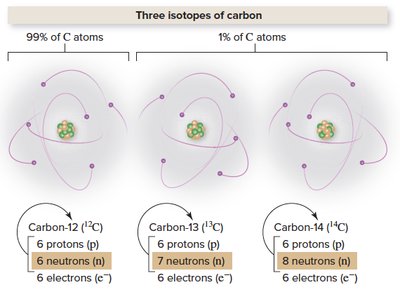
Isotopes are atoms of the same element with different numbers of neutrons, resulting in different mass numbers but identical chemical properties.
Example: Carbon-12, Carbon-13, and Carbon-14 all have 6 protons but different numbers of neutrons.
Radioactive Isotopes: Unstable isotopes that decay, emitting radiation.
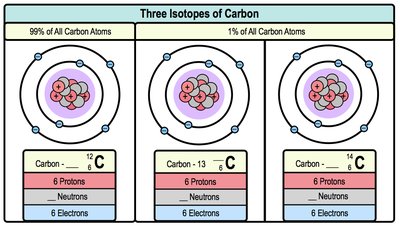
Isotope | Protons | Neutrons | Electrons |
|---|---|---|---|
Carbon-12 | 6 | 6 | 6 |
Carbon-13 | 6 | 7 | 6 |
Carbon-14 | 6 | 8 | 6 |
Chemical Bonding
Chemical bonds are attractive forces that hold atoms together in molecules and compounds.
Molecule: Two or more atoms chemically bonded (e.g., O2).
Compound: Molecule composed of two or more different elements (e.g., H2O).
Chemical Formula: Indicates the types and numbers of atoms in a molecule (e.g., C6H12O6).
Intramolecular vs. Intermolecular Bonds
Intramolecular Bonds: Bonds within a molecule (e.g., covalent bonds in H2O).
Intermolecular Bonds: Bonds between molecules (e.g., hydrogen bonds between water molecules).
Covalent Bonds
Covalent bonds involve the sharing of electron pairs between atoms. They are the strongest type of chemical bond in biological molecules.
Nonpolar Covalent Bonds: Equal sharing of electrons (e.g., H2, O2).
Polar Covalent Bonds: Unequal sharing of electrons due to differences in electronegativity, resulting in partial charges (e.g., H2O).
Noncovalent Bonds
Noncovalent bonds do not involve sharing electrons. They include ionic bonds, hydrogen bonds, and van der Waals interactions.
Ionic Bonds: Attraction between oppositely charged ions (cations and anions).
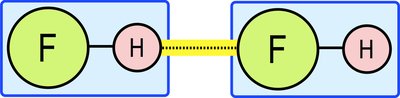
Hydrogen Bonds: Weak attraction between a hydrogen atom covalently bonded to a highly electronegative atom (F, O, N) and another electronegative atom.
Van der Waals Forces: Weak, transient interactions due to temporary dipoles.
Ions: Anions vs. Cations
Ions are atoms or molecules with a net electrical charge due to the loss or gain of electrons.
Anion: Negatively charged ion (gained electrons).
Cation: Positively charged ion (lost electrons).
Properties of Water
Water is a polar molecule with unique properties essential for life, largely due to hydrogen bonding.
Cohesion: Water molecules stick to each other.
Adhesion: Water molecules stick to other substances.
Surface Tension: Difficulty in breaking the surface of water.
High Specific Heat: Water resists temperature changes.
High Heat of Vaporization: Requires significant energy to convert from liquid to gas.
Density: Ice is less dense than liquid water, allowing it to float.
Universal Solvent: Water dissolves many substances due to its polarity.
Acids, Bases, and pH
The concentration of hydrogen ions (H+) in solution determines acidity or basicity, measured by the pH scale.
Acid: Increases H+ concentration in solution.
Base: Decreases H+ concentration (often by releasing OH-).
pH Scale: Ranges from 0 (acidic) to 14 (basic); pH 7 is neutral.
Buffers: Substances that minimize changes in pH by accepting or donating H+.
Carbon and Organic Molecules
Carbon is the backbone of organic molecules, capable of forming four covalent bonds, allowing for diverse molecular structures.
Organic Molecules: Contain carbon and hydrogen, often with other elements.
Hydrocarbons: Molecules made only of carbon and hydrogen.
Functional Groups: Specific groups of atoms that confer characteristic chemical properties (e.g., hydroxyl, carboxyl, amino, phosphate).
Biomolecules: Monomers and Polymers
Biomolecules are essential organic molecules in living organisms, often forming polymers from monomer subunits.
Carbohydrates: Sugars and starches; energy storage and structural support.
Proteins: Polymers of amino acids; structure, enzymes, signaling.
Nucleic Acids: DNA and RNA; store and transmit genetic information.
Lipids: Fats, oils, phospholipids, steroids; energy storage, membranes, signaling.
Polymerization
Dehydration Synthesis: Links monomers by removing water to form polymers.
Hydrolysis: Breaks polymers into monomers by adding water.
Carbohydrates
Carbohydrates are hydrated carbon molecules, classified by size:
Monosaccharides: Single sugar units (e.g., glucose).
Disaccharides: Two covalently linked monosaccharides.
Polysaccharides: Long chains of monosaccharides (e.g., starch, glycogen, cellulose).
Functions: Energy storage (starch in plants, glycogen in animals), structural support (cellulose, chitin).
Proteins
Proteins are polymers of amino acids linked by peptide bonds. They have four levels of structure:
Primary: Amino acid sequence.
Secondary: Alpha-helices and beta-sheets formed by hydrogen bonding.
Tertiary: Overall 3D shape of a polypeptide.
Quaternary: Association of multiple polypeptide chains.
Denaturation: Loss of structure (and function) due to environmental changes.
Chaperones: Proteins that assist in folding or refolding other proteins.
Nucleic Acids
Nucleic acids (DNA and RNA) store and transmit genetic information. They are polymers of nucleotide monomers, each consisting of a phosphate group, a pentose sugar, and a nitrogenous base.
DNA: Double helix, antiparallel strands, bases A-T and C-G.
RNA: Single-stranded, bases A-U and C-G.
Phosphodiester Bonds: Link nucleotides in a chain.
Lipids
Lipids are hydrophobic molecules, not true polymers. Major types include:
Fats (Triglycerides): Glycerol + 3 fatty acids; energy storage.
Phospholipids: Glycerol + 2 fatty acids + phosphate group; major component of cell membranes.
Steroids: Four fused carbon rings (e.g., cholesterol).
Waxes: Fatty acids linked to long-chain alcohols; protective functions.
Energy and Thermodynamics
Energy is the capacity to do work. Biological systems obey the laws of thermodynamics:
First Law: Energy cannot be created or destroyed, only transformed.
Second Law: Every energy transfer increases the entropy (disorder) of the universe; some energy is lost as heat.
Potential Energy: Stored energy (e.g., chemical bonds).
Kinetic Energy: Energy of motion.
Chemical Reactions and ATP
Chemical reactions involve making and breaking bonds. ATP (adenosine triphosphate) is the main energy currency of the cell.
Exergonic Reactions: Release energy.
Endergonic Reactions: Require energy input.
ATP Hydrolysis: Releases energy by breaking a phosphate bond.
Energy Coupling: ATP hydrolysis powers endergonic reactions.
Phosphorylation: Transfer of a phosphate group to another molecule to activate it.
Enzymes
Enzymes are biological catalysts that speed up chemical reactions by lowering activation energy without being consumed.
Substrate: Reactant acted upon by an enzyme.
Active Site: Region of enzyme where substrate binds.
Cofactors and Coenzymes: Non-protein helpers required for enzyme function.
Enzyme Inhibition: Competitive inhibitors bind the active site; noncompetitive inhibitors bind elsewhere (allosteric site).
Environmental Factors: Temperature, pH, and substrate concentration affect enzyme activity; extreme conditions can denature enzymes.
*Additional info: This summary expands on the provided notes with definitions, examples, and academic context to ensure completeness and clarity for college-level anatomy and physiology students.*
