Back
BackThe Chemistry of Life: Foundations for Anatomy & Physiology
Study Guide - Smart Notes
 Tailored notes based on your materials, expanded with key definitions, examples, and context.
The Chemistry of Life
Introduction to Matter and Chemistry
Chemistry is the study of matter and its interactions, forming the foundation for understanding biological processes in Anatomy & Physiology. Matter is anything that has mass and occupies space, existing in three states: solid, liquid, or gas.
Matter: Anything with mass and volume.
Chemistry: The science of matter and its changes.
Atoms and Atomic Structure
Subatomic Particles
An atom is the smallest unit of matter that retains the properties of an element. Atoms are composed of subatomic particles:
Protons (p+): Positively charged, located in the nucleus.
Neutrons (n0): No charge, located in the nucleus.
Electrons (e-): Negatively charged, orbit the nucleus in electron shells.
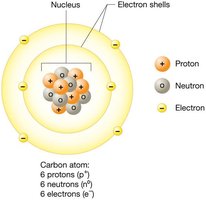
The number of protons defines the element, while the number of neutrons can vary (isotopes). Electrons determine chemical behavior.
Electron Shells and Stability
Electrons occupy energy levels called shells around the nucleus:
1st shell: Holds up to 2 electrons (duet rule).
2nd shell: Holds up to 8 electrons.
3rd shell: Holds up to 8 electrons (for biological atoms), following the octet rule.
Atoms are most stable when their outermost shell is full (2 or 8 electrons).
Elements in the Periodic Table and the Human Body
Elements and Atomic Number
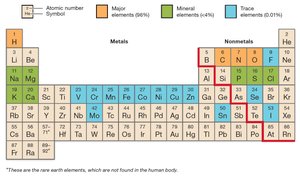
An element is a substance that cannot be broken down by chemical means. Each element is defined by its atomic number (number of protons).
The human body is primarily composed of four elements: hydrogen, oxygen, carbon, and nitrogen.
Other elements include 7 mineral elements and 13 trace elements.
Isotopes and Radioactivity
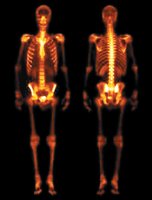
Isotopes are atoms of the same element with different numbers of neutrons (different mass numbers). Radioisotopes are unstable isotopes that emit radiation as they decay.
Applications include cancer therapy, radiotracers, and treatment of thyroid disorders.
Matter Combined: Mixtures and Chemical Bonds
Mixtures
Mixtures are combinations of two or more substances physically intermixed without changing their chemical nature. There are three main types:
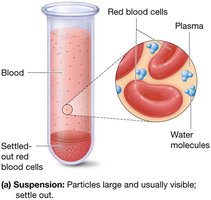
Suspensions: Large, unevenly distributed particles that settle out (e.g., blood).
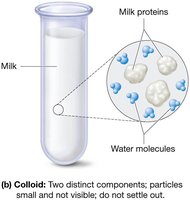
Colloids: Small, evenly distributed particles that do not settle out (e.g., milk).
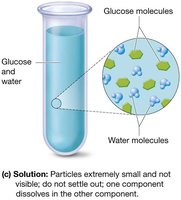
Solutions: Extremely small, evenly distributed particles; solute dissolves in solvent (e.g., glucose in water).
Chemical Bonds
Atoms combine chemically by forming chemical bonds through interactions of their valence electrons. The main types are:
Ionic bonds: Electrons are transferred from a metal to a nonmetal, forming cations and anions (e.g., NaCl).
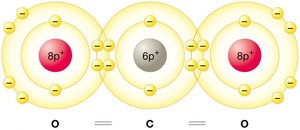
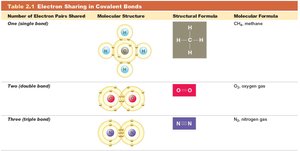
Covalent bonds: Two or more nonmetals share electrons. Can be single, double, or triple bonds.
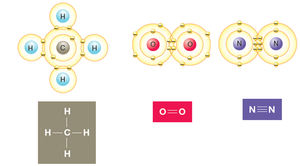
Number of Electron Pairs Shared | Molecular Structure | Structural Formula | Molecular Formula |
|---|---|---|---|
One (single bond) | CH4 (methane) | H–C–H | CH4 |
Two (double bond) | O2 (oxygen gas) | O=O | O2 |
Three (triple bond) | N2 (nitrogen gas) | N≡N | N2 |
Electronegativity and Covalent Bonds
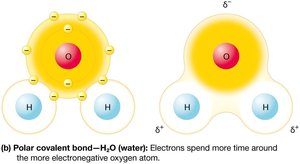
Electronegativity is the ability of an atom to attract electrons. Covalent bonds can be:
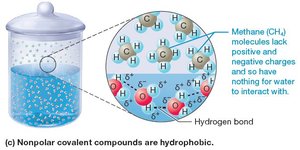
Nonpolar: Electrons are shared equally (e.g., O2, CH4).
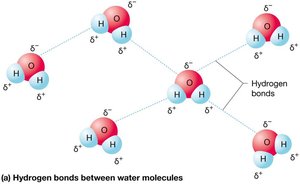
Polar: Electrons are shared unequally, creating dipoles (e.g., H2O).
Hydrogen Bonds
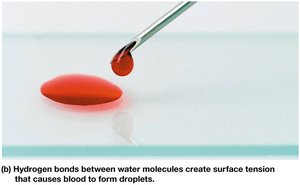
Hydrogen bonds are weak attractions between the partially positive end of one dipole and the partially negative end of another. They are crucial for water's surface tension and the structure of biological molecules.
Chemical Reactions and Energy
Chemical Notation and Reaction Types
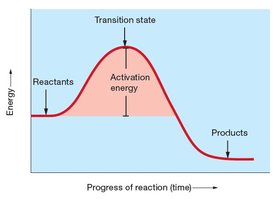
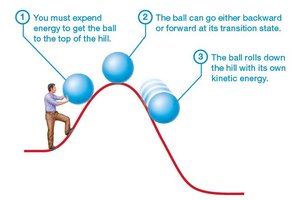
Chemical reactions can be reversible (⇌) or irreversible (→). Energy is required to initiate reactions (activation energy).
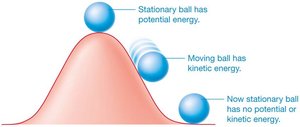
Potential energy: Stored energy.
Kinetic energy: Energy of motion.
Energy in the Human Body
Chemical energy: Stored in bonds; drives metabolism.
Electrical energy: Movement of charged particles (e.g., nerve impulses).
Mechanical energy: Direct movement of objects (e.g., muscle contraction).
Types of Chemical Reactions
Endergonic: Require energy input; products have more energy than reactants.
Exergonic: Release energy; products have less energy than reactants.
Homeostasis and Chemical Reactions
Three fundamental reaction types maintain homeostasis:
Catabolic (decomposition): Large molecules broken into smaller ones.
Anabolic (synthesis): Small molecules joined to form larger ones.
Exchange: Atoms are exchanged between reactants.
Redox (oxidation-reduction): Electrons are transferred; one reactant is oxidized, the other reduced.
Reaction Rates and Enzymes
Activation energy () is the energy required to start a reaction. Enzymes are biological catalysts that lower activation energy, increasing reaction rates without being consumed.
Factors affecting rate: Concentration, temperature, reactant properties, and catalysts.
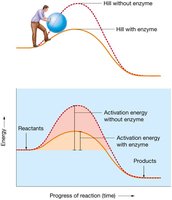
Enzyme Mechanism
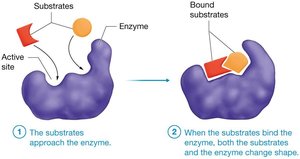
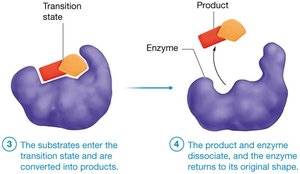
Enzymes use an induced-fit mechanism where substrate binding causes a shape change, facilitating the reaction.
Inorganic Compounds: Water, Acids, Bases, and Salts
Water
Water (H2O) is the most abundant inorganic compound in the body, making up 60–80% of body mass. It has a high heat capacity, acts as a solvent, and provides cushioning and lubrication.
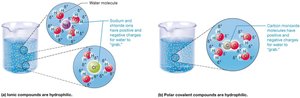
Hydrophilic: Substances that dissolve in water (charged or polar).
Hydrophobic: Substances that do not dissolve in water (nonpolar).
Acids, Bases, and pH
Acids are proton donors; they increase H+ concentration in water. Bases are proton acceptors; they decrease H+ concentration.
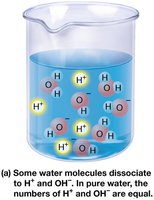
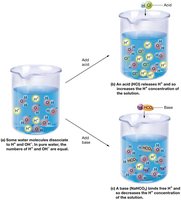
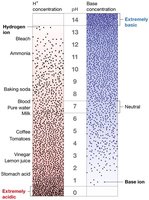
The pH scale (0–14) measures hydrogen ion concentration:
pH 7: Neutral
pH < 7: Acidic
pH > 7: Basic (alkaline)
Buffers resist changes in pH, maintaining homeostasis (e.g., carbonic acid–bicarbonate buffer in blood).
Organic Compounds: Carbohydrates, Lipids, Proteins, and Nucleotides
Monomers and Polymers
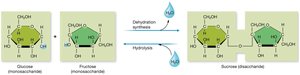
Organic compounds are built from monomers (single units) joined to form polymers by dehydration synthesis. Hydrolysis breaks polymers into monomers using water.
Carbohydrates
Carbohydrates are composed of carbon, hydrogen, and oxygen, and serve as the body's primary fuel source.
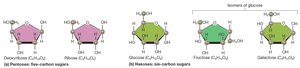
Monosaccharides: Simple sugars (e.g., glucose, fructose, galactose, ribose, deoxyribose).
Disaccharides: Two monosaccharides joined by dehydration synthesis (e.g., sucrose).
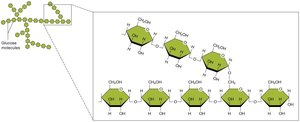
Polysaccharides: Long chains of monosaccharides (e.g., glycogen in animals, starch in plants).
Lipids
Lipids are hydrophobic molecules including fats, oils, phospholipids, and steroids.
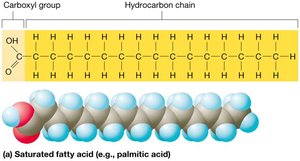
Saturated fatty acids: No double bonds; solid at room temperature.
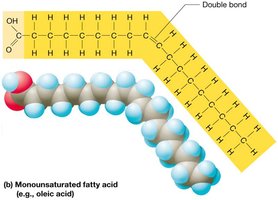
Monounsaturated fatty acids: One double bond; liquid at room temperature.
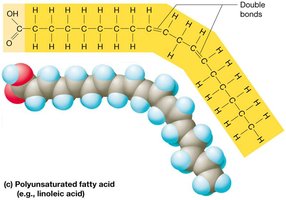
Polyunsaturated fatty acids: Two or more double bonds; liquid at room temperature.
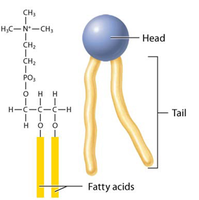
Phospholipids: Glycerol backbone, two fatty acid tails, and a phosphate head; amphiphilic and essential for cell membranes.
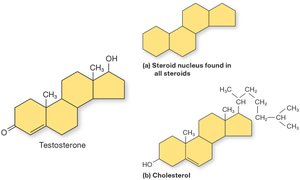
Steroids: Four-ring structure; cholesterol is the precursor for all steroids.
Proteins
Proteins are polymers of amino acids, serving structural, enzymatic, and regulatory roles.
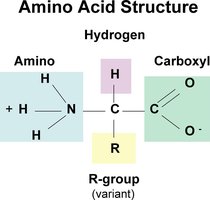
Amino acids: Monomers with a central carbon, amino group, carboxyl group, hydrogen, and R group.
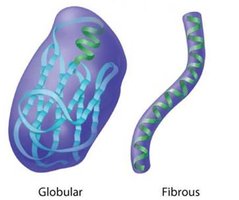
Fibrous proteins: Long, strong, mostly nonpolar (e.g., collagen).
Globular proteins: Spherical, mostly polar, function as enzymes and hormones.
Levels of Protein Structure
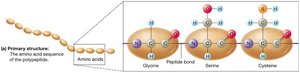
Primary: Amino acid sequence.
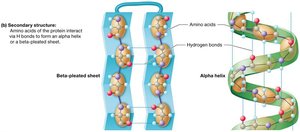
Secondary: Alpha helix or beta-pleated sheet, stabilized by hydrogen bonds.
Tertiary: Three-dimensional folding of a single polypeptide chain.
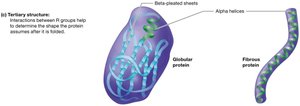
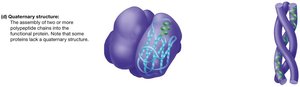
Quaternary: Arrangement of multiple polypeptide chains.
Denaturation disrupts protein structure and function, caused by heat, pH changes, or chemicals.
Nucleotides and Nucleic Acids
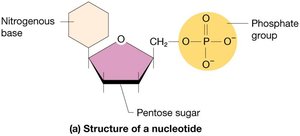
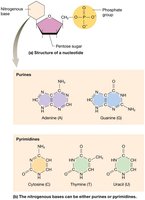
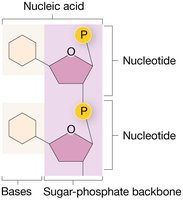
Nucleotides are the building blocks of nucleic acids (DNA and RNA), consisting of a nitrogenous base, a five-carbon sugar, and a phosphate group.
Pyrimidines: Cytosine (C), uracil (U), thymine (T).
Purines: Adenine (A), guanine (G).
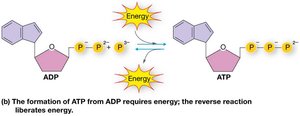
ATP (adenosine triphosphate) is the main energy carrier in cells.
DNA and RNA
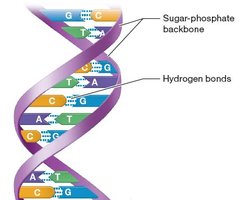
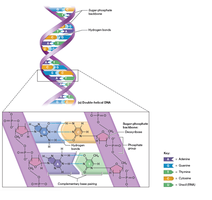
DNA: Double helix, deoxyribose sugar, bases A, T, C, G; complementary base pairing (A=T, C≡G).
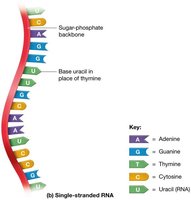
RNA: Single strand, ribose sugar, bases A, U, C, G; uracil replaces thymine.
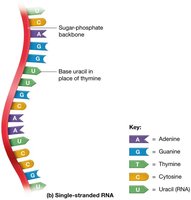
Transcription is the process of copying DNA to RNA; translation is the synthesis of proteins from RNA instructions.