 Back
The Chemistry of Life: Important Biological Molecules
Study Guide - Smart Notes
 Tailored notes based on your materials, expanded with key definitions, examples, and context.
The Chemistry of Life
Inorganic and Organic Molecules
Biological systems rely on both inorganic and organic molecules to sustain life. Inorganic molecules are typically simple and lack carbon, while organic molecules always contain carbon and are more complex.
Inorganic molecules: Examples include water (H2O), oxygen (O2), salts, acids, and bases.
Organic molecules: Include sugars, proteins, nucleic acids, and lipids.
Water: Structure and Properties
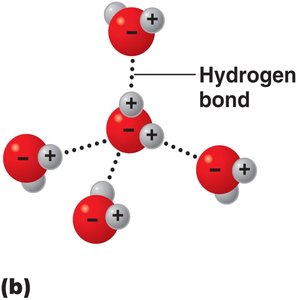
Water is essential for life due to its unique chemical properties. It is a polar molecule, meaning it has an unequal distribution of charge, with oxygen being slightly negative and hydrogen slightly positive. This polarity allows water to form hydrogen bonds, which are critical for its function in cells.
Polarity: Water's polarity enables it to dissolve many substances, making it an excellent solvent.
Cohesion: Attraction between water molecules.
Adhesion: Attraction between water and other substances.
High specific heat: Water absorbs heat, protecting cells from temperature fluctuations.
Salts, Acids, and Bases
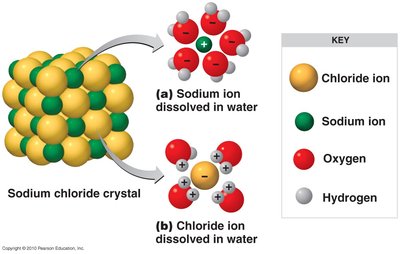
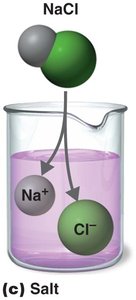
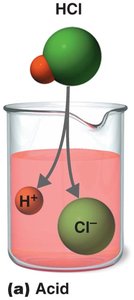
Salts, acids, and bases are important inorganic molecules that dissociate in water to form ions. These ions are crucial for cellular processes and maintaining homeostasis.
Salt: Dissociates into cations (positive ions) and anions (negative ions). Example:
Acid: Dissociates into hydrogen ions () and anions. Example:
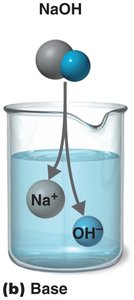
Base: Dissociates into cations and hydroxide ions (). Example:
The pH Scale and Cellular Importance
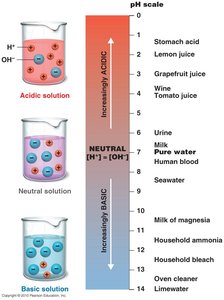
The pH scale measures the concentration of hydrogen ions in a solution, ranging from 0 (most acidic) to 14 (most basic). Cells must maintain a stable pH for proper protein structure and function, often using buffers to resist changes.
Acidic: pH < 7, high
Neutral: pH = 7,
Basic: pH > 7, low
Each whole number change: 10x difference in
Organic Molecules
Carbon: The Basis of Organic Molecules
Carbon atoms can form up to four covalent bonds, allowing for a vast diversity of molecular structures, including chains and rings. This versatility is the foundation for complex biological functions.
Macromolecules: Synthesis and Breakdown
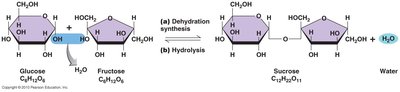
Organic molecules are often macromolecules, built from smaller units by dehydration synthesis and broken down by hydrolysis.
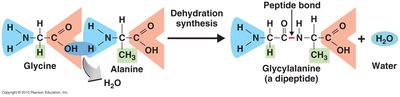
Dehydration synthesis: Joins monomers by removing water.
Hydrolysis: Breaks polymers into monomers by adding water.
Carbohydrates
Carbohydrates are the primary energy source for cells and are classified by their complexity.
Monosaccharides: Simple sugars (e.g., glucose).
Disaccharides: Two monosaccharides joined (e.g., sucrose).
Polysaccharides: Long chains of monosaccharides (e.g., cellulose, chitin, starch).
Lipids
Lipids are hydrophobic molecules important for energy storage and membrane structure.
Triglycerides: Glycerol + 3 fatty acids; energy storage.
Phospholipids: Glycerol + 2 fatty acids + phosphate group; form cell membrane bilayers.
Steroids: Four fused carbon rings; e.g., cholesterol, important for membrane stability.
Proteins
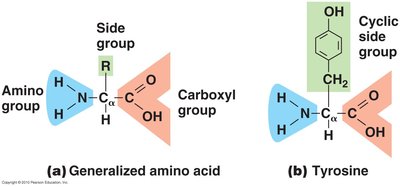
Proteins perform diverse functions, including catalysis (enzymes), transport, motility, and pathogenesis. They are polymers of amino acids, joined by peptide bonds.
Amino acids: 20 types, each with a unique side group.
Peptide bond: Formed by dehydration synthesis between amino acids.
Levels of organization:
Primary: Sequence of amino acids.
Secondary: Local folding (α-helix, β-pleated sheet) via hydrogen bonds.
Tertiary: Overall 3D structure.
Quaternary: Aggregation of multiple polypeptides.
Nucleic Acids
Nucleic acids (DNA and RNA) store and transmit genetic information. They are polymers of nucleotides, each consisting of a phosphate group, a pentose sugar, and a nitrogenous base.
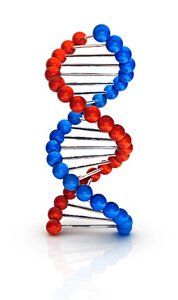
DNA: Double-stranded, deoxyribose sugar, bases A, T, C, G; stores genetic material.
RNA: Single-stranded, ribose sugar, bases A, U, C, G; involved in protein synthesis.
Characteristic | DNA | RNA |
|---|---|---|
Sugar | Deoxyribose | Ribose |
Nucleotides | A, T, C, G | A, U, C, G |
Number of strands | Double stranded | Single stranded |
Function | Genetic material | Protein synthesis |
----------------------------------------
