 Back
The Chemistry of Life: Structured Study Notes for Anatomy & Physiology
Study Guide - Smart Notes
 Tailored notes based on your materials, expanded with key definitions, examples, and context.
The Chemistry of Life
Introduction: Chemistry in Anatomy & Physiology
The study of chemistry is fundamental to understanding human anatomy and physiology because the body is composed of chemicals. The chemical level of organization forms the basis for all structural and functional aspects of the human body. For example, bones are strong due to minerals and the protein collagen, both of which are chemical substances.
Atoms and Elements
Atoms and Atomic Structure
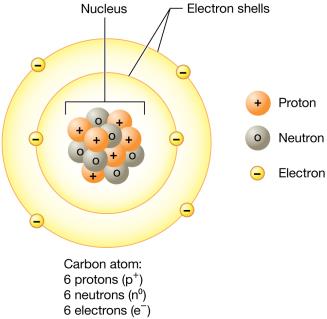
Atoms are the smallest units of matter that retain their original properties. They are composed of three types of subatomic particles:
Protons (p+): Positively charged, located in the atomic nucleus.
Neutrons (n0): Uncharged, slightly larger than protons, also in the nucleus.
Electrons (e-): Negatively charged, orbit the nucleus in electron shells.
Atoms are electrically neutral when the number of protons equals the number of electrons. Electron shells surround the nucleus and have specific capacities:
1st shell: 2 electrons
2nd shell: 8 electrons
3rd shell: 18 electrons (satisfied with 8)
Elements and the Periodic Table
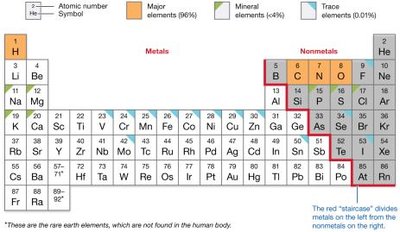
Elements are defined by their atomic number (number of protons). The periodic table organizes elements by increasing atomic number and shows repeating properties. Elements are represented by chemical symbols.
Major elements (96% of body mass): Oxygen (O), Carbon (C), Hydrogen (H), Nitrogen (N)
Mineral elements (<4%): Sodium (Na), Potassium (K), Calcium (Ca), Chlorine (Cl), Magnesium (Mg), Phosphorus (P), Sulfur (S)
Trace elements (0.01%): Iron (Fe), Copper (Cu), Iodine (I), Zinc (Zn), etc.
Isotopes and Radioactivity
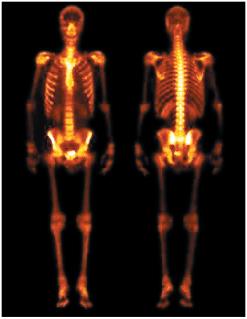
Isotopes are atoms of the same element with different numbers of neutrons. Radioisotopes are unstable isotopes that release energy as radiation and are used in nuclear medicine, such as cancer radiation therapy and treatment of thyroid disorders.
Matter Combined: Mixtures and Chemical Bonds
Types of Mixtures
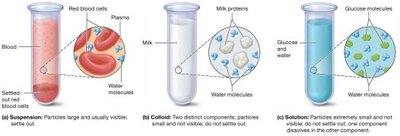
Mixtures are physical combinations of atoms or molecules. There are three basic types:
Suspensions: Large solid particles settle out (e.g., blood).
Colloids: Small solid particles remain dispersed and opaque (e.g., milk).
Solutions: Solute dissolves in solvent, appears translucent (e.g., glucose in water).
Chemical Bonds
Chemical bonds are energy relationships between atoms. They form molecules (same element) or compounds (different elements). Macromolecules are very large compounds.
Valence electrons in the outermost shell interact to form bonds.
Octet Rule: Atoms are most stable with 8 electrons in the valence shell.
Duet Rule: Atoms with 5 or fewer electrons are stable with 2 electrons.
Ions and Ionic Bonds
Ionic bonds form when electrons are transferred between a metal and a nonmetal, creating ions:
Cation: Positively charged ion
Anion: Negatively charged ion
These ions are held together as salts.
Covalent Bonds
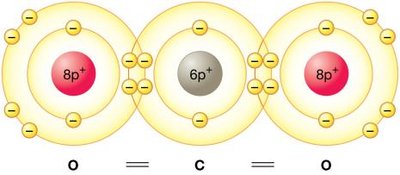
Covalent bonds are formed by sharing electrons between nonmetal atoms. They are the strongest type of chemical bond and can be single, double, or triple bonds.
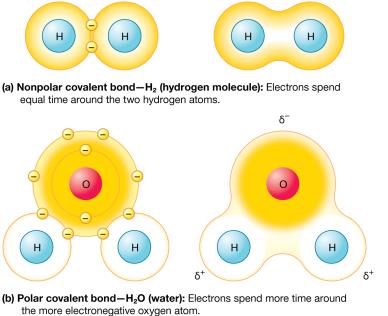
Nonpolar covalent bonds: Electrons are shared equally.
Polar covalent bonds: Electrons are shared unequally, creating dipoles.
Hydrogen Bonds
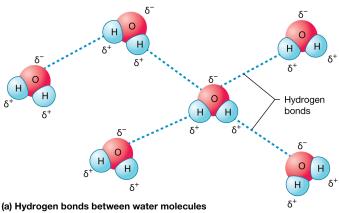
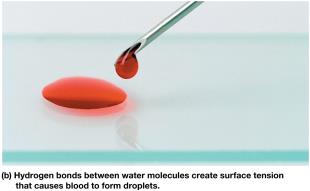
Hydrogen bonds are weak attractions between partially positive and negative atoms in polar covalent molecules. They are important for surface tension in water.
Determining Bond Types
Bond types can be identified by the elements involved:
Ionic: Metal + nonmetal
Nonpolar: Identical nonmetals, or mostly C and H
Polar: Two nonmetals with different electronegativities
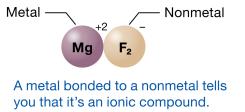
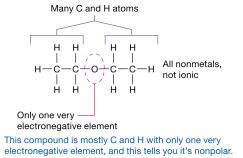
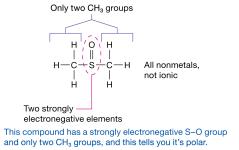
Chemical Notation and Reactions
Chemical Notation
Chemical reactions involve the formation, breaking, or rearrangement of chemical bonds. Chemical equations use symbols to show reactants (left) and products (right). Reactions can be reversible (two arrows) or irreversible (one arrow).
Energy and Chemical Reactions
Energy is the capacity to do work. It exists as:
Potential energy: Stored energy
Kinetic energy: Energy in motion
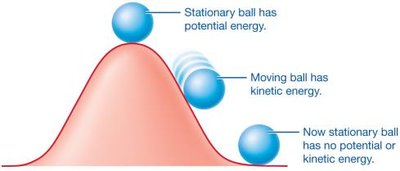
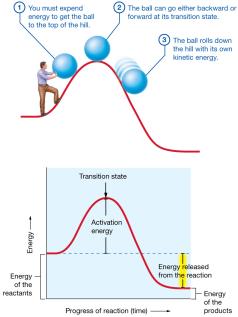
Forms of energy include chemical, electrical, and mechanical. Energy must be invested for reactions to occur:
Endergonic reactions: Require energy input; products have more energy
Exergonic reactions: Release energy; products have less energy
Types of Chemical Reactions
Three fundamental types maintain homeostasis:
Catabolic: Break down larger substances (exergonic)
Exchange: Transfer atoms/electrons between reactants
Anabolic: Form new chemical bonds (endergonic)
Oxidation-Reduction (Redox) reactions involve electron exchange; the reactant losing electrons is oxidized, and the one gaining electrons is reduced.
Reaction Rates and Enzymes
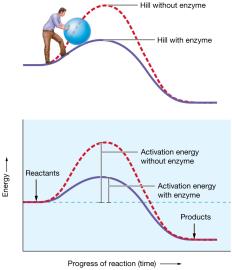
Activation energy () is required for reactions. Factors increasing reaction rate include concentration, temperature, properties of reactants, and catalysts (enzymes).
Enzymes are biological catalysts that lower activation energy and speed up reactions. They are highly specific, not permanently altered, and increase reaction rates dramatically.
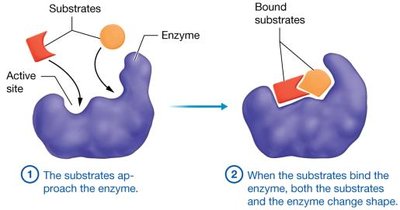
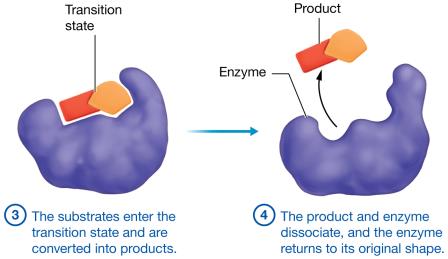
Enzyme action follows the "induced fit" mechanism:
Substrates approach the enzyme's active site
Binding changes the shape of both enzyme and substrate
Transition state is reached, products are formed
Products dissociate, enzyme returns to original shape
Enzyme Deficiencies
Deficiencies in specific enzymes can cause diseases such as Tay-Sachs, SCIDS, and phenylketonuria, affecting metabolism and health.
Inorganic Compounds: Water, Acids, Bases, and Salts
Water
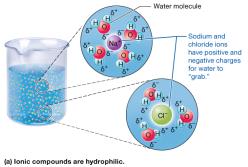
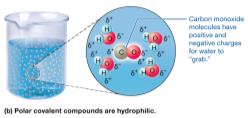
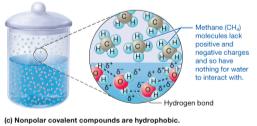
Water makes up 50-65% of body mass and is vital for life. It absorbs heat, carries heat, cushions, protects, and lubricates body structures. Water is the primary solvent, dissolving hydrophilic solutes but not hydrophobic ones.
Acids and Bases
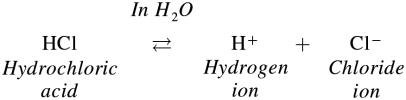
Acids are proton donors, increasing hydrogen ion concentration in water. Bases are proton acceptors, decreasing hydrogen ion concentration.
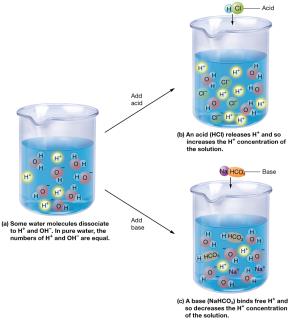
pH is the negative logarithm of hydrogen ion concentration:
The pH scale ranges from 0 (acidic) to 14 (basic), with pure water at 7 (neutral).
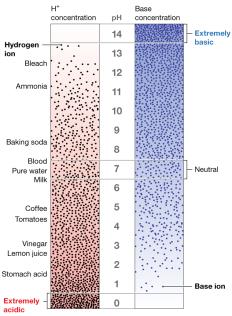
Buffers resist changes in pH, such as the carbonic acid–bicarbonate system in blood.
Salts and Electrolytes
Salts are formed from metal cations and nonmetal anions held by ionic bonds. Electrolytes are ions in solution that conduct electricity and are essential for organ function.
Organic Compounds
Hydrocarbons, Monomers, and Polymers
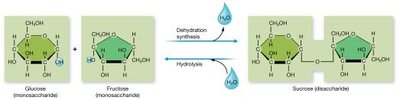
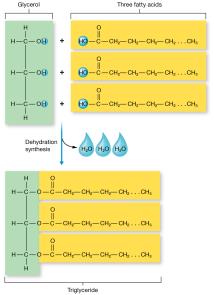
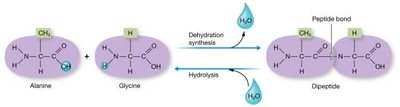
Organic compounds contain carbon and hydrogen. The four main types are carbohydrates, lipids, proteins, and nucleic acids. Monomers are single subunits; polymers are chains of monomers. Dehydration synthesis links monomers, while hydrolysis splits polymers.
Carbohydrates
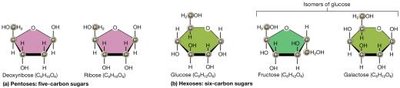
Carbohydrates are made of carbon, hydrogen, and oxygen in a 1:2:1 ratio. They are polar and hydrophilic, functioning mainly as fuel and in structural roles.
Monosaccharides: Simple sugars (glucose, fructose, galactose, ribose, deoxyribose)
Disaccharides: Two monosaccharides joined (sucrose, lactose)
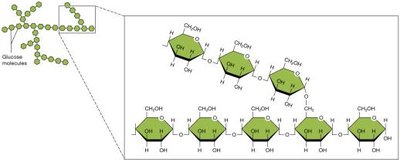
Polysaccharides: Long chains (starch in plants, glycogen in animals)
Lipids
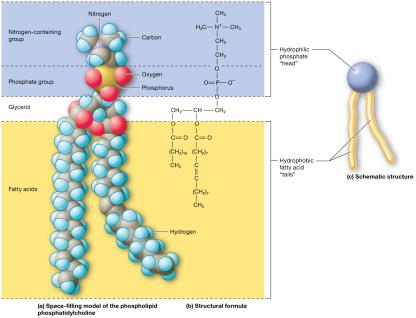
Lipids are nonpolar and hydrophobic, made of carbon, hydrogen, and some oxygen. They function as fuel, membrane components, and hormones.
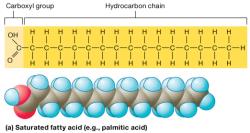
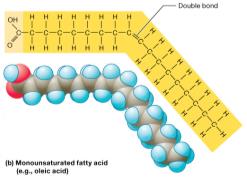
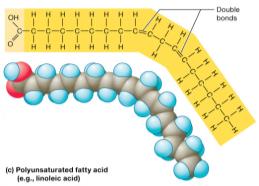
Fatty acids: Saturated (no double bonds), monounsaturated (one double bond), polyunsaturated (multiple double bonds)
Triglycerides: Three fatty acids linked to glycerol
Phospholipids: Glycerol backbone, two fatty acids, phosphate group; amphiphilic
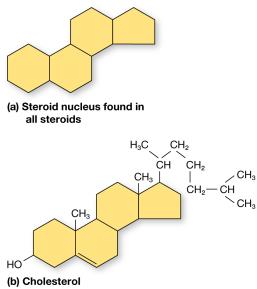
Steroids: Four-ring hydrocarbon nucleus (cholesterol, hormones)
Proteins
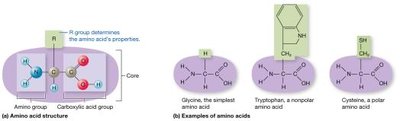
Proteins are made of carbon, hydrogen, oxygen, nitrogen, and sometimes other elements. They are crucial for structure, enzymes, defense, communication, movement, and as fuel. Monomers are amino acids (21 types).
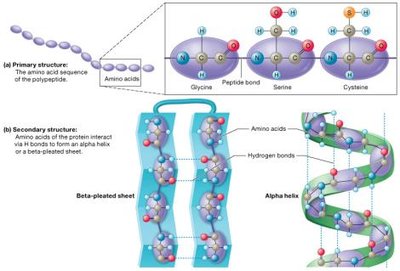
Peptides: Chains of amino acids linked by peptide bonds
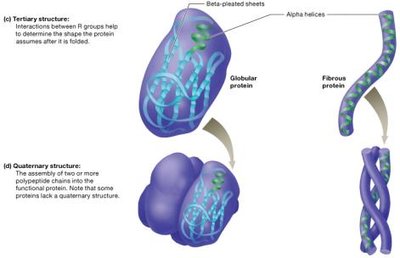
Protein structure: Four levels—primary (sequence), secondary (folding: alpha helix, beta sheet), tertiary (3D shape), quaternary (multiple chains)
Denaturation: Loss of shape due to heat, pH, or chemicals; proteins lose function
Nucleotides and Nucleic Acids
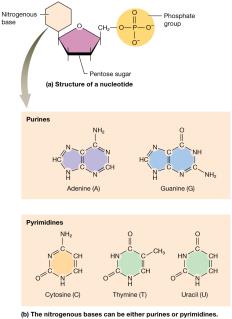
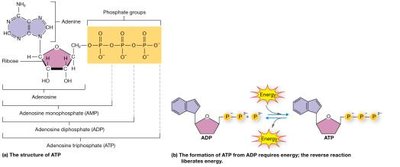
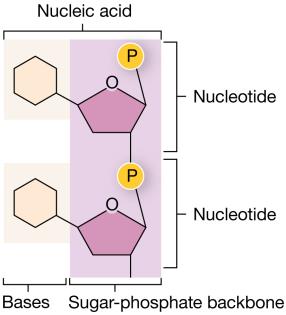
Nucleic acids (DNA and RNA) are made of carbon, hydrogen, oxygen, nitrogen, and phosphorus. Monomers are nucleotides, each with a nitrogenous base (purine or pyrimidine), a five-carbon sugar, and a phosphate group.
ATP: Main source of chemical energy for cells
DNA: Double helix, stores genetic code, found in nucleus
RNA: Single strand, carries genetic instructions, found in nucleus and cytosol
Summary Table: Organic Compounds
Type of Compound | Structure | General Functions | Examples/Location |
|---|---|---|---|
Carbohydrates | Monosaccharides, Disaccharides, Polysaccharides | Energy, Structure | Glucose, Ribose, Glycogen |
Lipids | Triglycerides, Phospholipids, Steroids | Energy storage, Structure, Regulation | Adipose tissue, Cell membranes, Hormones |
Proteins | Di- and polypeptides, folded proteins | Structure, Movement, Catalysis, Transport, Defense | Collagen, Keratin, Enzymes |
Nucleotides & Nucleic Acids | ATP, DNA, RNA | Energy, Information storage & retrieval | ATP, DNA, RNA |
