 Back
BackThe Endocrine System and Metabolism: Structure, Function, and Disorders
Study Guide - Smart Notes
 Tailored notes based on your materials, expanded with key definitions, examples, and context.
The Endocrine System
Overview of the Endocrine System
The endocrine system is a network of glands that release hormones to regulate various physiological processes throughout the body. It acts as the second major control system, working alongside the nervous system to maintain homeostasis and coordinate growth, development, and metabolism.
Hormones: Chemical messengers (steroids or amino acid-based molecules) that stimulate changes in metabolic activity.
Target Cells: Specific cells within organs that respond to particular hormones.
Secretion vs. Excretion: Endocrine glands secrete hormones directly into the bloodstream, while exocrine glands release substances through ducts.
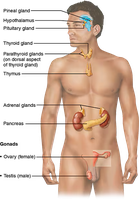
Major Endocrine Glands
Each endocrine gland has a unique function and location, contributing to the regulation of bodily processes.
Pituitary Gland: Located at the base of the brain; often called the "master gland" as it regulates other glands by producing and releasing hormones.
Pineal Gland: Cone-shaped, located in the roof of the third ventricle; produces melatonin, which regulates sleep-wake cycles.
Thyroid Gland: Located in the neck; controls metabolism and energy balance.
Parathyroid Glands: Located behind the thyroid; produce parathyroid hormone (PTH) to regulate calcium, phosphorus, and magnesium levels.
Thymus: Produces peptide hormones involved in immune system development; prominent in infants, atrophies with age.
Adrenal Glands: Located atop the kidneys; produce steroid hormones, adrenaline, and noradrenaline, affecting heart rate, blood pressure, and stress response.
Pancreas: Both endocrine and exocrine; produces digestive enzymes, insulin, and glucagon for blood sugar regulation.
Gonads: Ovaries (female) and testes (male); produce sex hormones and gametes, with functions beginning at puberty.
Hormonal Regulation and Disorders
Hormone Action and Target Cells
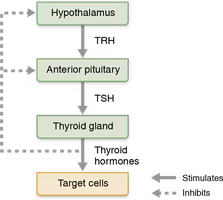
Hormones travel through the bloodstream but only affect specific organs or tissues with appropriate receptors, known as target cells. The specificity of hormone action is crucial for precise regulation of physiological processes.
Endocrine Disorders
Disorders of the endocrine system arise from abnormal hormone secretion levels, leading to various physiological effects.
Hyposecretion: Underproduction of hormones; symptoms include low metabolic rate, feeling cold, constipation, dry skin, and mental sluggishness.
Hypersecretion: Overproduction of hormones; symptoms include elevated metabolism, sweating, rapid heartbeat, nervousness, and weight loss.
Human Metabolism and Thyroid Hormones
Metabolism: Catabolism and Anabolism
Metabolism encompasses all chemical reactions necessary to sustain life. It is divided into two main processes:
Catabolism: Breakdown of complex substances into simpler ones, releasing energy. This energy helps maintain body temperature.
Anabolism: Building larger molecules or structures from smaller ones, requiring energy input.
Role of Thyroid Hormones in Metabolism
Thyroid hormones are critical regulators of basal metabolic rate (BMR) and body heat production. The level of thyroid hormone directly affects BMR:
Higher thyroid hormone levels = higher BMR
Lower thyroid hormone levels = lower BMR
Different foods (carbohydrates, fats, proteins) contribute variably to metabolic processes, influencing energy production and utilization.
Key Equation: Basal Metabolic Rate (BMR)
BMR is the energy required to perform essential activities at rest. It can be estimated using the following equation:
Additional info: This equation is a general estimate; actual BMR depends on age, sex, hormone levels, and other factors.
Summary Table: Major Endocrine Glands and Their Functions
Gland | Location | Main Hormones | Primary Function |
|---|---|---|---|
Pituitary | Base of brain | Growth hormone, ACTH, TSH, etc. | Regulates other glands |
Pineal | Roof of third ventricle | Melatonin | Regulates sleep-wake cycle |
Thyroid | Neck | Thyroxine (T4), Triiodothyronine (T3) | Controls metabolism |
Parathyroid | Behind thyroid | PTH | Regulates calcium, phosphorus, magnesium |
Thymus | Chest | Thymulin, Thymosins | Immune system development |
Adrenal | Above kidneys | Cortisol, adrenaline, noradrenaline | Stress response, metabolism |
Pancreas | Behind stomach | Insulin, glucagon | Blood sugar regulation |
Ovaries | Pelvic cavity (female) | Estrogen, progesterone | Sex cell production, female traits |
Testes | Scrotum (male) | Testosterone | Sex cell production, male traits |
