 Back
BackThe Endocrine System: Structure, Function, and Regulation
Study Guide - Smart Notes
 Tailored notes based on your materials, expanded with key definitions, examples, and context.
The Endocrine System
Overview of the Endocrine System
The endocrine system is a major regulatory system of the body that controls long-term processes such as growth, development, metabolism, reproduction, and homeostasis. It consists of glands that secrete hormones directly into the bloodstream, allowing for widespread and prolonged effects on target tissues throughout the body.
Hormones are chemical messengers that relay information and instructions between cells.
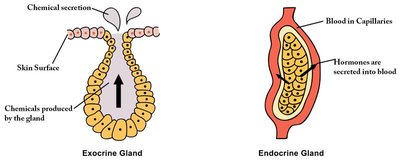
Endocrine glands release hormones into the blood, while exocrine glands secrete substances via ducts onto epithelial surfaces.
Major processes regulated include growth, sleep, hunger, thirst, and reproduction.
Endocrine vs. Exocrine Glands
Endocrine glands: Secrete hormones into the bloodstream; have intracellular effects (e.g., pituitary, thyroid, adrenal glands).
Exocrine glands: Secrete products via ducts onto surfaces; have extracellular effects (e.g., sweat, mucous, digestive glands).
Primary and Secondary Endocrine Organs
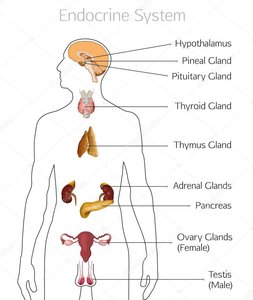
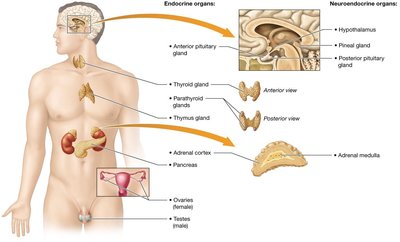
Primary endocrine organs: Anterior pituitary, thyroid, parathyroid, adrenal cortices, pancreas, ovaries, testes.
Secondary endocrine glands: Organs with other primary functions that also secrete hormones (e.g., heart, kidneys, small intestine, adipose tissue).
Neuroendocrine organs: Nervous tissue that secretes hormones (e.g., hypothalamus, pineal gland, adrenal medulla).
Endocrine vs. Nervous System
Nervous system: Uses neurotransmitters, acts quickly (milliseconds), effects are brief and localized.
Endocrine system: Uses hormones, acts more slowly (minutes or longer), effects are prolonged and widespread.
Mechanisms of Intercellular Communication
Types of Communication
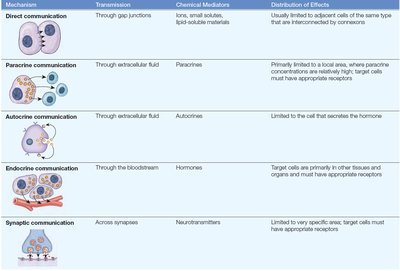
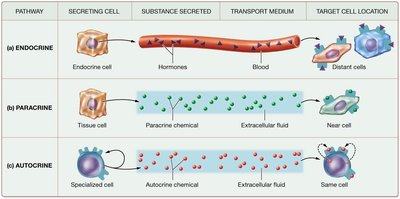
Direct communication: Exchange of ions/molecules through gap junctions between adjacent cells (rare).
Paracrine communication: Chemical messengers affect nearby cells within the same tissue via extracellular fluid.
Autocrine communication: Cells secrete chemicals that affect themselves.
Endocrine communication: Hormones travel through the bloodstream to distant target cells.
Synaptic communication: Neurotransmitters cross synaptic clefts to target cells (nervous system).
Hormones: Classes, Transport, and Action
Classes of Hormones
Amino acid-based hormones: Small molecules derived from amino acids (e.g., melatonin, thyroid hormones).
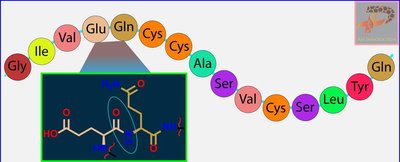
Peptide/protein hormones: Chains of amino acids (e.g., insulin, TSH, ADH, GH); bind to extracellular receptors and are water-soluble.
Steroid hormones: Lipid derivatives made from cholesterol (e.g., androgens, estrogens, corticosteroids); hydrophobic, bind to intracellular receptors.
Hormone Transport in Blood
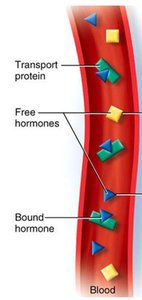
Free hormones: Water-soluble, circulate unbound, short-lived (less than 1 hour).
Bound hormones: Lipid-soluble, travel attached to carrier proteins, longer-lasting, serve as a hormone reserve.
Target Cells and Receptors
Target cells have specific receptors for hormones, located on the plasma membrane, cytosol, or nucleus.
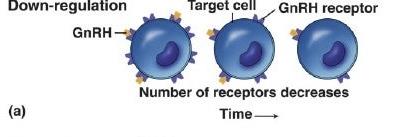
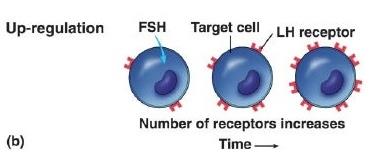
Upregulation: Increase in receptor number when hormone levels are low (increased sensitivity).
Downregulation: Decrease in receptor number when hormone levels are high (decreased sensitivity).
Mechanisms of Hormone Action
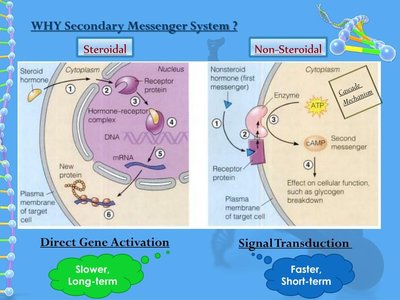
Plasma membrane receptors: Used by peptide hormones; activate second messengers (e.g., cAMP, G-proteins) to change cell activity.
Intracellular receptors: Used by steroid and thyroid hormones; hormones diffuse through the membrane and directly affect gene expression and protein synthesis.
Summary of Hormone Effects
Stimulate secretion from other cells
Activate or inhibit enzymes
Stimulate or inhibit cell division
Open/close ion channels
Regulate gene expression
Regulation of Hormone Secretion
Types of Stimuli
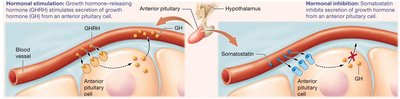
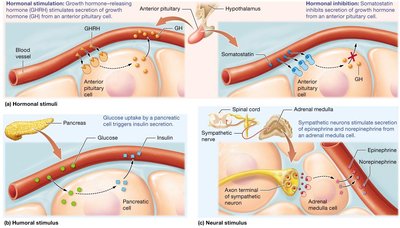
Hormonal stimuli: Hormone release triggered by other hormones (e.g., hypothalamic hormones regulate pituitary hormones).
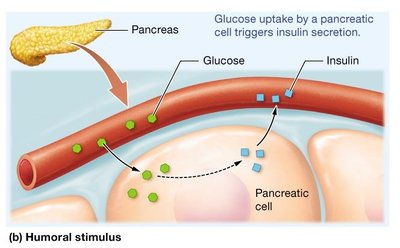
Humoral stimuli: Changes in blood levels of ions/nutrients trigger hormone release (e.g., blood glucose stimulates insulin).
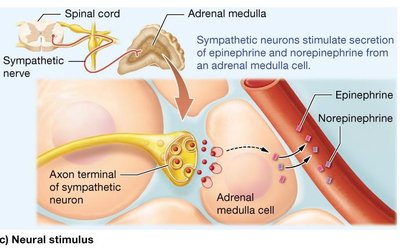
Neural stimuli: Nerve fibers stimulate hormone release (e.g., sympathetic nerves stimulate adrenal medulla).
Negative Feedback Loops
Most hormone secretion is regulated by negative feedback, maintaining homeostasis by reducing hormone output when levels are adequate.
Major Endocrine Glands and Their Hormones
Pituitary Gland (Hypophysis)
Anterior pituitary (adenohypophysis): Produces hormones that regulate other endocrine glands (e.g., TSH, ACTH, LH, FSH, GH, prolactin).
Posterior pituitary (neurohypophysis): Stores and releases ADH and oxytocin produced by the hypothalamus.
Thyroid and Parathyroid Glands
Thyroid gland: Produces thyroid hormones (T3, T4) that regulate metabolism, and calcitonin which lowers blood calcium.
Parathyroid glands: Secrete parathyroid hormone (PTH) which increases blood calcium by stimulating osteoclasts, increasing kidney reabsorption, and activating vitamin D.
Adrenal Glands
Adrenal cortex: Produces corticosteroids (mineralocorticoids, glucocorticoids, androgens).
Adrenal medulla: Produces catecholamines (epinephrine, norepinephrine) for the fight-or-flight response.
Pancreas
Contains both exocrine (digestive enzymes) and endocrine (hormones) cells.
Alpha cells: Secrete glucagon (raises blood glucose).
Beta cells: Secrete insulin (lowers blood glucose).
Delta cells: Secrete somatostatin (inhibits GH and insulin).
Other Endocrine Organs
Thymus: Secretes thymosin for T cell maturation.
Gonads: Testes produce testosterone; ovaries produce estrogens and progesterone.
Pineal gland: Produces melatonin, regulating circadian rhythms.
Adipose tissue: Produces leptin, regulating appetite.
Heart: Produces atrial natriuretic peptide (ANP), lowering blood pressure.
Kidneys: Produce erythropoietin (EPO), stimulating red blood cell production.
Hormonal Control of Homeostasis
Metabolic Homeostasis
Thyroid hormones set basal metabolic rate.
Insulin and glucagon regulate blood glucose during feeding and fasting.
Catecholamines and glucagon increase during exercise to provide energy.
Fluid Homeostasis
ADH, aldosterone, and ANP regulate water and sodium balance, affecting blood volume and pressure.
Negative feedback adjusts hormone secretion to maintain homeostasis.
Summary Table: Major Hormones and Their Functions
Hormone | Source | Main Function |
|---|---|---|
Thyroid hormones (T3, T4) | Thyroid gland | Regulate metabolism |
Calcitonin | Thyroid gland | Lowers blood calcium |
Parathyroid hormone (PTH) | Parathyroid glands | Raises blood calcium |
Insulin | Pancreas (beta cells) | Lowers blood glucose |
Glucagon | Pancreas (alpha cells) | Raises blood glucose |
Cortisol | Adrenal cortex | Stress response, increases blood glucose |
Aldosterone | Adrenal cortex | Increases sodium reabsorption |
Epinephrine/Norepinephrine | Adrenal medulla | Fight-or-flight response |
ADH | Posterior pituitary | Water retention |
Oxytocin | Posterior pituitary | Uterine contraction, milk ejection |
Growth hormone (GH) | Anterior pituitary | Stimulates growth |
Prolactin | Anterior pituitary | Milk production |
Testosterone | Testes | Male secondary sex characteristics |
Estrogen/Progesterone | Ovaries | Female secondary sex characteristics, menstrual cycle |
Melatonin | Pineal gland | Regulates sleep cycles |
