 Back
BackThe Endocrine System: Structure, Function, and Regulation
Study Guide - Smart Notes
 Tailored notes based on your materials, expanded with key definitions, examples, and context.
The Endocrine System
Overview of the Endocrine System
The endocrine system is one of the body's two major control systems, working alongside the nervous system to coordinate and integrate the activity of most body cells. It uses hormones—chemical messengers transported in the blood—to influence metabolic activities. Endocrine responses are generally slower but longer-lasting than those of the nervous system. The study of hormones and endocrine organs is called endocrinology.
Major processes controlled by the endocrine system:
Reproduction
Growth and development
Maintenance of electrolyte, water, and nutrient balance of blood
Regulation of cellular metabolism and energy balance
Mobilization of body defenses
Endocrine vs. Exocrine Glands
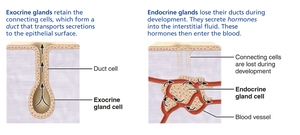
Glands in the body can be classified as either endocrine or exocrine based on their structure and function.
Exocrine glands: Produce nonhormonal substances (e.g., sweat, saliva) and have ducts that carry secretions to a membrane surface.
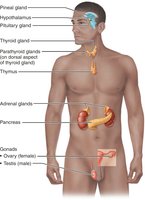
Endocrine glands: Produce hormones, are ductless, and secrete hormones directly into the surrounding extracellular fluid. Major endocrine glands include the pituitary, thyroid, parathyroid, adrenal, and pineal glands. The hypothalamus is a neuroendocrine organ. Other organs with endocrine tissue include the pancreas, gonads, and placenta.
Location of Major Endocrine Organs
The major endocrine organs are distributed throughout the body, each with specific locations and functions.
Types of Chemical Messengers
Chemical messengers can be classified based on their range of action:
Hormones: Long-distance chemical signals that travel in the blood to reach target cells.
Autocrines: Chemicals that exert effects on the same cells that secrete them (local action).
Paracrines: Locally acting chemicals that affect neighboring cells (local action).
Autocrines and paracrines are not considered part of the endocrine system due to their localized effects.
Chemical Structure and Classification of Hormones
Hormone Structure and Solubility
The chemical structure of a hormone determines its solubility in water, which affects how it is transported in the blood, how long it persists, and which receptors it can bind to.
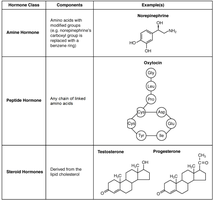
Amino acid–based hormones: Include amino acid derivatives, peptides, and proteins. Most are water-soluble (except thyroxine) and cannot cross the plasma membrane.
Steroid hormones: Synthesized from cholesterol, lipid-soluble, and can cross the plasma membrane. Includes gonadal and adrenocortical hormones.
Eicosanoids: Sometimes considered hormones, but most classify them as paracrines and autocrines due to their localized effects.
Mechanisms of Hormone Action
Target Cells and Hormone Effects
Although hormones circulate throughout the body, only cells with specific receptors (target cells) are affected. Hormones alter target cell activity by increasing or decreasing the rates of normal cellular processes.
Alter plasma membrane permeability and/or membrane potential by opening or closing ion channels
Stimulate synthesis of enzymes or other proteins
Activate or deactivate enzymes
Induce secretory activity
Stimulate mitosis
Second Messenger Systems
Hormones act in one of two ways, depending on their chemical nature and receptor location:
Water-soluble hormones (all amino acid–based hormones except thyroid hormone): Act on plasma membrane receptors and are usually coupled via G proteins to second messengers. They cannot cross the plasma membrane.
Lipid-soluble hormones (steroid and thyroid hormones): Act on intracellular receptors that directly activate genes. They can diffuse across the plasma membrane.
Cyclic AMP (cAMP) Signaling Mechanism
Many amino acid–based hormones exert their effects through the cAMP second-messenger system:
Hormone (first messenger) binds to receptor.
Receptor activates a G protein.
G protein activates (or inhibits) adenylate cyclase.
Adenylate cyclase converts ATP to cAMP (second messenger).
cAMP activates protein kinases that phosphorylate other proteins, leading to cellular responses.
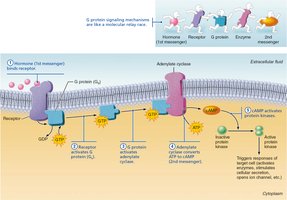
cAMP is rapidly degraded by phosphodiesterase, stopping the cascade. This mechanism allows for amplification of the hormone signal.
Other Second Messenger Systems
PIP2-calcium signaling mechanism: Involves the generation of diacylglycerol (DAG) and inositol trisphosphate (IP3), which act as second messengers to activate protein kinases and release calcium ions, respectively.
cGMP: Another second messenger used by some hormones.
Tyrosine kinase receptors: Example: Insulin receptor, which autophosphorylates and triggers cell responses without a second messenger.
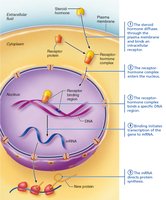
Direct Gene Activation by Lipid-Soluble Hormones
Lipid-soluble steroid and thyroid hormones diffuse into target cells and bind with intracellular receptors. The receptor-hormone complex enters the nucleus, binds to DNA, and initiates transcription to produce mRNA, which is then translated into proteins that alter cell function.
Regulation of Hormone Release
Negative Feedback and Stimuli for Hormone Release
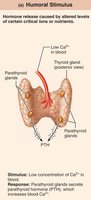
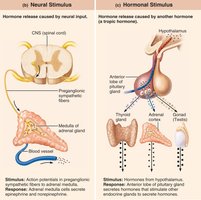
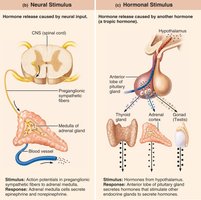
Blood levels of hormones are controlled by negative feedback mechanisms. Hormone release is triggered by:
Humoral stimuli: Changing blood levels of ions and nutrients directly stimulate hormone release (e.g., low Ca2+ stimulates parathyroid hormone release).
Neural stimuli: Nerve fibers stimulate hormone release (e.g., sympathetic nervous system stimulates adrenal medulla).
Hormonal stimuli: Hormones stimulate other endocrine organs to release their hormones (e.g., hypothalamic hormones regulate anterior pituitary hormones).
Nervous System Modulation
The nervous system can override normal endocrine controls, especially under conditions of stress, to ensure the body can respond appropriately (e.g., overriding insulin to increase blood glucose during fight or flight).
Hormone Receptors and Target Cell Activation
Specificity of Hormone Action
Target cells must have specific receptors for a hormone to respond. The degree of activation depends on:
Blood levels of the hormone
Relative number of receptors on or in the target cell
Affinity (strength) of binding between hormone and receptor
Cells can adjust their sensitivity by up-regulating (adding receptors) or down-regulating (removing receptors) in response to hormone levels.
Hormone Transport, Half-Life, and Duration
Hormones circulate in the blood either free or bound to proteins. Steroid and thyroid hormones are usually bound to plasma proteins, while others circulate freely. The half-life of a hormone is the time required for its blood level to decrease by half. Hormone effects can be rapid or delayed and may persist for varying durations depending on the hormone's solubility and mechanism of action.
Hormone Interactions at Target Cells
Permissiveness: One hormone cannot exert its effects without another hormone being present (e.g., reproductive hormones require thyroid hormone).
Synergism: More than one hormone produces the same effects, and their combined effects are amplified (e.g., glucagon and epinephrine).
Antagonism: One or more hormones oppose the action of another hormone (e.g., insulin and glucagon).
The Hypothalamus and Pituitary Gland
Structure and Function
The hypothalamus is connected to the pituitary gland (hypophysis) via the infundibulum. The pituitary has two major lobes:
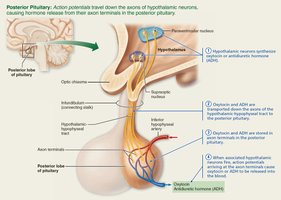
Posterior pituitary (neurohypophysis): Composed of neural tissue, stores and secretes two neurohormones (oxytocin and ADH) produced by the hypothalamus.
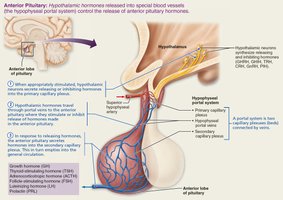
Anterior pituitary (adenohypophysis): Glandular tissue that manufactures and secretes six hormones.
Pituitary-Hypothalamic Relationships
The posterior pituitary contains axon terminals of hypothalamic neurons, while the anterior pituitary is connected to the hypothalamus via the hypophyseal portal system, allowing hypothalamic hormones to regulate anterior pituitary hormone secretion.
Posterior Pituitary Hormones
Oxytocin
Oxytocin is released during childbirth and breastfeeding, stimulating uterine contractions and milk ejection. Both actions are positive feedback mechanisms involving neuroendocrine reflexes. Oxytocin also acts as a neurotransmitter in the brain.
Antidiuretic Hormone (ADH)
ADH secretion is triggered by high blood osmolarity. It signals the kidneys to reabsorb more water, reducing urine output and blood osmolarity. High concentrations cause vasoconstriction (vasopressin). Release is also triggered by pain, low blood pressure, and certain drugs, and is inhibited by alcohol.
Clinical Imbalances
Diabetes insipidus: ADH deficiency causing intense thirst and large urine output.
SIADH (Syndrome of Inappropriate ADH Secretion): Hypersecretion of ADH causing fluid retention, headache, and disorientation.
Anterior Pituitary Hormones
Overview
The anterior pituitary secretes six peptide or protein hormones. All but growth hormone (GH) activate target cells via the cAMP second-messenger system. All but two are tropic hormones (regulate secretion of other hormones).
Growth hormone (GH)
Thyroid-stimulating hormone (TSH) (tropic)
Adrenocorticotropic hormone (ACTH) (tropic)
Follicle-stimulating hormone (FSH) (tropic)
Luteinizing hormone (LH) (tropic)
Prolactin (PRL)
Growth Hormone (GH)
GH (somatotropin) has direct metabolic actions and indirect growth-promoting actions via insulin-like growth factors (IGFs). It decreases glucose uptake, increases blood glucose and free fatty acids, and stimulates protein synthesis and cell division, especially in bone and skeletal muscle.
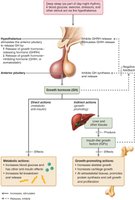
Regulation: GH release is stimulated by GHRH (triggered by low GH, low blood glucose, stress, or exercise) and inhibited by GHIH (somatostatin, triggered by high GH and IGF levels).
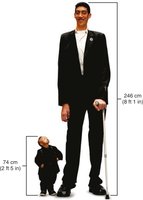
Clinical Imbalances: Hypersecretion causes gigantism in children and acromegaly in adults; hyposecretion causes pituitary dwarfism in children.
Thyroid-Stimulating Hormone (TSH)
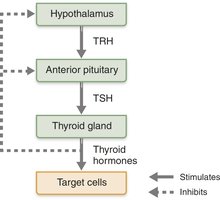
TSH (thyrotropin) stimulates normal development and secretory activity of the thyroid. Secretion is triggered by TRH from the hypothalamus and inhibited by rising thyroid hormone levels (negative feedback) and GHIH.
Adrenocorticotropic Hormone (ACTH)
ACTH (corticotropin) stimulates the adrenal cortex to release corticosteroids (mainly glucocorticoids). Secretion is triggered by CRH (in response to stress and hypoglycemia) and inhibited by rising glucocorticoid levels.
Gonadotropins (FSH and LH)
FSH stimulates gamete production; LH promotes production of gonadal hormones. In females, LH and FSH promote follicle maturation and ovulation; in males, LH stimulates testosterone production. Secretion is triggered by GnRH during and after puberty and inhibited by rising gonadal hormone levels.
Prolactin (PRL)
PRL stimulates milk production in females. Regulation is primarily by PIH (dopamine), with levels rising toward the end of pregnancy and in response to infant suckling. Hypersecretion can cause inappropriate lactation and reproductive issues.
Summary Tables
For a comprehensive overview of pituitary hormones, their regulation, and effects, refer to the following tables (not shown here, but present in the original material):
Table 16.1: Comparison of Nervous and Endocrine Systems
Table 16.2: Comparison between Lipid- and Water-Soluble Hormones
Table 16.3: Pituitary Hormones: Summary of Regulation and Effects
