 Back
The Endocrine System: Structure, Function, and Regulation
Study Guide - Smart Notes
 Tailored notes based on your materials, expanded with key definitions, examples, and context.
The Endocrine System
Overview and Functions
The endocrine system is a major regulatory system of the body, responsible for maintaining homeostasis through the secretion of hormones. It coordinates with the nervous system to regulate physiological processes, but its effects are generally slower and longer-lasting. The endocrine system influences reproduction, growth and development, metabolism, and the mobilization of body defenses.
Homeostasis: Maintains internal balance by regulating body functions.
Communication: Uses hormones as chemical messengers to communicate between organs and tissues.
Processes Affected: Reproduction, growth, electrolyte and nutrient balance, metabolism, and immune responses.
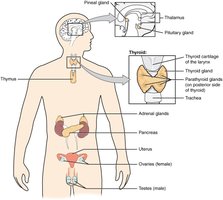
Endocrine vs. Exocrine Glands
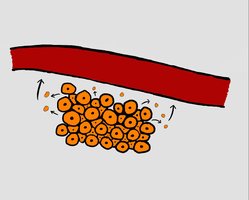
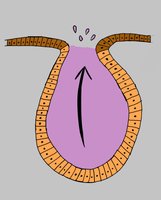
Endocrine glands are ductless glands that secrete hormones directly into the bloodstream, while exocrine glands release their products through ducts to epithelial surfaces.
Endocrine glands: Examples include the pituitary, thyroid, adrenal glands, and gonads.
Exocrine glands: Examples include sweat, salivary, and mammary glands.
Types of Chemical Signals
Hormones: Secreted into extracellular fluid, diffuse into blood, and act on distant targets.
Autocrine signals: Affect the same cell that secretes them.
Paracrine signals: Affect neighboring cells in the local environment.
Chemical Structure of Hormones
Amino acid–based hormones: Includes amines, peptides, and proteins.
Steroid hormones: Derived from cholesterol (e.g., cortisol, estrogen).
Hormone Actions on Target Cells
Hormones affect only target cells that have specific receptors. They can:
Stimulate protein synthesis
Activate or deactivate enzymes
Alter cell membrane permeability
Change rates of cell division
Stimulate secretion of other substances
Regulation of Hormone Secretion
Feedback Loops
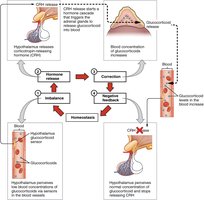
Hormone secretion is tightly regulated by feedback mechanisms to maintain homeostasis.
Negative feedback: Inhibits further hormone release when adequate levels are reached (most common).
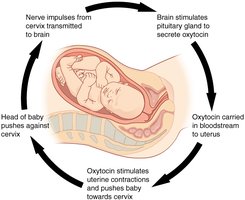
Positive feedback: Enhances hormone release in response to an initial stimulus (rare; e.g., oxytocin during childbirth).
Endocrine Gland Stimuli
Humoral stimuli: Changes in blood levels of ions or nutrients trigger hormone release (e.g., insulin release in response to high blood glucose).
Neural stimuli: Nerve fibers stimulate hormone release (e.g., adrenal medulla releases epinephrine during stress).
Hormonal stimuli: Hormones from one gland stimulate hormone release from another (e.g., hypothalamic hormones regulate pituitary hormones).
Major Endocrine Glands and Their Hormones
Pituitary Gland and Hypothalamus
The pituitary gland, often called the "master gland," is controlled by the hypothalamus and consists of two lobes: the anterior (glandular) and posterior (neural) pituitary. It regulates many other endocrine glands.
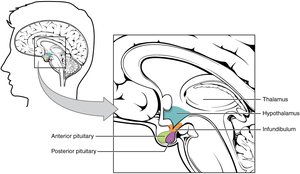
Posterior Pituitary Hormones
Oxytocin: Stimulates uterine contractions during childbirth and milk ejection during breastfeeding. Released via positive feedback.
Antidiuretic hormone (ADH): Increases water reabsorption in kidneys, reducing urine output and increasing blood pressure. Release is regulated by blood osmolarity and negative feedback.
Anterior Pituitary Hormones
Growth hormone (GH): Stimulates growth, protein synthesis, and cell division. Acts directly and via insulin-like growth factors (IGFs).
Thyroid-stimulating hormone (TSH): Stimulates thyroid hormone release.
Adrenocorticotropic hormone (ACTH): Stimulates adrenal cortex to release corticosteroids.
Follicle-stimulating hormone (FSH): Stimulates gamete production.
Luteinizing hormone (LH): Triggers ovulation and sex hormone production.
Prolactin (PRL): Promotes milk production.
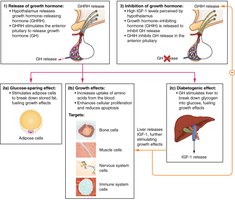
Abnormalities of Growth Hormone
Hypersecretion in children: Gigantism
Hypersecretion in adults: Acromegaly
Hyposecretion in children: Pituitary dwarfism

Thyroid and Parathyroid Glands
Thyroid Gland
The thyroid gland is located anterior to the trachea and produces thyroid hormones (T3 and T4) that regulate metabolism, growth, and development. It also produces calcitonin, which lowers blood calcium levels.
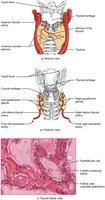
Thyroid Hormone (TH)
T3 (triiodothyronine): More potent, less abundant
T4 (thyroxine): Less potent, more abundant
Functions: Increases basal metabolic rate, supports growth and neurological development, enhances sensitivity to catecholamines
Iodine Deficiency and Goiter
Iodine is essential for thyroid hormone synthesis.
Deficiency: Leads to goiter (thyroid enlargement) and hypothyroidism.
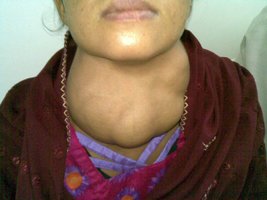
Thyroid Disorders
Hypothyroidism: Low thyroid hormone levels; symptoms include weight gain, cold intolerance, and mental sluggishness.
Hyperthyroidism (Graves’ disease): High thyroid hormone levels; symptoms include weight loss, heat intolerance, and exophthalmos (bulging eyes).

Parathyroid Glands
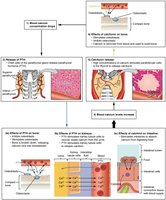
Located on the posterior surface of the thyroid, the parathyroid glands secrete parathyroid hormone (PTH), which increases blood calcium levels by stimulating osteoclasts, increasing renal reabsorption, and activating vitamin D.
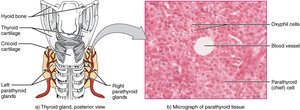
Calcium Homeostasis
PTH: Increases blood calcium
Calcitonin: Decreases blood calcium
Adrenal Glands
Structure and Hormones
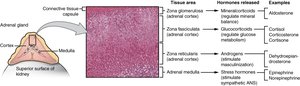
The adrenal glands sit atop the kidneys and consist of an outer cortex and inner medulla. The cortex produces steroid hormones, while the medulla produces catecholamines.
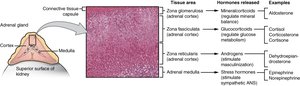
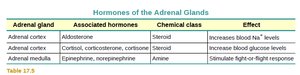
Adrenal gland | Associated hormones | Chemical class | Effect |
|---|---|---|---|
Adrenal cortex | Aldosterone | Steroid | Increases blood Na+ levels |
Adrenal cortex | Cortisol, corticosterone, cortisone | Steroid | Increase blood glucose levels |
Adrenal medulla | Epinephrine, norepinephrine | Amine | Stimulate fight-or-flight response |
Adrenal Cortex
Zona glomerulosa: Produces mineralocorticoids (e.g., aldosterone) for electrolyte balance.
Zona fasciculata: Produces glucocorticoids (e.g., cortisol) for stress response and metabolism.
Zona reticularis: Produces androgens (sex hormones).
Adrenal Medulla
Epinephrine and norepinephrine: Mediate acute stress response (fight-or-flight), increase heart rate, blood pressure, and blood glucose.
Pancreas
Endocrine and Exocrine Functions
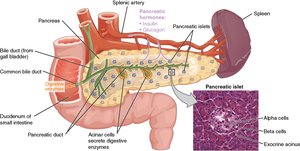
The pancreas has both endocrine (hormone-secreting) and exocrine (digestive enzyme-secreting) functions. The pancreatic islets secrete insulin and glucagon to regulate blood glucose levels.
Glucagon
Produced by alpha cells
Increases blood glucose by stimulating glycogenolysis, gluconeogenesis, and lipolysis
Insulin
Produced by beta cells
Lowers blood glucose by promoting cellular uptake, glycolysis, and glycogen synthesis
Diabetes Mellitus
Type 1: Autoimmune destruction of beta cells; no insulin production
Type 2: Insulin resistance; associated with obesity and lifestyle factors
Gonadal and Placental Hormones
Ovaries
Estradiol: Female reproductive development, menstrual cycle regulation, secondary sex characteristics
Progesterone: Prepares and maintains pregnancy
Testes
Testosterone: Male reproductive development, spermatogenesis, secondary sex characteristics
Inhibin: Inhibits FSH to regulate sperm production
Placenta
hCG: Maintains pregnancy
hPL: Prepares breasts for lactation
Relaxin: Softens pubic symphysis for childbirth
Other Organs with Endocrine Functions
Adipose tissue: Produces leptin, which regulates appetite and lipid metabolism
Heart, kidneys, and other organs: Release hormones with secondary endocrine functions
