 Back
The Endocrine System: Structure, Function, and Regulation
Study Guide - Smart Notes
 Tailored notes based on your materials, expanded with key definitions, examples, and context.
The Endocrine System
Introduction to the Endocrine System
The endocrine system is a network of glands and organs that use hormones to regulate and coordinate many of the body's functions, including growth, metabolism, reproduction, and homeostasis. Unlike the nervous system, which uses rapid electrical and chemical signals, the endocrine system relies solely on chemical signaling via hormones released into the bloodstream.
Hormones: Chemical messengers secreted by endocrine glands that travel through the blood to target cells.
Homeostasis: The maintenance of a stable internal environment, largely regulated by endocrine and nervous systems.
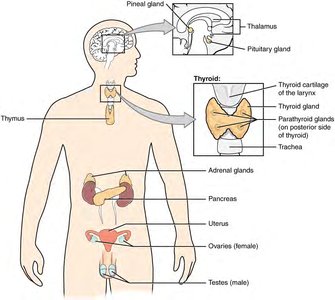
Types of Intercellular Communication
Neural vs. Endocrine Signaling
The nervous and endocrine systems are the primary means of long-distance communication in the body. Neural signaling is rapid and specific, while endocrine signaling is slower and can affect multiple tissues simultaneously.
Neural signaling: Uses neurotransmitters for rapid, local communication (milliseconds).
Endocrine signaling: Uses hormones for slower, widespread effects (seconds to hours or longer).
Feature | Endocrine System | Nervous System |
|---|---|---|
Signaling Mechanism | Chemical (hormones) | Chemical/electrical (neurotransmitters, action potentials) |
Distance Traveled | Long or short | Always short |
Response Time | Fast or slow | Always fast |
Environment Targeted | Internal | Internal and external |
Other Types of Chemical Signaling
Autocrine signaling: A cell targets itself (e.g., interleukin-1 in inflammation).
Paracrine signaling: A cell targets nearby cells (e.g., histamine in the bronchial tree).
Hormones: Structure and Function
Major Classes of Hormones
Hormones are classified based on their chemical structure, which determines their mechanism of action and solubility.
Hormone Class | Components | Example(s) |
|---|---|---|
Amine Hormone | Amino acids with modified groups | Norepinephrine |
Peptide Hormone | Short chains of linked amino acids | Oxytocin |
Protein Hormone | Long chains of linked amino acids | Human Growth Hormone |
Steroid Hormones | Derived from cholesterol | Testosterone, Progesterone |
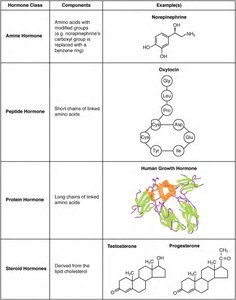
Amine hormones: Derived from single amino acids (e.g., epinephrine, melatonin).
Peptide/protein hormones: Chains of amino acids (e.g., ADH, growth hormone).
Steroid hormones: Derived from cholesterol (e.g., cortisol, testosterone, estrogens).
Hormone Receptors and Mechanisms of Action
Hormones exert their effects by binding to specific receptors on or in target cells. The location of the receptor depends on the hormone's solubility.
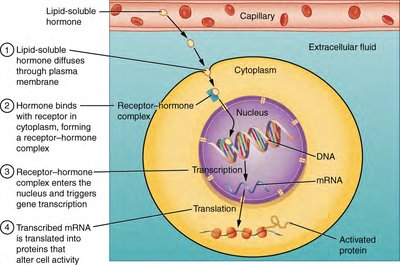
Lipid-soluble hormones (e.g., steroids, thyroid hormones): Diffuse through the cell membrane and bind to intracellular receptors, directly influencing gene transcription.
Water-soluble hormones (e.g., peptides, proteins): Bind to cell membrane receptors, activating second messenger systems (e.g., cAMP, IP3) to trigger cellular responses.
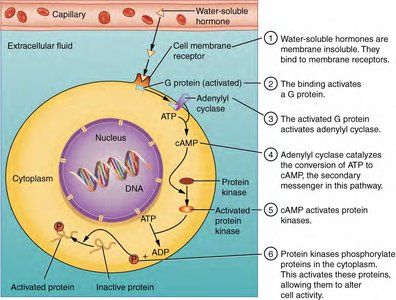
Second Messenger Systems
cAMP pathway: Hormone binds to receptor → G protein activation → adenylyl cyclase converts ATP to cAMP → cAMP activates protein kinases → cellular response.
IP3/DAG pathway: G protein activates phospholipase C → IP3 releases Ca2+ from ER → Ca2+ and DAG activate protein kinases.
Regulation of Hormone Secretion
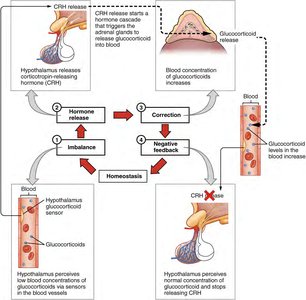
Hormone levels are regulated by feedback loops to maintain homeostasis.
Negative feedback: Most common; hormone secretion is inhibited when levels are adequate (e.g., glucocorticoid regulation).
Positive feedback: Less common; hormone release stimulates further release (e.g., oxytocin during childbirth).
Major Endocrine Glands and Their Hormones
Pituitary Gland and Hypothalamus
The hypothalamus and pituitary gland form the command center of the endocrine system, integrating neural and hormonal signals.
Hypothalamus: Produces releasing and inhibiting hormones that control the pituitary gland.
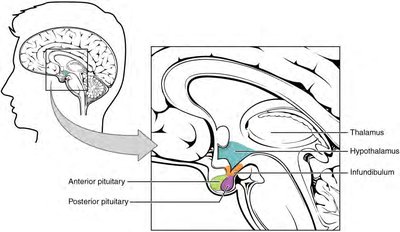
Pituitary gland: Suspended from the hypothalamus by the infundibulum; consists of anterior and posterior lobes.
Posterior Pituitary
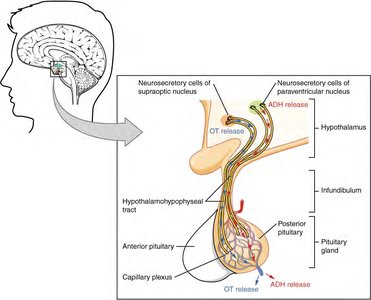
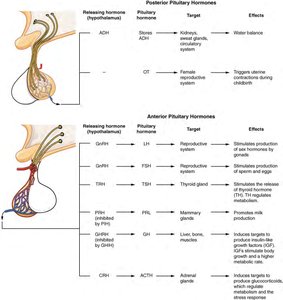
Stores and releases oxytocin (uterine contractions, milk ejection) and antidiuretic hormone (ADH) (water reabsorption in kidneys), both produced by the hypothalamus.
Anterior Pituitary
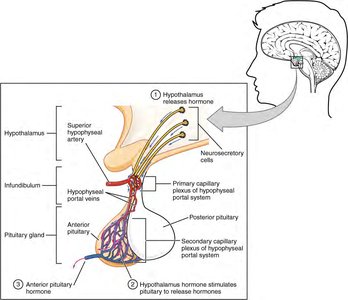
Produces hormones such as growth hormone (GH), thyroid-stimulating hormone (TSH), adrenocorticotropic hormone (ACTH), follicle-stimulating hormone (FSH), luteinizing hormone (LH), and prolactin (PRL).
Secretion is regulated by hypothalamic hormones via the hypophyseal portal system.
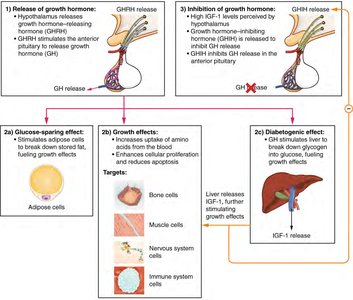
Growth Hormone Regulation
GH promotes protein synthesis, tissue growth, and has glucose-sparing and diabetogenic effects.
Regulated by GHRH (stimulates) and GHIH (inhibits) from the hypothalamus.
Summary Table: Major Pituitary Hormones
The Thyroid Gland
Structure and Function
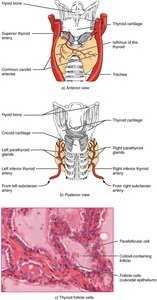
The thyroid gland is a butterfly-shaped organ located anterior to the trachea and inferior to the larynx. It produces hormones that regulate metabolism and calcium homeostasis.
Synthesis and Regulation of Thyroid Hormones
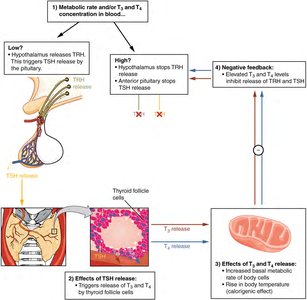
Thyroxine (T4) and triiodothyronine (T3): Amine hormones that increase basal metabolic rate, protein synthesis, and are essential for growth and development.
Calcitonin: Peptide hormone that lowers blood calcium levels.
Regulated by TSH from the anterior pituitary, which is controlled by TRH from the hypothalamus (negative feedback).
Thyroid Disorders
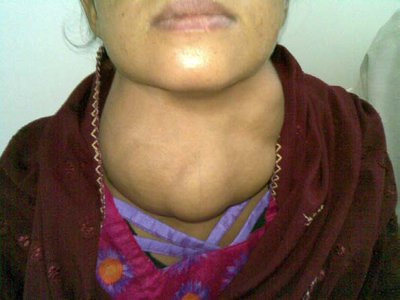
Goiter: Enlargement of the thyroid gland, often due to iodine deficiency.
Hypothyroidism: Low thyroid hormone levels; symptoms include weight gain, cold intolerance, and reduced mental activity.
Hyperthyroidism: Excess thyroid hormone; symptoms include weight loss, heat intolerance, and increased heart rate.
The Parathyroid Glands
Structure and Function
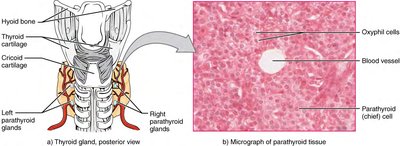
The parathyroid glands are small glands located on the posterior surface of the thyroid gland. They secrete parathyroid hormone (PTH), which is the major regulator of blood calcium levels.
Regulation of Blood Calcium
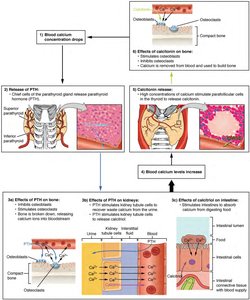
PTH: Increases blood calcium by stimulating osteoclasts, increasing renal reabsorption, and promoting intestinal absorption via activation of vitamin D.
Calcitonin: Lowers blood calcium by inhibiting osteoclasts and increasing calcium excretion.
Summary
The endocrine system uses hormones to regulate diverse physiological processes.
Hormones are classified by structure and mechanism of action, and their secretion is tightly regulated by feedback mechanisms.
Major glands include the pituitary, thyroid, parathyroid, adrenal, and others, each with specific hormones and functions essential for homeostasis.
