 Back
Ch. 16 The Endocrine System: Part A
Study Guide - Smart Notes
 Tailored notes based on your materials, expanded with key definitions, examples, and context.
The Endocrine System
Introduction to the Endocrine System
The endocrine system is composed of ductless glands that secrete hormones directly into the bloodstream. These hormones regulate various physiological processes by targeting specific cells throughout the body. The endocrine system works closely with the nervous system to maintain homeostasis, but it uses chemical signals rather than electrical impulses.
Endocrine glands: Ductless organs that release hormones into the blood.
Hormones: Chemical messengers that affect target cells with specific receptors.
Endocrine glands include the pituitary, thyroid, parathyroid, adrenal glands, pancreas, gonads, and others.
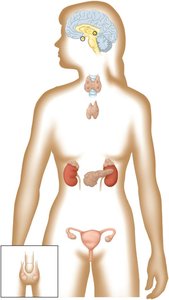
Comparison of Endocrine and Nervous Systems
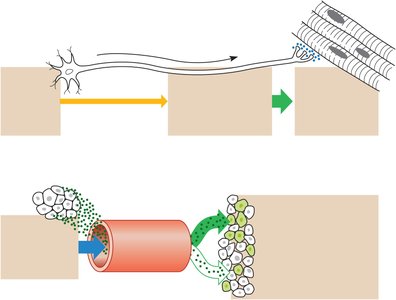
The endocrine and nervous systems both coordinate body functions, but they differ in their mechanisms, speed, and duration of action.
Feature | Nervous System | Endocrine System |
|---|---|---|
Cells | Neurons | Glandular epithelium |
Chemical Signal | Neurotransmitter | Hormone |
Specificity of Action | Receptors on postsynaptic cell | Receptors on target cell |
Speed of Onset | Seconds | Seconds to hours |
Duration of Action | Very brief unless neuronal activity continues | May be brief or last for days even if secretion ceases |

General Characteristics of Hormones
Hormones are secreted into extracellular spaces and travel via the bloodstream to affect distant target cells. Only cells with specific receptors for a hormone will respond to its signal.
Hormones are effective in very low concentrations.
They regulate metabolism, growth, development, and homeostasis.
Hormones can be classified by their chemical structure as steroid or non-steroid hormones.
Chemistry and Action of Hormones
Chemical Classes of Hormones
Hormones are divided into two main chemical classes:
Steroid hormones: Derived from cholesterol; include sex hormones and adrenal cortex hormones. They are hydrophobic and can diffuse through cell membranes.
Non-steroid hormones: Include amines, proteins, and glycoproteins. They are generally hydrophilic and bind to receptors on the cell membrane.
Mechanism of Steroid Hormone Action
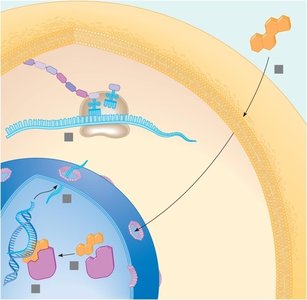
Steroid hormones pass through the cell membrane and bind to intracellular receptors, influencing gene expression and protein synthesis.
Sequence of Steroid Hormone Action | |
|---|---|
1. | Endocrine gland secretes steroid hormone. |
2. | Steroid hormone diffuses through target cell membrane and enters cytoplasm or nucleus. |
3. | Hormone combines with a receptor molecule in the cytoplasm or nucleus. |
4. | Hormone-receptor complex binds to DNA and promotes transcription of messenger RNA (mRNA). |
5. | mRNA enters the cytoplasm and directs protein synthesis. |
6. | Newly synthesized proteins produce hormone’s specific effects. |
Mechanism of Non-Steroid Hormone Action
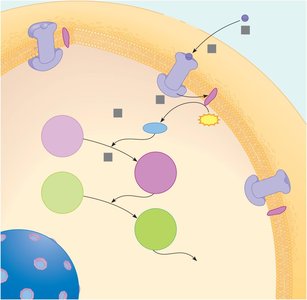
Non-steroid hormones bind to membrane receptors, activating second messenger systems such as cyclic AMP (cAMP) to elicit cellular responses.
Sequence of Actions of Nonsteroid Hormone Using Cyclic AMP | |
|---|---|
1. | Endocrine gland secretes nonsteroid hormone. |
2. | Body fluid carries hormone to its target cell. |
3. | Hormone combines with receptor site on membrane of its target cell, activating G protein. |
4. | Adenylate cyclase molecules are activated in target cell’s membrane. |
5. | Adenylate cyclase circularizes ATP into cyclic AMP. |
6. | Cyclic AMP activates protein kinases. |
7. | Protein kinases activate protein substrates in the cell that change metabolic processes. |
8. | Cellular changes produce the hormone’s effects. |
Hormonal Regulation and Control
Control of Hormonal Secretions
Hormone secretion is primarily regulated by negative feedback mechanisms, ensuring that hormone levels remain within physiological ranges. Control sources include:
Nervous system control: Direct stimulation by nerve impulses.
Hormonal control: Hormones from one gland stimulate or inhibit another gland.
Humoral control: Changes in blood levels of ions or nutrients stimulate hormone release.
Major Endocrine Glands and Hormones
Pituitary Gland (Hypophysis)
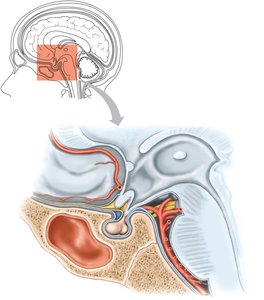
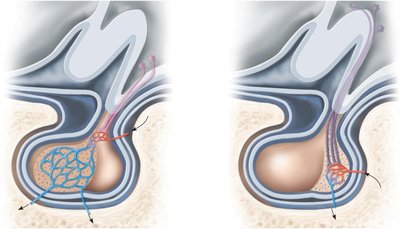
The pituitary gland is located at the base of the brain in the sella turcica and consists of two distinct lobes: the anterior pituitary (adenohypophysis) and the posterior pituitary (neurohypophysis). The hypothalamus controls both lobes via different mechanisms.
Anterior pituitary: Controlled by hypothalamic releasing hormones via the hypophyseal portal system.
Posterior pituitary: Controlled by nerve impulses from the hypothalamus.
Hormones of the Anterior Pituitary
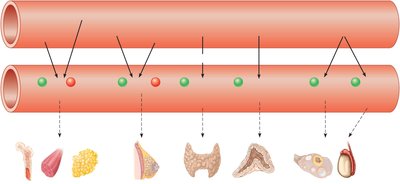
The anterior pituitary produces several key hormones, each with specific targets and actions:
Growth Hormone (GH): Stimulates growth of bones, muscles, and adipose tissue.
Thyroid-Stimulating Hormone (TSH): Stimulates the thyroid gland to release T3 and T4.
Adrenocorticotropic Hormone (ACTH): Stimulates the adrenal cortex to release cortisol.
Follicle-Stimulating Hormone (FSH) and Luteinizing Hormone (LH): Regulate function of gonads (testes and ovaries).
Prolactin (PRL): Stimulates milk production in mammary glands.
Hormones of the Posterior Pituitary
The posterior pituitary stores and releases two hormones produced by the hypothalamus:
Antidiuretic Hormone (ADH, vasopressin): Increases water reabsorption in the kidneys.
Oxytocin: Stimulates uterine contractions during childbirth and milk ejection during breastfeeding.
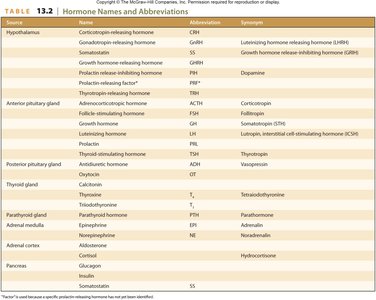
Summary Table: Major Hormones and Abbreviations
Gland/Source | Hormone | Abbreviation | Synonym |
|---|---|---|---|
Hypothalamus | Corticotropin-releasing hormone | CRH | - |
Hypothalamus | Gonadotropin-releasing hormone | GnRH | Luteinizing hormone releasing hormone (LHRH) |
Hypothalamus | Growth hormone-releasing hormone | GHRH | - |
Hypothalamus | Growth hormone release-inhibiting hormone | SS | Somatostatin |
Hypothalamus | Prolactin-releasing factor | PRF | - |
Hypothalamus | Prolactin release-inhibiting hormone | PIH | Dopamine |
Hypothalamus | Thyrotropin-releasing hormone | TRH | - |
Anterior pituitary | Adrenocorticotropic hormone | ACTH | Corticotropin |
Anterior pituitary | Follicle-stimulating hormone | FSH | - |
Anterior pituitary | Growth hormone | GH | Somatotropin (STH) |
Anterior pituitary | Luteinizing hormone | LH | Lutropin, interstitial cell-stimulating hormone (ICSH) |
Anterior pituitary | Prolactin | PRL | - |
Anterior pituitary | Thyroid-stimulating hormone | TSH | Thyrotropin |
Posterior pituitary | Oxytocin | OT | - |
Posterior pituitary | Antidiuretic hormone | ADH | Vasopressin |
Clinical Correlations
Disorders of Pituitary Hormone Secretion
Acromegaly: Hypersecretion of growth hormone in adults, leading to enlarged extremities.
Gigantism: Hypersecretion of growth hormone in children, resulting in excessive growth.
Pituitary dwarfism: Hyposecretion of growth hormone during childhood, causing stunted growth.
Summary
The endocrine system is essential for regulating metabolism, growth, development, and homeostasis through the secretion of hormones. Understanding the mechanisms of hormone action and the regulation of endocrine glands is fundamental for comprehending human physiology and the basis of many diseases.
