 Back
The Endocrine System: Structure, Function, and Hormonal Regulation
Study Guide - Smart Notes
 Tailored notes based on your materials, expanded with key definitions, examples, and context.
The Endocrine System
Introduction to the Endocrine System
The endocrine system is a major regulatory system of the body, responsible for maintaining homeostasis through the secretion of hormones. These hormones regulate the activity and growth of target cells and influence metabolism, development, and various physiological processes.
Hormones are chemical messengers released by endocrine glands into the bloodstream, affecting distant target cells.
The endocrine system works closely with the nervous system to coordinate body functions, but hormones typically act more slowly and have longer-lasting effects than neurotransmitters.
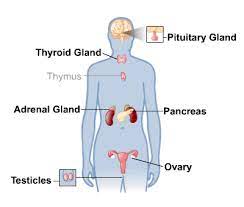
Endocrine System & Homeostasis
The endocrine system maintains homeostasis by regulating the internal environment of the body. It controls processes such as metabolism, growth, reproduction, and circadian rhythms.
Endocrine glands detect changes in the body and release hormones to restore balance.
Examples of regulated functions include smooth muscle contraction, menstrual cycles, and sleep-wake cycles.
Comparison of Nervous and Endocrine Systems
The nervous and endocrine systems both coordinate body activities but differ in their mechanisms and effects.
Nervous system: Uses neurotransmitters, acts rapidly, effects are short-lived.
Endocrine system: Uses hormones, acts more slowly, effects are prolonged.
Some chemicals can function as both neurotransmitters and hormones (e.g., norepinephrine).
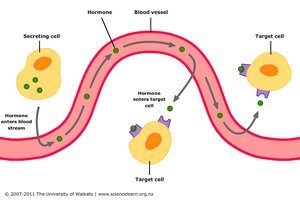
Glands of the Endocrine System
Exocrine vs. Endocrine Glands
Glands in the body are classified as exocrine or endocrine based on their mode of secretion.
Exocrine glands: Secrete products into ducts (e.g., sweat, oil, mucous, digestive glands). Their secretions are not hormones.
Endocrine glands: Ductless; secrete hormones directly into the interstitial fluid, which then diffuse into the bloodstream.
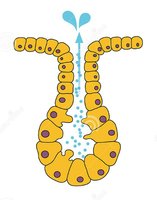
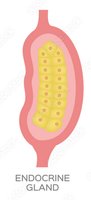
Major Endocrine Glands and Hormone-Secreting Organs
Primary endocrine glands include the pituitary, thyroid, parathyroid, adrenal, and pineal glands. Other organs such as the hypothalamus, thymus, pancreas, ovaries, testes, kidneys, stomach, liver, small intestine, skin, heart, adipose tissue, and placenta also secrete hormones.
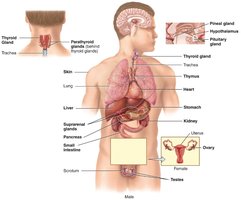
Hormone Activity and Regulation
Hormone Specificity and Receptors
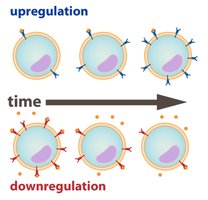
Hormones affect only target cells that possess specific protein receptors for those hormones. The number of receptors can change in response to hormone levels:
Down-regulation: Decrease in receptor number when hormone levels are high.
Up-regulation: Increase in receptor number when hormone levels are low.
Medications can block hormone receptors to modulate effects.
Types of Hormones: Circulating vs. Local
Circulating hormones: Travel through the bloodstream to distant target cells.
Local hormones: Act on neighboring cells (paracrines) or the same cell that secreted them (autocrines).
Example: Insulin acts as an autocrine in pancreatic cells; clotting factors act as paracrines.
Chemical Classes of Hormones
Hormones are classified based on their chemical structure:
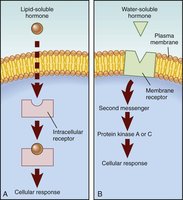
Lipid-soluble hormones: Steroid hormones, thyroid hormones, nitric oxide. Circulate bound to transport proteins and can cross cell membranes.
Water-soluble hormones: Amine, peptide, protein, and eicosanoid hormones. Circulate freely in plasma and bind to cell surface receptors.
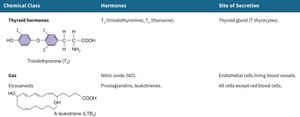
Summary Table: Lipid-Soluble Hormones
Chemical Class | Hormones | Site of Secretion |
|---|---|---|
Thyroid hormones | T3 (triiodothyronine), T4 (thyroxine) | Thyroid gland (follicular cells) |
Gas | Nitric oxide (NO) | Endothelial cells lining blood vessels |
Eicosanoids | Prostaglandins, leukotrienes | All cells except red blood cells |
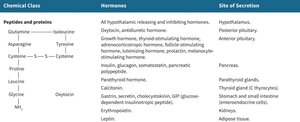
Summary Table: Water-Soluble Hormones
Chemical Class | Hormones | Site of Secretion |
|---|---|---|
Peptides and proteins | All hypothalamic releasing and inhibiting hormones, oxytocin, antidiuretic hormone, growth hormone, prolactin, insulin, glucagon, parathyroid hormone, calcitonin, leptin, etc. | Hypothalamus, pituitary, pancreas, parathyroid, thyroid, stomach, small intestine, kidneys, adipose tissue |
Mechanisms of Hormone Action
The response of a target cell to a hormone depends on the hormone's concentration, the number of receptors, and the presence of other hormones. Hormones can have synergistic or antagonistic effects.
Lipid-soluble hormones: Enter cells and bind to intracellular receptors, altering gene expression.
Water-soluble hormones: Bind to membrane receptors, activating second messenger systems (e.g., cAMP, protein kinases).
Control of Hormone Secretion
Regulation of Hormone Release
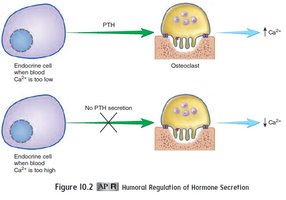
Hormone secretion is typically regulated by negative feedback mechanisms and is influenced by:
Nervous system signals
Chemical changes in the blood
Other hormones
Hypothalamus and Pituitary Gland
Structure and Function
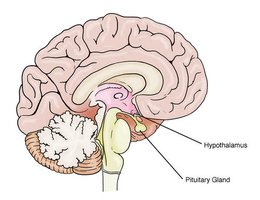
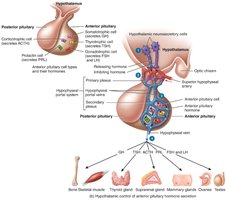
The hypothalamus and pituitary gland are central to endocrine regulation. The hypothalamus produces releasing and inhibiting hormones that control the pituitary gland, which in turn regulates other endocrine glands.
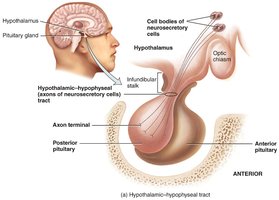
The pituitary gland is connected to the hypothalamus by the infundibulum.
The anterior pituitary (adenohypophysis) secretes seven hormones; the posterior pituitary (neurohypophysis) stores and releases two hormones produced by the hypothalamus.
Hormones of the Anterior Pituitary
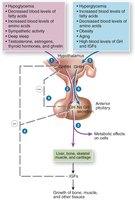
The anterior pituitary releases hormones that regulate growth, metabolism, and reproductive functions. Negative feedback loops control the secretion of these hormones.
Human growth hormone (hGH): Most abundant; stimulates growth and metabolism. Controlled by GHRH and GHIH from the hypothalamus.
Thyrotrophs, gonadotrophs, corticotrophs: Cells that secrete hormones regulating the thyroid, reproductive organs, and adrenal cortex, respectively.
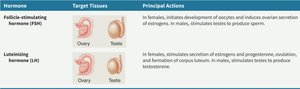
Summary Table: Principal Actions of Anterior Pituitary Hormones
Hormone | Target Tissues | Principal Actions |
|---|---|---|
Follicle-stimulating hormone (FSH) | Ovary, Testes | In females, initiates development of oocytes and induces ovarian secretion of estrogens. In males, stimulates testes to produce sperm. |
Luteinizing hormone (LH) | Ovary, Testes | In females, stimulates secretion of estrogens and progesterone, ovulation, and formation of corpus luteum. In males, stimulates testes to produce testosterone. |
Posterior Pituitary and Hypothalamic-Hypophyseal Tract
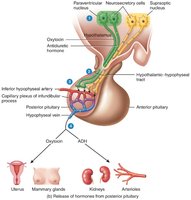
The posterior pituitary stores and releases oxytocin (OT) and antidiuretic hormone (ADH), which are synthesized in the hypothalamus and transported via the hypothalamic-hypophyseal tract.
Oxytocin: Stimulates uterine contractions and milk ejection.
Antidiuretic hormone (ADH): Regulates water balance by increasing water reabsorption in the kidneys.
Additional info: The endocrine system is essential for integrating and regulating physiological processes, and its dysfunction can lead to various disorders such as diabetes mellitus, hypothyroidism, and growth abnormalities.
