 Back
The Endocrine System 2: Structure, Function, and Regulation
Study Guide - Smart Notes
 Tailored notes based on your materials, expanded with key definitions, examples, and context.
Endocrine System Overview
Major Endocrine Glands and Their Organization
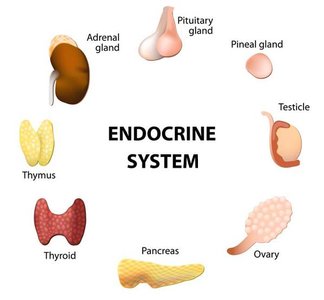
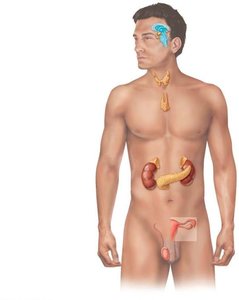
The endocrine system is composed of glands that secrete hormones directly into the bloodstream to regulate various physiological processes. These glands are distributed throughout the body and include the pituitary, thyroid, parathyroid, adrenal, pineal, pancreas, thymus, and gonads (ovaries and testes). Each gland produces specific hormones that target organs and tissues to maintain homeostasis.
Pituitary gland: Often called the "master gland" because it regulates other endocrine glands.
Thyroid gland: Regulates metabolism, growth, and development.
Parathyroid glands: Control calcium balance in the blood.
Adrenal glands: Produce hormones involved in stress response and metabolism.
Pineal gland: Secretes melatonin, regulating sleep-wake cycles.
Pancreas: Regulates blood glucose through insulin and glucagon.
Gonads: Ovaries and testes produce sex hormones for reproduction.
Hormone Classification and Actions
Types of Hormones
Hormones are classified based on their chemical structure and mechanism of action:
Amino acid derivatives: Derived from amino acids (e.g., epinephrine, norepinephrine).
Peptide hormones: Chains of amino acids (e.g., insulin, growth hormone).
Steroid hormones: Derived from cholesterol (e.g., cortisol, sex hormones).
Hormones act by binding to specific receptors on target cells, triggering cellular responses that regulate metabolism, growth, and homeostasis.
Hypothalamus and Pituitary Glands
Structure and Function
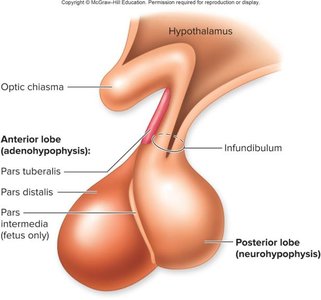
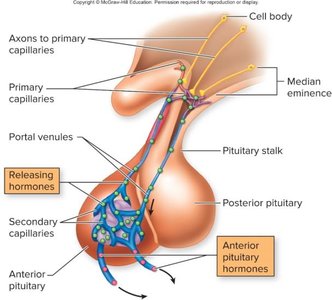
The hypothalamus and pituitary gland form a central regulatory axis for the endocrine system. The hypothalamus produces releasing and inhibiting hormones that control the pituitary gland, which in turn regulates other endocrine glands.
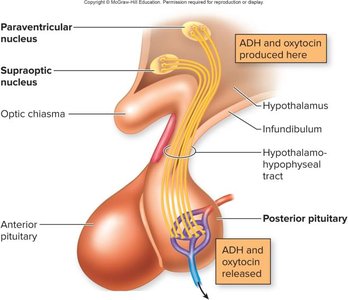
Posterior pituitary: Stores and releases hormones produced by the hypothalamus (ADH and oxytocin).
Anterior pituitary: Produces and secretes its own hormones under hypothalamic control.
Posterior Pituitary Hormones
Antidiuretic hormone (ADH, vasopressin): Promotes water retention in kidneys, increasing blood volume and pressure.
Oxytocin: Stimulates uterine contractions during childbirth and milk ejection during lactation.
Anterior Pituitary Hormones
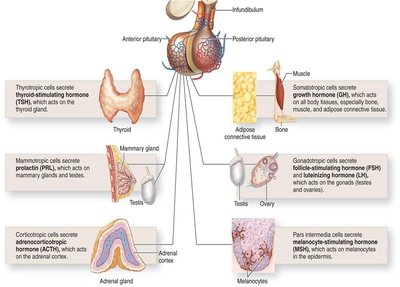
The anterior pituitary secretes several key hormones, each with specific targets and effects:
Hormone | Target Tissue | Principal Actions | Regulation |
|---|---|---|---|
ACTH | Adrenal cortex | Stimulates glucocorticoid secretion | Stimulated by CRH; inhibited by glucocorticoids |
TSH | Thyroid gland | Stimulates thyroid hormone secretion | Stimulated by TRH; inhibited by thyroid hormone |
GH | Most tissues | Promotes growth, protein synthesis | Stimulated by GHRH; inhibited by somatostatin |
FSH | Gonads | Promotes gamete production | Stimulated by GnRH; inhibited by sex steroids |
PRL | Mammary glands | Promotes milk production | Inhibited by PIH (dopamine) |
LH | Gonads | Stimulates sex hormone secretion | Stimulated by GnRH; inhibited by sex steroids |
Hypothalamic Control of the Pituitary
The hypothalamus regulates the anterior pituitary via releasing and inhibiting hormones transported through the hypophyseal portal system. The posterior pituitary is regulated by neuroendocrine reflexes.
Feedback Control Mechanisms
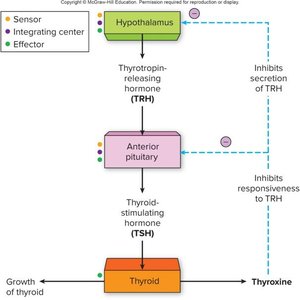
Hormone secretion is tightly regulated by negative feedback loops. The final hormone product inhibits further release from both the pituitary and hypothalamus, maintaining homeostasis.
Example: Thyroid hormone inhibits TRH and TSH release.
Example: Sex steroids inhibit GnRH, FSH, and LH release.
Other Major Endocrine Glands
Thyroid and Parathyroid Glands
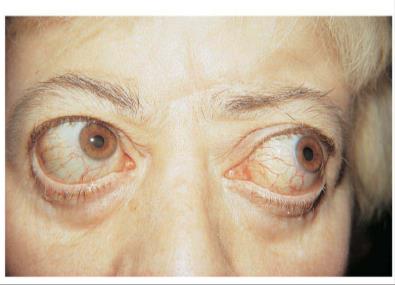
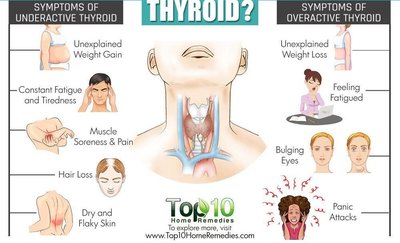
Thyroid gland: Produces thyroid hormones (T3, T4) that regulate metabolism. Calcitonin lowers blood calcium levels.
Parathyroid glands: Secrete parathyroid hormone (PTH), which increases blood calcium by stimulating bone resorption, kidney reabsorption, and vitamin D activation.
Adrenal Glands
Adrenal cortex: Produces corticosteroids (aldosterone for electrolyte balance, cortisol for stress response, androgens for sex characteristics).
Adrenal medulla: Secretes epinephrine and norepinephrine for the fight-or-flight response.
Pancreas
Insulin: Lowers blood glucose by promoting cellular uptake and storage as glycogen.
Glucagon: Raises blood glucose by stimulating glycogen breakdown in the liver.
Dysfunction leads to diabetes mellitus: Type I (autoimmune, insulin-dependent) and Type II (lifestyle-related, insulin resistance).
Summary Table: Major Endocrine Glands and Hormones
Gland | Hormone(s) | Main Function(s) |
|---|---|---|
Pituitary (anterior) | GH, TSH, ACTH, FSH, LH, PRL | Growth, metabolism, stress, reproduction, lactation |
Pituitary (posterior) | ADH, Oxytocin | Water balance, childbirth, lactation |
Thyroid | T3, T4, Calcitonin | Metabolism, calcium regulation |
Parathyroid | PTH | Calcium regulation |
Adrenal cortex | Aldosterone, Cortisol, Androgens | Electrolyte balance, stress, sex characteristics |
Adrenal medulla | Epinephrine, Norepinephrine | Fight-or-flight response |
Pancreas | Insulin, Glucagon | Blood glucose regulation |
Gonads | Estrogen, Progesterone, Testosterone | Reproduction, secondary sex characteristics |
Key Concepts and Clinical Correlations
Negative feedback is the primary mechanism for hormone regulation.
Disorders can result from hypo- or hypersecretion of hormones (e.g., Addison's disease, Cushing's syndrome, hypothyroidism, hyperthyroidism, diabetes mellitus).
Hormone pathways often involve multiple steps and regulatory feedback loops.
