 Back
The Endocrine System: Structure, Function, and Regulation
Study Guide - Smart Notes
 Tailored notes based on your materials, expanded with key definitions, examples, and context.
The Endocrine System: Overview
General Functions and Characteristics
The endocrine system works in concert with the nervous system to coordinate and integrate the activity of body cells. It influences metabolic activities through hormones transported in the blood, with responses that are slower but longer-lasting than those of the nervous system.
Endocrinology: The study of hormones and endocrine organs.
Hormones: Long-distance chemical signals that travel in blood or lymph.
Exocrine glands: Produce nonhormonal substances (e.g., sweat, saliva) and have ducts.
Endocrine glands: Produce hormones and lack ducts.
Chemical Messengers
Hormones: Affect distant targets via the bloodstream.
Autocrines: Affect the same cells that secrete them.
Paracrines: Affect nearby cells other than those that secrete them.
Autocrines and paracrines are local messengers and not considered part of the endocrine system.
Chemistry and Mechanisms of Hormone Action
Classes of Hormones
Hormones are classified based on their chemical structure:
Amino acid-based hormones: Includes derivatives, peptides, and proteins.
Steroid hormones: Synthesized from cholesterol; includes gonadal and adrenocortical hormones.
Mechanisms of Hormone Action
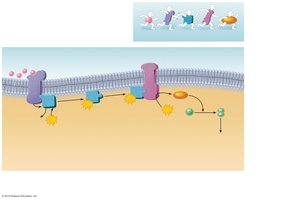
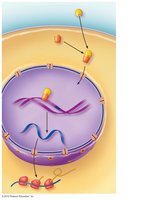
Hormones act at receptors in one of two ways, depending on their chemical nature and receptor location:
Water-soluble hormones: (All amino acid–based hormones except thyroid hormone) act on plasma membrane receptors via G protein second messengers and cannot enter the cell.
Lipid-soluble hormones: (Steroid and thyroid hormones) act on intracellular receptors that directly activate genes and can enter the cell.
Target Cell Specificity and Activation
Specificity
Target cells must have specific receptors for a hormone to bind. For example, ACTH receptors are found only on certain cells of the adrenal cortex, while thyroxin receptors are found on nearly all cells of the body.
Activation Factors
Target cell activation depends on:
Blood levels of the hormone
Relative number of receptors on or in the target cell
Affinity of binding between receptor and hormone
Regulation of Receptors
Up-regulation: Target cells form more receptors in response to low hormone levels.
Down-regulation: Target cells lose receptors in response to high hormone levels.
Control of Hormone Release
Types of Endocrine Gland Stimuli
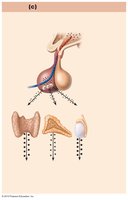
Hormone release is triggered by three main types of stimuli:
Humoral Stimulus: Hormone release caused by altered levels of critical ions or nutrients (e.g., low Ca2+ triggers PTH release).
Neural Stimulus: Hormone release caused by neural input (e.g., action potentials to adrenal medulla trigger epinephrine/norepinephrine release).
Hormonal Stimulus: Hormone release caused by another hormone (e.g., hypothalamic hormones stimulate anterior pituitary hormones).
Nervous System Modulation
The nervous system can modify stimulation of endocrine glands and override normal endocrine controls, especially under stress.
Hormone Interactions at Target Cells
Permissiveness: One hormone cannot exert its effects without another hormone being present.
Synergism: More than one hormone produces the same effects on a target cell, amplifying the response.
Antagonism: One or more hormones oppose the action of another hormone.
The Pituitary Gland and Hypothalamus
Structure
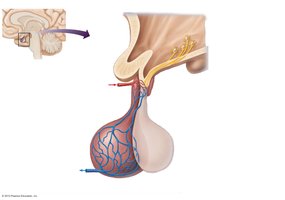
The pituitary gland (hypophysis) has two major lobes:
Posterior pituitary: Neural tissue
Anterior pituitary (adenohypophysis): Glandular tissue
Hormone Release Mechanisms
Posterior pituitary: Hypothalamic neurons synthesize oxytocin and ADH, which are stored in axon terminals and released into the blood upon neuronal firing.
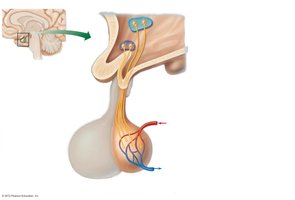
Anterior pituitary: Hypothalamic hormones travel through portal veins to stimulate or inhibit hormone release from the anterior pituitary.
Major Pituitary Hormones
Growth hormone (GH)
Thyroid-stimulating hormone (TSH) or thyrotropin
Adrenocorticotropic hormone (ACTH)
Follicle-stimulating hormone (FSH)
Luteinizing hormone (LH)
Prolactin (PRL)
Thyroid Gland and Hormones
Anatomy and Histology
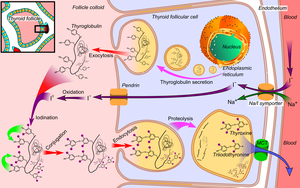
The thyroid gland is located anteriorly in the neck and consists of colloid-filled follicles surrounded by follicular and parafollicular cells. 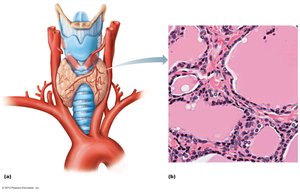
Thyroid Hormone (TH)
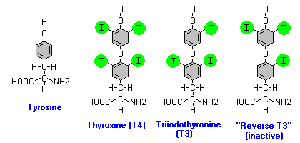
Two related compounds: T4 (thyroxine) and T3 (triiodothyronine)
Affects virtually every cell in the body
Functions of Thyroid Hormone
Major metabolic hormone
Increases metabolic rate and heat production (calorigenic effect)
Regulates tissue growth and development
Essential for development of skeletal and nervous systems
Maintains reproductive capabilities and blood pressure
Calcitonin
Produced by parafollicular (C) cells
Antagonist to parathyroid hormone (PTH)
Inhibits osteoclast activity and release of Ca2+ from bone matrix
Stimulates Ca2+ uptake and incorporation into bone matrix
Parathyroid Glands and Hormone
Anatomy
Four to eight tiny glands embedded in the posterior aspect of the thyroid. 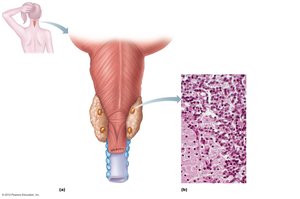
Parathyroid Hormone (PTH)
Most important hormone in Ca2+ homeostasis
Stimulates osteoclasts to digest bone matrix and release Ca2+ to the blood
Enhances reabsorption of Ca2+ and secretion of phosphate by kidneys
Promotes activation of vitamin D, increasing absorption of Ca2+ by intestinal mucosa
Adrenal (Suprarenal) Glands
Structure
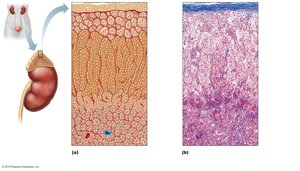
Paired, pyramid-shaped organs atop the kidneys, consisting of two regions:
Adrenal medulla: Nervous tissue, part of the sympathetic nervous system
Adrenal cortex: Three layers of glandular tissue that synthesize and secrete corticosteroids
Adrenal Cortex Hormones
Mineralocorticoids: Regulate electrolytes (primarily Na+ and K+) in extracellular fluid; aldosterone is the most potent.
Glucocorticoids: Keep blood glucose levels constant; cortisol is the main glucocorticoid in humans.
Gonadocorticoids: Sex hormones, mainly androgens.
Adrenal Medulla Hormones
Medullary chromaffin cells synthesize epinephrine (80%) and norepinephrine (20%).
Effects include vasoconstriction, increased heart rate, increased blood glucose, and blood diversion to brain, heart, and skeletal muscle.
Pancreas and Hormones
Structure and Function
The pancreas is a triangular gland with both exocrine and endocrine functions.
Acinar cells: Exocrine, produce enzyme-rich juice for digestion.
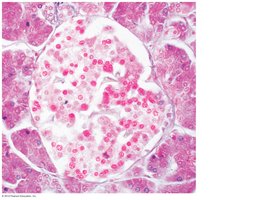
Pancreatic islets (islets of Langerhans): Endocrine, contain alpha (glucagon-producing) and beta (insulin-producing) cells.
Insulin
Lowers blood glucose levels
Enhances membrane transport of glucose into fat and muscle cells
Inhibits glycogenolysis and gluconeogenesis
Participates in neuronal development, learning, and memory
Homeostatic Imbalances: Diabetes Mellitus
Due to hyposecretion (type 1) or hypoactivity (type 2) of insulin
Blood glucose levels remain high, leading to glycosuria, lipidemia, ketonuria, and ketoacidosis
Three cardinal signs: polyuria (excessive urine), polydipsia (excessive thirst), polyphagia (excessive hunger)
Gonads and Placenta
Ovaries
Produce estrogens and progesterone
Estrogen: Maturation of reproductive organs, appearance of secondary sexual characteristics
Progesterone: With estrogen, causes breast development and cyclic changes in uterine mucosa
Placenta
Secretes estrogens, progesterone, placental lactogen, and human chorionic gonadotropin (hCG)
Testes
Produce testosterone
Initiates maturation of male reproductive organs, appearance of male secondary sexual characteristics, sex drive, and normal sperm production
Other Hormone-Producing Structures
Adipose tissue: Leptin (appetite control), resistin (insulin antagonist), adiponectin (enhances sensitivity to insulin)
Enteroendocrine cells of GI tract: Gastrin, secretin, cholecystokinin, serotonin
Heart: Atrial natriuretic peptide (ANP) decreases blood Na+, blood pressure, and blood volume
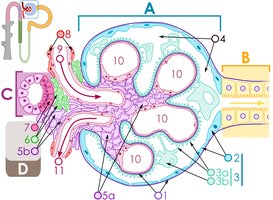
Kidneys: Erythropoietin (stimulates RBC production), renin (initiates renin-angiotensin-aldosterone mechanism)
Summary Table: Major Endocrine Glands and Their Hormones
Gland | Hormone(s) | Main Function |
|---|---|---|
Pituitary | GH, TSH, ACTH, FSH, LH, PRL, ADH, Oxytocin | Growth, metabolism, reproduction, water balance |
Thyroid | T3, T4, Calcitonin | Metabolism, calcium regulation |
Parathyroid | PTH | Calcium homeostasis |
Adrenal | Aldosterone, Cortisol, Androgens, Epinephrine, Norepinephrine | Electrolyte balance, stress response |
Pancreas | Insulin, Glucagon | Blood glucose regulation |
Ovaries/Testes | Estrogen, Progesterone, Testosterone | Reproduction, secondary sex characteristics |
Pineal | Melatonin | Regulation of sleep cycles |
Additional info: The notes above expand on brief points with academic context, definitions, and examples to ensure completeness and clarity for college-level study.
