 Back
BackThe Endocrine System: Structure, Function, and Regulation
Study Guide - Smart Notes
 Tailored notes based on your materials, expanded with key definitions, examples, and context.
The Endocrine System
Overview of the Endocrine System
The endocrine system is one of the two major regulatory systems of the body, working alongside the nervous system to maintain homeostasis. It consists of glands that synthesize and secrete chemical messengers called hormones into the bloodstream. These hormones interact with specific target cells that possess receptors for the hormone, leading to changes in cellular function. The tissues containing these target cells are known as target tissues.
Hormones: Chemical messengers secreted into the blood to regulate distant target cells.
Target Cells: Cells with specific receptors for a hormone.
Receptors: Proteins on or in target cells that bind hormones and initiate cellular changes.
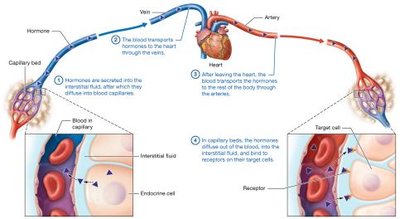
Comparison of the Endocrine and Nervous Systems
The endocrine and nervous systems both regulate body functions, but differ in their mechanisms and speed of action:
Endocrine system: Hormones are secreted into the interstitial fluid, diffuse into blood capillaries, and are transported throughout the body. Effects are generally slower to initiate but longer-lasting.
Nervous system: Neurotransmitters are released directly onto target cells, producing rapid but short-lived effects.
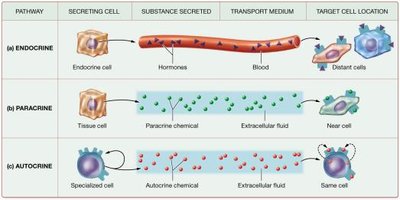
Types of Chemical Signaling
Not all chemical signals are classic hormones. Other types include:
Endocrine signals: Hormones travel through the blood to distant cells.
Paracrine signals: Chemicals affect nearby cells without entering the blood.
Autocrine signals: Chemicals affect the same cell that secreted them.
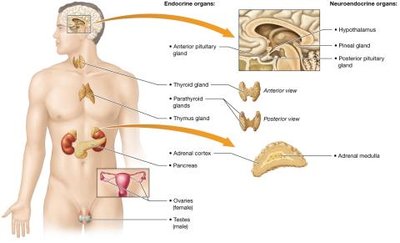
Overview of Endocrine Organs
Endocrine glands are ductless organs that secrete hormones into the interstitial fluid for transport by the bloodstream. Primary endocrine organs include the anterior pituitary, thyroid, parathyroid, adrenal cortices, pancreas, thymus, and gonads (ovaries/testes). Secondary endocrine glands, such as the heart, kidneys, small intestine, and adipose tissue, also produce hormones but are primarily part of other systems. Neuroendocrine organs (e.g., hypothalamus, pineal gland, adrenal medulla) are composed of nervous tissue but secrete hormones called neurohormones.
Hormones: Structure, Function, and Mechanisms
Classes of Hormones
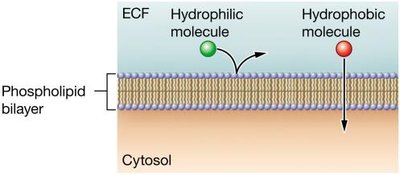
Amino Acid-Based Hormones: Derived from amino acids; generally hydrophilic (except thyroid hormone, which is hydrophobic).
Peptide/Protein Hormones: Chains of amino acids; hydrophilic.
Steroid Hormones: Derived from cholesterol; hydrophobic and lipid-soluble.
Hormone Transport in Blood
Free hormones: Hydrophilic, travel unbound in plasma.
Bound hormones: Hydrophobic, transported bound to plasma proteins, which extends their half-life.
Target Cells and Receptors
Hormones bind to specific receptors on or in target cells. The location of the receptor depends on the hormone's chemical nature:
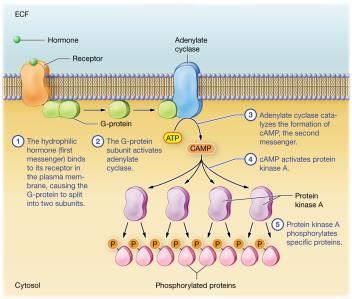
Plasma membrane receptors: Bind hydrophilic hormones.
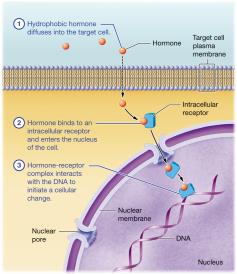
Intracellular receptors (cytosol or nucleus): Bind hydrophobic hormones.
Regulation of Receptor Number
Upregulation: Increase in receptor number in response to low hormone levels.
Downregulation: Decrease in receptor number after prolonged exposure to high hormone levels.
Mechanisms of Hormone Action
Hydrophilic hormones: Bind to cell surface receptors and activate second-messenger systems (e.g., cAMP pathway).
Hydrophobic hormones: Diffuse into cells, bind intracellular receptors, and directly influence gene expression.
Hormone Effects and Interactions
Stimulate secretion, activate/inhibit enzymes, regulate mitosis/meiosis, alter membrane potential, or affect gene expression.
Complementary actions: Different hormones work together for a common goal.
Synergists: Hormones act together to amplify an effect.
Antagonists: Hormones have opposing effects on the same target cell.
Hormone Half-Life and Elimination
Hormones are removed from circulation by the kidneys (urine) or liver (enzymatic breakdown).
Hydrophobic hormones generally have longer half-lives than hydrophilic hormones.
Regulation of Hormone Secretion
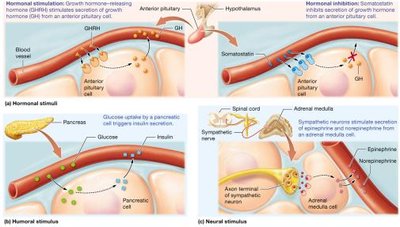
Types of Stimuli
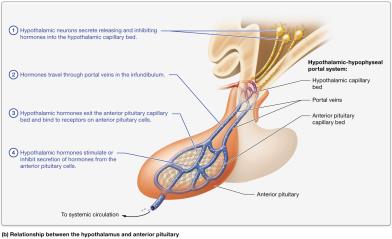
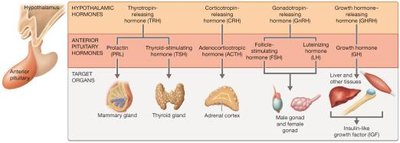
Hormonal stimuli: Hormone release triggered by other hormones (e.g., hypothalamic hormones regulate anterior pituitary).
Humoral stimuli: Changes in blood levels of ions or nutrients (e.g., blood glucose triggers insulin release).
Neural stimuli: Nerve fibers stimulate hormone release (e.g., sympathetic stimulation of adrenal medulla).
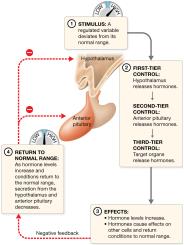
Negative Feedback Loops
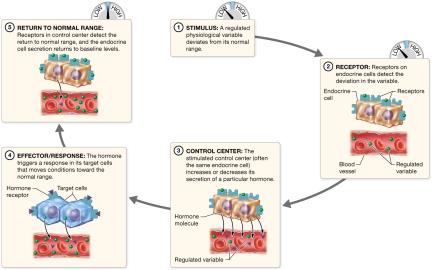
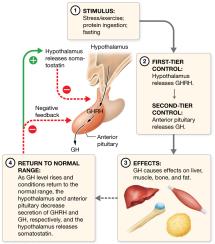
Hormone secretion is typically regulated by negative feedback loops to maintain homeostasis:
Stimulus: Physiological variable deviates from normal.
Receptor: Endocrine cells detect the change.
Control center: Endocrine cell increases/decreases hormone secretion.
Effector/response: Hormone triggers a response to restore normal conditions.
Return to normal: Secretion returns to baseline.
Hypothalamus and Pituitary Gland
Structure and Functional Relationships
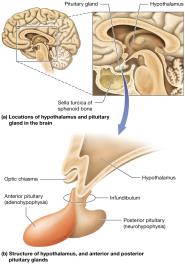
The hypothalamus connects to the pituitary gland via the infundibulum. The pituitary gland has two parts:
Anterior pituitary (adenohypophysis): True gland, secretes hormones in response to hypothalamic releasing/inhibiting hormones via the hypophyseal portal system.
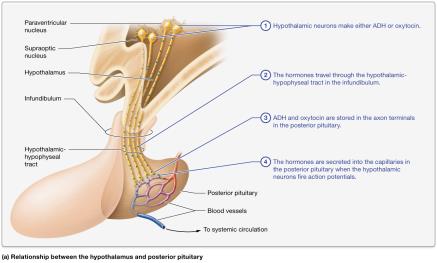
Posterior pituitary (neurohypophysis): Nervous tissue, stores and releases neurohormones produced by the hypothalamus.
Hormones of the Posterior Pituitary
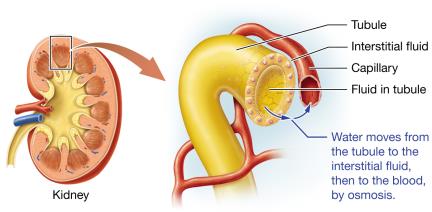
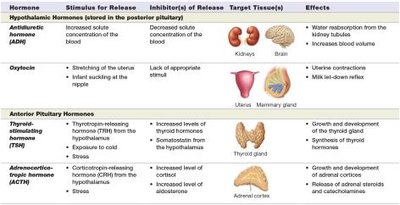
Antidiuretic hormone (ADH): Promotes water retention by the kidneys; released in response to high blood solute concentration.
Oxytocin: Stimulates uterine contractions and milk ejection; involved in positive feedback during childbirth and lactation.
Hormones of the Anterior Pituitary
Thyroid-stimulating hormone (TSH): Stimulates thyroid hormone production.
Adrenocorticotropic hormone (ACTH): Stimulates adrenal cortex hormone production.
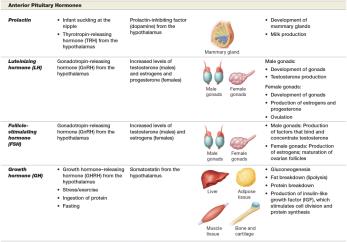
Prolactin: Stimulates milk production.
Luteinizing hormone (LH) and Follicle-stimulating hormone (FSH): Regulate gonadal function.
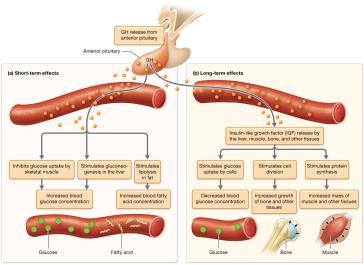
Growth hormone (GH): Stimulates growth, protein synthesis, and cell division.
Summary Table: Hypothalamic and Pituitary Hormones
Hormone | Stimulus for Release | Inhibitor of Release | Target Tissue(s) | Effects |
|---|---|---|---|---|
ADH | Increased solute concentration of blood | Decreased solute concentration of blood | Kidneys, brain | Water reabsorption, increased blood volume |
Oxytocin | Uterine stretching, infant suckling | Lack of appropriate stimuli | Uterus, mammary gland | Uterine contraction, milk let-down |
TSH | TRH from hypothalamus, cold, stress | Somatostatin from hypothalamus | Thyroid gland | Growth and secretion of thyroid hormones |
ACTH | CRH from hypothalamus, stress | Increased cortisol, aldosterone | Adrenal cortex | Growth and secretion of adrenal hormones |
Prolactin | Infant suckling, TRH from hypothalamus | Dopamine from hypothalamus | Mammary gland | Milk production |
LH | GnRH from hypothalamus | Increased testosterone/estrogen/progesterone | Male/female gonads | Gonadal development, hormone production |
FSH | GnRH from hypothalamus | Inhibin, increased sex hormones | Male/female gonads | Gonadal development, gamete production |
GH | GHRH from hypothalamus, stress, protein intake, fasting | Somatostatin from hypothalamus | Liver, muscle, bone, fat | Growth, protein synthesis, fat breakdown |
Thyroid and Parathyroid Glands
Structure and Function
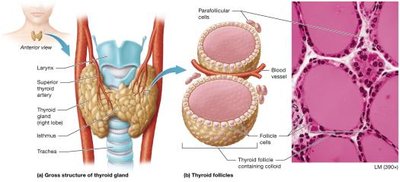
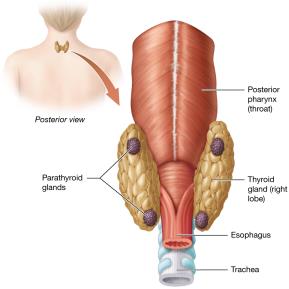
The thyroid gland is located in the anterior neck and consists of right and left lobes connected by an isthmus. It is composed of thyroid follicles filled with colloid, where thyroid hormone precursors are stored. Parafollicular cells produce calcitonin. The parathyroid glands are usually four small glands on the posterior thyroid, with chief cells producing parathyroid hormone (PTH).
Thyroid Hormones: Synthesis and Effects
Triiodothyronine (T3) and Thyroxine (T4): Regulate basal metabolic rate, thermoregulation, growth, and development; upregulate sympathetic receptors.
T4 is converted to T3 in target cells; T3 is more active.
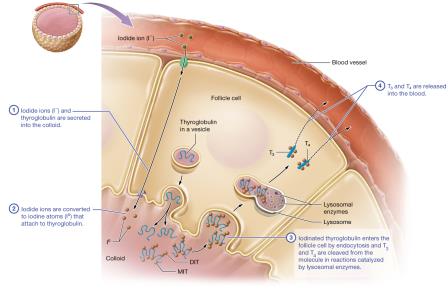
Production involves iodide uptake, thyroglobulin synthesis, iodination, and release into blood.
Regulation of Thyroid Hormone Production
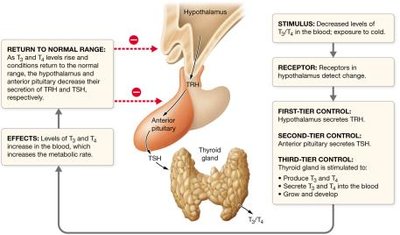
Regulated by a negative feedback loop involving TRH (hypothalamus), TSH (anterior pituitary), and thyroid hormones. Low T3/T4 or cold exposure increases TRH and TSH, stimulating thyroid hormone production.
Thyroid Disorders
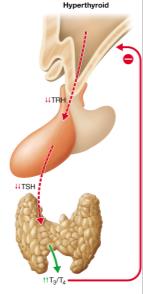
Hyperthyroidism: Excess thyroid hormone (e.g., Graves disease); symptoms include weight loss, heat intolerance, tachycardia, goiter, exophthalmos.
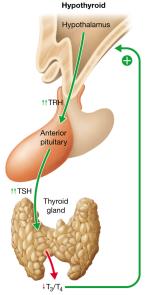
Hypothyroidism: Deficient thyroid hormone (e.g., Hashimoto thyroiditis, iodine deficiency); symptoms include weight gain, cold intolerance, bradycardia, goiter.
Congenital hypothyroidism: In infants, leads to developmental delays if untreated.

Parathyroid Hormone and Calcitonin: Bone Homeostasis
PTH: Increases blood calcium by stimulating osteoclasts, increasing intestinal absorption (via vitamin D), and increasing renal reabsorption.
Calcitonin: Lowers blood calcium by inhibiting osteoclasts (less significant in adults).
Adrenal Glands
Structure
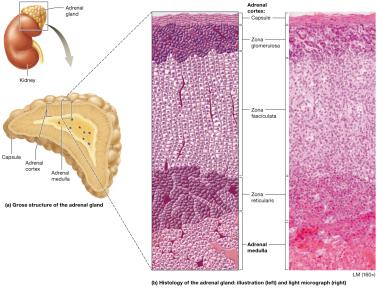
Located atop the kidneys, each adrenal gland has an outer cortex (endocrine) and inner medulla (neuroendocrine). The cortex has three zones: zona glomerulosa (mineralocorticoids), zona fasciculata (glucocorticoids), and zona reticularis (androgenic steroids).
Hormones of the Adrenal Cortex
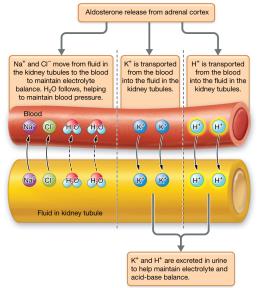
Mineralocorticoids (Aldosterone): Regulate sodium, potassium, and acid-base balance; increase blood pressure by promoting sodium and water retention.
Glucocorticoids (Cortisol): Mediate stress response, increase blood glucose via gluconeogenesis, anti-inflammatory effects.
Androgenic steroids: Minor role in adults; can be converted to sex hormones.
Hormones of the Adrenal Medulla
Epinephrine and Norepinephrine: Mediate the fight-or-flight response; increase heart rate, blood pressure, and metabolic rate.
Pancreas and Glucose Homeostasis
Structure and Function
The pancreas contains both exocrine (acinar cells) and endocrine (islets of Langerhans) components. The islets contain alpha cells (glucagon), beta cells (insulin), and delta cells (somatostatin).
Hormones of the Endocrine Pancreas
Glucagon: Increases blood glucose by promoting glycogenolysis, gluconeogenesis, and ketone body formation.
Insulin: Lowers blood glucose by promoting glucose uptake, glycogen synthesis, and fat storage.
Diabetes Mellitus
Type 1: Autoimmune destruction of beta cells; requires insulin therapy.
Type 2: Insulin resistance; associated with obesity and heredity; may require lifestyle changes, oral hypoglycemics, or insulin.
Blood Glucose Regulation
Blood glucose is maintained within a narrow range by the opposing actions of insulin and glucagon, regulated by negative feedback loops.
Other Endocrine Organs and Hormones
Thymus: Secretes thymosin and thymopoietin for T cell maturation.
Gonads: Testes produce testosterone; ovaries produce estrogens and progesterone.
Pineal gland: Secretes melatonin, regulates sleep-wake cycles.
Adipose tissue: Produces leptin, regulates satiety.
Heart: Produces atrial natriuretic peptide (ANP), lowers blood pressure.
Kidneys: Produce erythropoietin (EPO), renin, and activate vitamin D.
Hormonal Control of Homeostasis
Metabolic Homeostasis
Thyroid hormones set basal metabolic rate.
Insulin and glucagon regulate nutrient storage and mobilization during feeding and fasting.
Catecholamines and glucagon increase during exercise to provide metabolic fuels.
Fluid Homeostasis
ADH, aldosterone, and ANP regulate water and electrolyte balance, blood volume, and pressure.
