 Back
The Endocrine System: Structure, Function, and Regulation
Study Guide - Smart Notes
 Tailored notes based on your materials, expanded with key definitions, examples, and context.
Endocrine System Overview
Definition and Function
The endocrine system is the body's second major controlling system, influencing metabolic activities of cells through the release of hormones. It plays a crucial role in maintaining homeostasis, typically via negative feedback mechanisms.
Communication: Occurs through neurotransmitters, paracrines, and hormones.
Hormones: Chemical messengers released into the bloodstream to regulate physiological processes.
Homeostasis: Maintained by adjusting metabolic activity in response to internal and external stimuli.
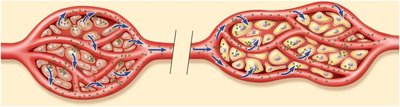
Endocrine vs. Exocrine Glands
Glands are classified based on their mode of secretion and target effects:
Exocrine glands: Use ducts to carry secretions outside the body or into organ cavities; produce extracellular effects (e.g., sweat, digestive enzymes).
Endocrine glands: Release hormones directly into the blood or extracellular fluid; produce intracellular effects.
Dual-role organs: Pancreas and gonads function as both endocrine and exocrine glands.
Major Endocrine Organs
The primary endocrine glands include the pituitary, thyroid, parathyroid, adrenal, pineal, and thymus. Some organs, such as the pancreas and gonads, have both endocrine and exocrine functions. The hypothalamus serves as a bridge between the nervous and endocrine systems.
Other hormone-producing tissues: Adipose cells, intestinal wall, stomach, kidneys, and heart.
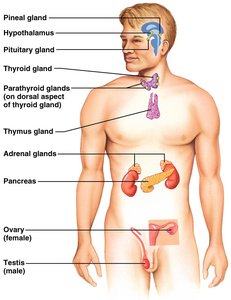
Hormones: Types and Mechanisms
Hormone Classification
Hormones are classified based on their chemical structure and solubility:
Amino acid-based hormones: Includes catecholamines, thyroxine, peptides, and proteins. These are hydrophilic and act via second messenger systems.
Steroid hormones: Derived from cholesterol, hydrophobic, and act directly on nuclear receptors to alter gene expression.
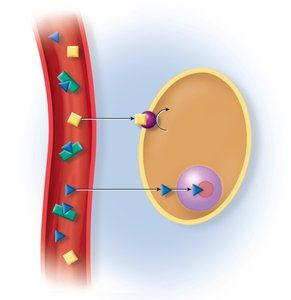
Hormone Transport and Action
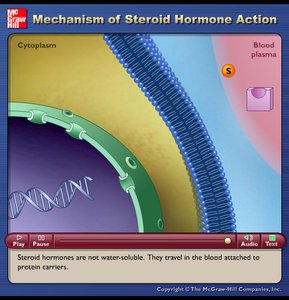
Hydrophilic hormones circulate freely in plasma and bind to cell surface receptors, while hydrophobic hormones are transported bound to proteins and penetrate cell membranes to act on nuclear receptors.
Hydrophilic hormones: Cannot cross cell membranes; use second messengers (e.g., cAMP).
Hydrophobic hormones: Cross cell membranes; directly influence gene transcription.
Second Messenger Systems
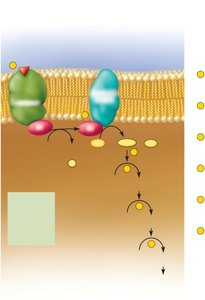
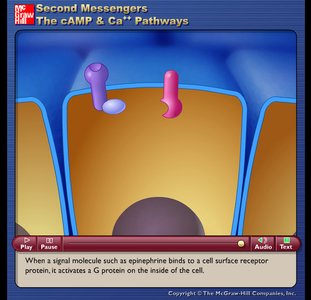
Peptides and catecholamines (hydrophilic hormones) activate second messenger systems:
Hormone binds to cell-surface receptor.
Receptor activates G protein.
G protein activates adenylate cyclase, producing cAMP.
cAMP activates protein kinases, which phosphorylate enzymes, leading to various metabolic effects.
Steroid Hormone Mechanism
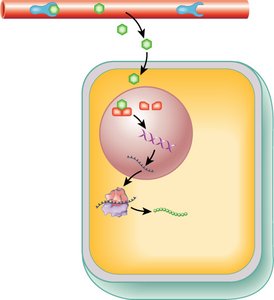
Steroid hormones diffuse into cells, bind to intracellular receptors, and directly activate genes, resulting in mRNA production and protein synthesis.
Hormone-receptor complex enters nucleus.
Promotes DNA transcription to mRNA.
mRNA directs synthesis of specific proteins, altering cell activity.
Target Cell Specificity and Regulation
Target Cell Specificity
Hormones circulate throughout the body but only affect cells with specific receptors (target cells). Receptors may be located on the plasma membrane or intracellularly.
ACTH: Receptors only on adrenal cortex cells.
Thyroxine: Receptors found on nearly all body cells.
Target Cell Activation
Activation depends on:
Blood hormone levels
Number of receptors on target cell
Affinity of receptors for the hormone
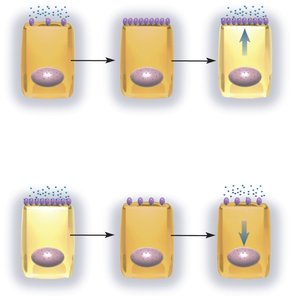
Up-regulation: Target cells increase receptor number in response to hormone. Down-regulation: Target cells decrease receptor number in response to hormone.
Hormone Interactions
Hormones can interact at target cells in three ways:
Permissiveness: One hormone enhances the response to another (e.g., estrogen prepares uterus for progesterone).
Synergism: Multiple hormones act together for a greater effect (e.g., FSH and testosterone on sperm production).
Antagonism: One hormone opposes the action of another (e.g., insulin vs. glucagon).
Control of Hormone Release
Feedback Mechanisms
Hormone levels are regulated by negative feedback systems, maintaining concentrations within a narrow range. Hormones are released in response to humoral, neural, or hormonal stimuli.
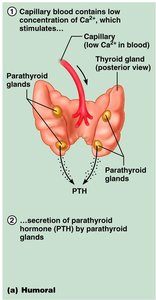
Humoral Stimuli
Hormone secretion in response to changing blood levels of ions and nutrients. Example: Low blood calcium stimulates parathyroid hormone (PTH) release.
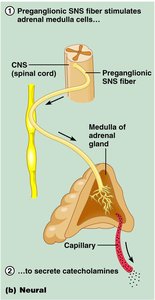
Neural Stimuli
Nerve fibers stimulate hormone release. Example: Preganglionic sympathetic fibers stimulate adrenal medulla to secrete catecholamines.
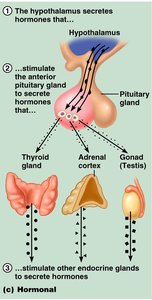
Hormonal Stimuli
Hormone release in response to hormones produced by other endocrine organs. Example: Hypothalamic hormones stimulate the anterior pituitary, which in turn stimulates other endocrine glands.
Nervous vs. Endocrine System
Communication and Regulation
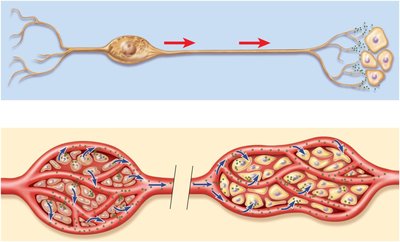
The nervous and endocrine systems both regulate physiological processes but differ in their mechanisms:
Nervous system: Electrical and chemical communication; fast, targeted, and specific responses.
Endocrine system: Chemical communication only; slower, persistent, and widespread effects.
Similarities and Overlap
Certain chemicals act as both hormones and neurotransmitters (e.g., norepinephrine, dopamine).
Some hormones are secreted by neuroendocrine cells (e.g., oxytocin).
Both systems can regulate the same target cells and influence each other.
Hypothalamus and Pituitary Gland
Hypothalamus
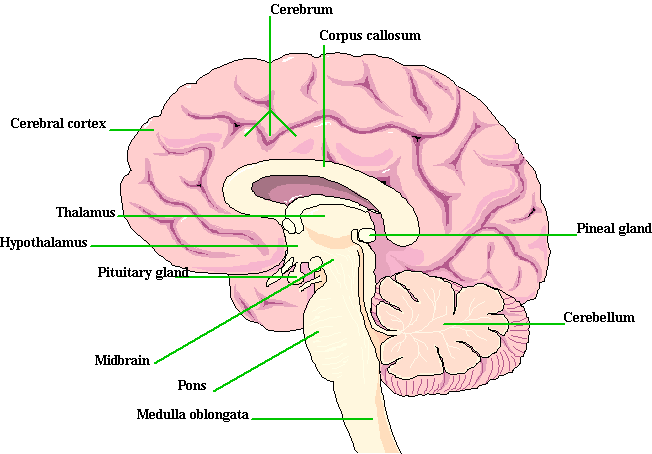
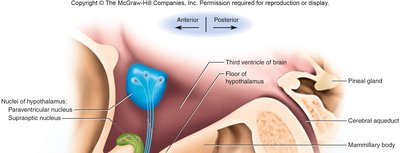
The hypothalamus is a major integrating link between the nervous and endocrine systems. It regulates primitive functions and controls the activity of the pituitary gland by producing releasing and inhibiting hormones.
Pituitary Gland (Hypophysis)
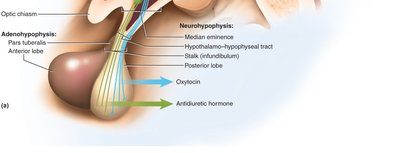
The pituitary gland is a two-lobed organ that secretes nine major hormones. It is divided into:
Neurohypophysis (posterior lobe): Neural tissue; stores and releases hormones from the hypothalamus.
Adenohypophysis (anterior lobe): Glandular tissue; synthesizes and secretes hormones, including tropic hormones that stimulate other endocrine glands.
Hypophyseal Portal System
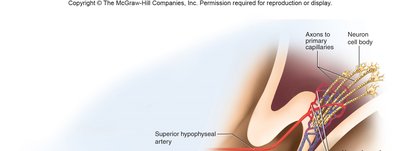
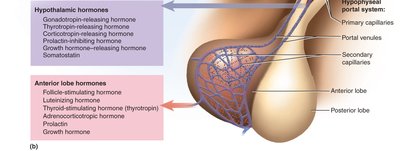
Hypothalamic releasing and inhibiting hormones travel through the hypophyseal portal system to the anterior pituitary, regulating hormone secretion.
Anterior Pituitary Hormones
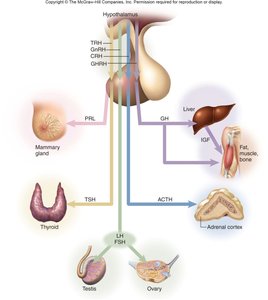
The anterior pituitary synthesizes and secretes several hormones:
FSH (Follicle Stimulating Hormone): Stimulates ovarian follicle development and sperm production.
LH (Luteinizing Hormone): Triggers ovulation and stimulates sex hormone production.
TSH (Thyroid Stimulating Hormone): Stimulates thyroid hormone secretion.
ACTH (Adrenocorticotropic Hormone): Stimulates adrenal cortex to release glucocorticoids.
PRL (Prolactin): Stimulates milk production and testosterone secretion.
GH (Growth Hormone): Stimulates mitosis, cellular differentiation, and protein synthesis.
Feedback Regulation
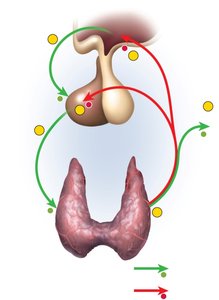
Hormone secretion is regulated by feedback from target organs:
Negative feedback: Increased hormone levels inhibit further release.
Positive feedback: Example: Uterine stretching increases oxytocin release, causing contractions.
Summary Table: Anterior Pituitary Hormones
Hormone | Target | Main Function |
|---|---|---|
FSH | Ovaries/Testes | Follicle development, sperm production |
LH | Ovaries/Testes | Ovulation, sex hormone secretion |
TSH | Thyroid | Thyroid hormone secretion |
ACTH | Adrenal Cortex | Glucocorticoid secretion |
PRL | Mammary glands/Testes | Milk production, testosterone secretion |
GH | Most tissues | Growth, protein synthesis |
Key Equations
Second Messenger System (cAMP):
Negative Feedback Regulation:
Additional info: Academic context was added to clarify hormone mechanisms, feedback regulation, and the functional anatomy of the endocrine system.
