 Back
The Endocrine System: Structure, Function, and Hormonal Regulation
Study Guide - Smart Notes
 Tailored notes based on your materials, expanded with key definitions, examples, and context.
The Endocrine System
Overview of the Endocrine System
The endocrine system is a collection of glands that secrete hormones directly into the bloodstream to regulate various body functions. It works closely with the nervous system to maintain homeostasis, but its effects are generally slower and longer-lasting.
Endocrine glands are ductless and release hormones into the blood.
Exocrine glands secrete substances through ducts to the outside of the body or into the digestive tract.
Major endocrine glands include the pituitary, thyroid, parathyroid, adrenal, pancreas, gonads (ovaries and testes), pineal, and thymus glands.
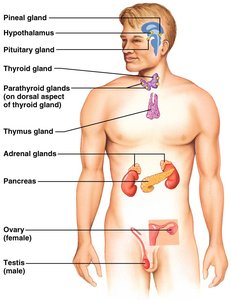
Comparison: Endocrine vs. Nervous System
Endocrine system: Uses hormones as messengers, targets any cell with a receptor, slower onset, longer duration.
Nervous system: Uses neurotransmitters, targets neurons, muscles, and glands, rapid onset, short duration.
Hormonal Regulation and Feedback Mechanisms
Types of Hormonal Regulation
Humoral: Changes in blood levels of ions/nutrients trigger hormone release (e.g., calcium, glucose).
Neural: Nerve fibers stimulate hormone release (e.g., adrenal medulla).
Hormonal: Hormones stimulate other endocrine glands (e.g., hypothalamic-pituitary axis).
Negative Feedback Mechanism
Most hormone secretion is regulated by negative feedback, where rising hormone levels inhibit further release to maintain balance.
Pituitary Gland and Hypothalamus
Posterior Pituitary Hormones
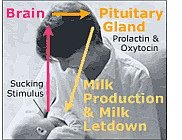
Oxytocin: Stimulates uterine contractions during childbirth and milk ejection during breastfeeding. Regulated by positive feedback.
Antidiuretic Hormone (ADH): Promotes water reabsorption in kidneys, decreases urine output, increases blood pressure.
Thyroid Gland
Structure and Hormones
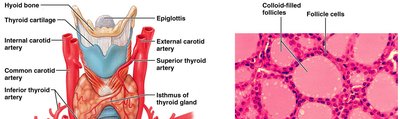
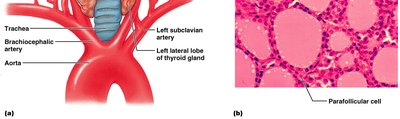
The thyroid gland is located in the anterior neck and is the largest endocrine gland. It produces thyroid hormones (T3 and T4) that regulate metabolism and calcitonin, which lowers blood calcium levels.
Thyroid follicles: Spherical structures filled with colloid, lined by follicular cells that produce T3 and T4.
Parafollicular cells: Produce calcitonin.
Regulation of Thyroid Hormone
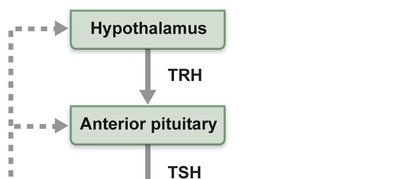
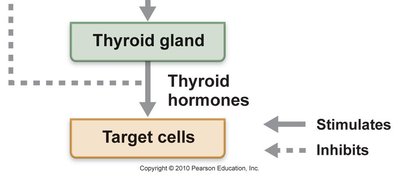
Thyroid hormone release is regulated by the hypothalamic-pituitary-thyroid axis:
Hypothalamus releases TRH (thyrotropin-releasing hormone).
TRH stimulates anterior pituitary to release TSH (thyroid-stimulating hormone).
TSH stimulates the thyroid gland to release T3 and T4.
Elevated T3/T4 levels inhibit TRH and TSH release (negative feedback).
Effects of Thyroid Hormone
Increases metabolic rate and oxygen consumption.
Promotes heat production (calorigenic effect).
Stimulates appetite and breakdown of carbohydrates, fats, and proteins.
Essential for normal growth, development, and maturation of the nervous and skeletal systems.
Calcitonin
Produced by parafollicular cells of the thyroid.
Lowers blood calcium by inhibiting osteoclast activity and stimulating calcium uptake into bone.
Antagonist to parathyroid hormone (PTH).
Parathyroid Glands
Structure and Function
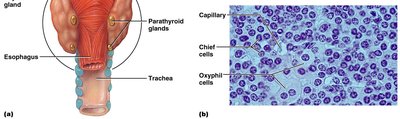
The parathyroid glands are small glands located on the posterior aspect of the thyroid. Chief cells secrete parathyroid hormone (PTH), which regulates blood calcium levels.
PTH increases blood calcium by stimulating osteoclasts, increasing calcium reabsorption in kidneys, and activating vitamin D to enhance intestinal absorption.
Negative feedback: Rising blood calcium inhibits PTH release.
Adrenal (Suprarenal) Glands
Structure
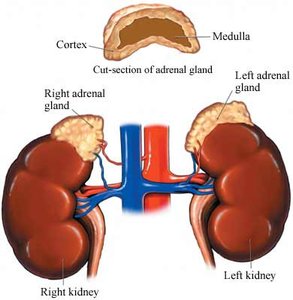
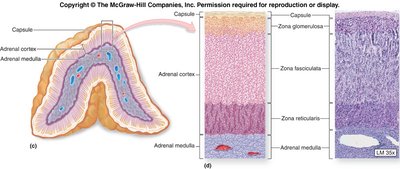
The adrenal glands are located atop the kidneys and consist of two regions: the cortex (outer) and medulla (inner).
Adrenal Cortex
Zona glomerulosa: Produces mineralocorticoids (aldosterone) for sodium and potassium balance.
Zona fasciculata: Produces glucocorticoids (cortisol) for glucose metabolism and stress response.
Zona reticularis: Produces gonadocorticoids (androgens).
Adrenal Medulla
Secretes epinephrine and norepinephrine in response to sympathetic stimulation.
Effects include increased heart rate, blood pressure, and blood glucose.
Regulation of Aldosterone
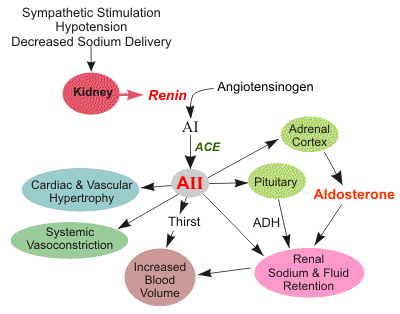
Stimulated by high potassium, low sodium, low blood volume/pressure, and the renin-angiotensin system.
Inhibited by atrial natriuretic peptide (ANP).
Pancreas
Structure and Function
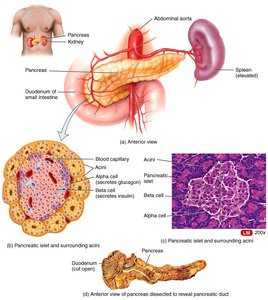
The pancreas has both exocrine (digestive enzyme secretion) and endocrine (hormone secretion) functions. The endocrine portion consists of the islets of Langerhans, which contain alpha and beta cells.
Alpha cells: Secrete glucagon (raises blood glucose).
Beta cells: Secrete insulin (lowers blood glucose).
Regulation of Blood Glucose
Insulin is secreted after meals to promote glucose uptake and storage.
Glucagon is secreted during fasting to promote glycogen breakdown and glucose release from the liver.
Diabetes Mellitus
Results from hyposecretion or hypoactivity of insulin.
Type I: Autoimmune destruction of beta cells; requires insulin therapy.
Type II: Insulin resistance; managed with diet, exercise, and sometimes medication.
Gonads
Ovaries
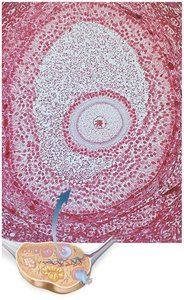
Produce estrogens and progesterone, responsible for female reproductive organ maturation, secondary sexual characteristics, and menstrual cycle regulation.
Testes
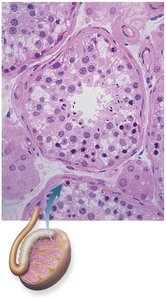
Produce testosterone, responsible for male reproductive organ maturation, secondary sexual characteristics, and sperm production.
Pineal Gland
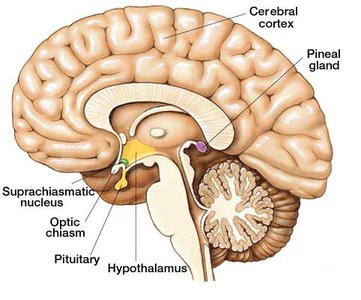
Located in the brain; secretes melatonin, which regulates circadian rhythms and sleep cycles.
Thymus
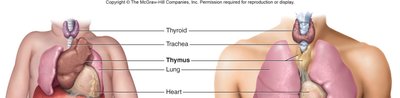
Located deep to the sternum; secretes thymopoietins and thymosins, essential for T cell development and immune function.
Other Hormone-Producing Structures
Heart: Produces atrial natriuretic peptide (ANP) to reduce blood pressure.
Kidneys: Secrete erythropoietin for red blood cell production.
Skin: Produces cholecalciferol (vitamin D precursor).
Adipose tissue: Releases leptin, regulating appetite and energy expenditure.
Summary Table: Major Endocrine Glands and Hormones
Gland | Hormone(s) | Main Function(s) |
|---|---|---|
Pituitary (anterior/posterior) | GH, TSH, ACTH, FSH, LH, PRL, ADH, Oxytocin | Growth, metabolism, reproduction, water balance |
Thyroid | T3, T4, Calcitonin | Metabolism, calcium regulation |
Parathyroid | PTH | Calcium regulation |
Adrenal cortex | Aldosterone, Cortisol, Androgens | Electrolyte balance, stress response, sex hormones |
Adrenal medulla | Epinephrine, Norepinephrine | Fight-or-flight response |
Pancreas | Insulin, Glucagon | Blood glucose regulation |
Ovaries | Estrogen, Progesterone | Female reproduction |
Testes | Testosterone | Male reproduction |
Pineal | Melatonin | Sleep/wake cycles |
Thymus | Thymosins | Immune cell maturation |
