 Back
The Endocrine System: Structure, Function, and Regulation
Study Guide - Smart Notes
 Tailored notes based on your materials, expanded with key definitions, examples, and context.
The Endocrine System
Overview of the Endocrine System
The endocrine system is composed of small, widely distributed glands that secrete hormones directly into the bloodstream. Despite their modest size, these organs play a crucial role in maintaining homeostasis by regulating metabolism, growth, reproduction, and other vital functions. Unlike other organ systems, the endocrine system lacks anatomical continuity, with its tissues scattered throughout the body.
Hormones are chemical messengers secreted by endocrine cells into extracellular fluids, affecting the metabolic activity of target cells.
Hormones are classified chemically as amino acid-based molecules (proteins, peptides, amines), steroids (derived from cholesterol), and prostaglandins (lipid derivatives).
Each hormone affects only specific target cells that possess the appropriate receptors.
Hormone Mechanisms of Action
Hormones alter cellular activity by increasing or decreasing the rate of normal metabolic processes. The effects depend on the hormone and target cell type. Major actions include:
Changing membrane permeability or potential
Activating or inactivating enzymes
Stimulating or inhibiting cell division
Promoting or inhibiting secretion of products
Regulating gene transcription
There are two main mechanisms by which hormones act:
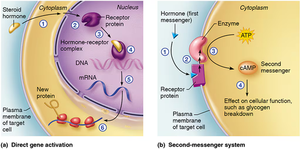
Steroid hormones (and thyroid hormone) use direct gene activation because they are lipid-soluble and can diffuse through the plasma membrane to bind intracellular receptors, influencing gene transcription and protein synthesis.
Protein and peptide hormones are water-soluble and act via second-messenger systems. They bind to membrane receptors, triggering a cascade that generates intracellular second messengers (e.g., cAMP) to mediate cellular responses.
Regulation of Hormone Release
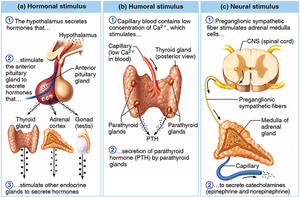
Hormone secretion is primarily regulated by negative feedback mechanisms, ensuring blood hormone levels remain within narrow limits. The main types of stimuli for hormone release are:
Hormonal stimuli: Endocrine glands are stimulated by hormones from other glands (e.g., hypothalamic hormones stimulate the anterior pituitary).
Humoral stimuli: Changes in blood levels of ions or nutrients trigger hormone release (e.g., low blood calcium stimulates parathyroid hormone release).
Neural stimuli: Nerve fibers stimulate hormone release (e.g., sympathetic stimulation of the adrenal medulla).
Major Endocrine Organs and Their Hormones
Hypothalamus and Pituitary Gland
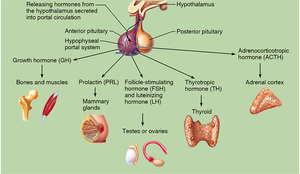
The hypothalamus is a key neuroendocrine organ that produces releasing and inhibiting hormones, regulating the anterior pituitary. The pituitary gland, located at the base of the brain, consists of two lobes:
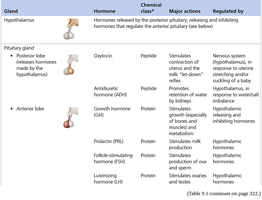
Posterior pituitary: Stores and releases oxytocin and antidiuretic hormone (ADH) produced by the hypothalamus.
Anterior pituitary: Produces growth hormone (GH), prolactin (PRL), follicle-stimulating hormone (FSH), luteinizing hormone (LH), thyroid-stimulating hormone (TSH), and adrenocorticotropic hormone (ACTH).
Pineal Gland
The pineal gland secretes melatonin, which regulates sleep-wake cycles and may influence reproductive timing.
Thyroid and Parathyroid Glands
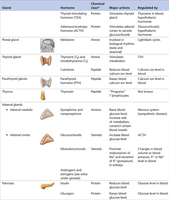
The thyroid gland produces thyroid hormone (T3 and T4), which regulates metabolism, and calcitonin, which lowers blood calcium levels. The parathyroid glands secrete parathyroid hormone (PTH), the main regulator of blood calcium, increasing it by stimulating bone resorption, kidney reabsorption, and intestinal absorption.
Thymus
The thymus produces thymosin, essential for T-lymphocyte development and immune function.
Adrenal Glands
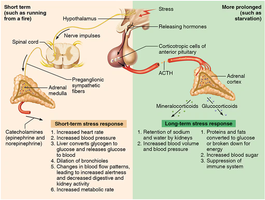
The adrenal glands consist of the cortex (producing corticosteroids) and the medulla (producing catecholamines):
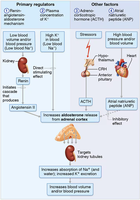
Mineralocorticoids (e.g., aldosterone): Regulate sodium and potassium balance, and thus water balance and blood pressure.
Glucocorticoids (e.g., cortisol): Regulate metabolism, increase blood glucose, and suppress inflammation.
Sex hormones: Androgens and estrogens are produced in small amounts.
Catecholamines (epinephrine and norepinephrine): Mediate the fight-or-flight response, increasing heart rate, blood pressure, and blood glucose.
Pancreas
The pancreas is a mixed gland with both endocrine and exocrine functions. The islets of Langerhans secrete:
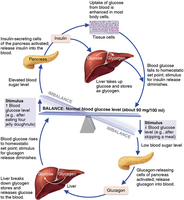
Insulin (from beta cells): Lowers blood glucose by promoting cellular uptake and storage of glucose.
Glucagon (from alpha cells): Raises blood glucose by stimulating glycogen breakdown and glucose release from the liver.
Gonads
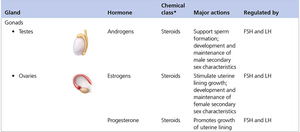
The ovaries and testes produce sex hormones:
Ovaries: Estrogens and progesterone regulate female reproductive development, secondary sex characteristics, and the menstrual cycle.
Testes: Testosterone regulates male reproductive development, secondary sex characteristics, and sperm production.
Other Hormone-Producing Organs
Other tissues, such as the heart, kidneys, digestive tract, and placenta, produce hormones with local or systemic effects. For example, the placenta produces human chorionic gonadotropin (hCG), human placental lactogen (hPL), and relaxin during pregnancy.
Hormone Regulation and Feedback
Negative Feedback and Homeostasis
Most hormone levels are regulated by negative feedback, where rising hormone levels inhibit further secretion. This maintains homeostasis and prevents overproduction.
Summary Table of Major Hormones
Hormone Action: Additional Examples
Prostaglandins and Gastrointestinal Hormones
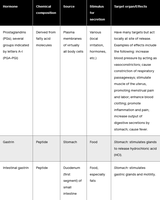
Prostaglandins are lipid-derived hormones with diverse local effects, including modulation of inflammation, smooth muscle contraction, and pain. Gastrointestinal hormones such as gastrin and intestinal gastrin regulate digestive processes.
Endocrine System and Aging
Changes Across the Lifespan
Endocrine function generally declines with age. In women, menopause results from decreased ovarian hormone production, leading to various physiological changes. In men, testosterone production declines more gradually. Aging is also associated with reduced growth hormone and insulin production, contributing to muscle atrophy and increased risk of type 2 diabetes.
Summary of Hormone Regulation Pathways
Stress Response Pathways
Key Points to Remember
Hormones are essential for regulating metabolism, growth, reproduction, and homeostasis.
Hormone action is highly specific, requiring target cell receptors.
Most hormone secretion is regulated by negative feedback.
The endocrine system interacts closely with the nervous system, especially via the hypothalamus and pituitary gland.
