 Back
The Endocrine System: Structure, Function, and Regulation
Study Guide - Smart Notes
 Tailored notes based on your materials, expanded with key definitions, examples, and context.
The Endocrine System
Overview of the Endocrine System
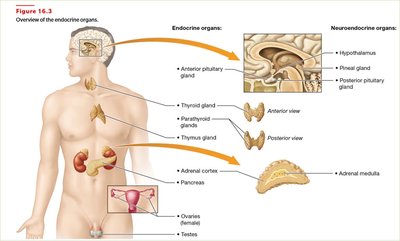
The endocrine system is a network of glands that secrete hormones to regulate various physiological processes throughout the body. These hormones act as chemical messengers, influencing growth, metabolism, reproduction, and homeostasis. The endocrine system works closely with the nervous system to maintain internal balance.
Endocrine organs: Include the pituitary gland, thyroid gland, parathyroid glands, adrenal glands, pancreas, ovaries, and testes.
Neuroendocrine organs: Include the hypothalamus and pineal gland, which integrate neural and hormonal signals.
Hormones: Proteins or steroids released from endocrine glands, most circulate in the blood before reaching target cells.
Types of Chemical Signaling
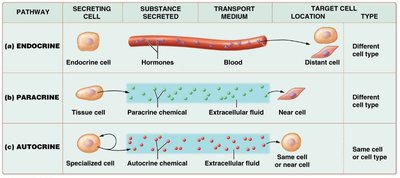
Hormones can act locally or at distant sites, depending on their mode of secretion and transport. The main types of chemical signaling are endocrine, paracrine, and autocrine.
Endocrine signaling: Hormones are released into the bloodstream and act on distant target cells.
Paracrine signaling: Local hormones act on neighboring cells without entering the bloodstream.
Autocrine signaling: Hormones act on the same cell that secreted them.
Hormone Transport and Target Cells
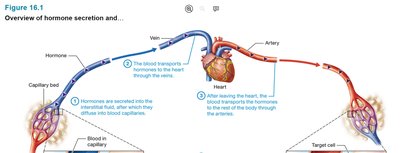
Hormones are secreted by endocrine cells, transported via the blood, and bind to specific receptors on target cells. The response depends on receptor availability and hormone concentration.
Down-regulation: Prolonged excess hormone leads to a decrease in receptor number.
Up-regulation: Increased hormone presence leads to an increase in receptor number.
Homeostasis and Feedback Regulation
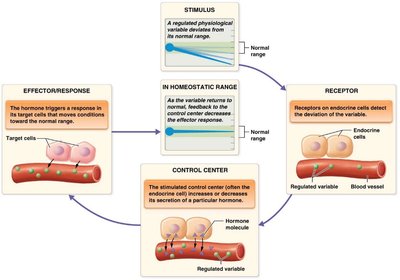
Hormone secretion is regulated by feedback mechanisms, primarily negative feedback, to maintain homeostasis. The process involves stimulus detection, receptor activation, control center response, and effector action.
Negative feedback: Most common mechanism; hormone levels are adjusted to keep physiological variables within normal range.
Stimuli: Can be hormonal, humoral (chemical changes in blood), or neural signals.
Types of Hormones
Water-Soluble vs. Lipid-Soluble Hormones
Hormones are classified based on their solubility, which determines their transport and mechanism of action.
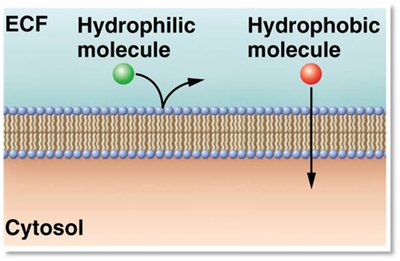
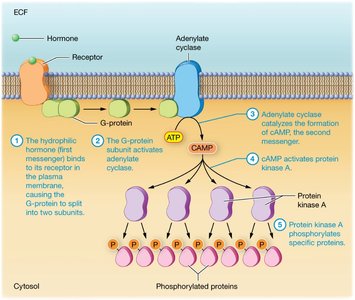
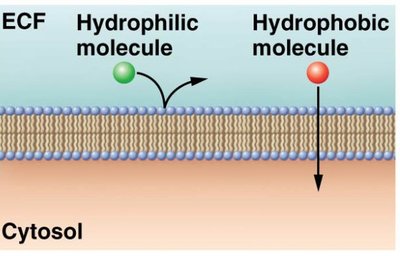
Water-soluble hormones: Include amines, peptides, proteins, and glycoproteins. They bind to cell membrane receptors and activate second messengers (e.g., cAMP).
Lipid-soluble hormones: Include steroids and thyroid hormones. They are bound to plasma proteins during transport, diffuse through cell membranes, and bind to intracellular receptors to alter gene expression.
Hypothalamus and Pituitary Gland
Structure and Function
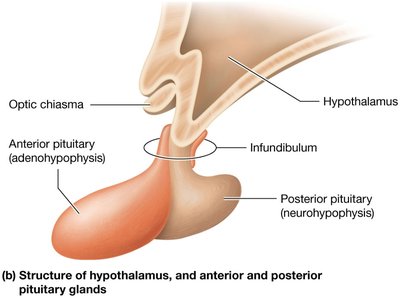
The hypothalamus is a major link between the nervous and endocrine systems, controlling the pituitary gland. The pituitary gland consists of an anterior (secretory) and posterior (neural) portion.
Anterior pituitary: Secretes six major hormones, including human growth hormone (hGH).
Posterior pituitary: Stores and releases oxytocin and antidiuretic hormone (ADH) from the hypothalamus.
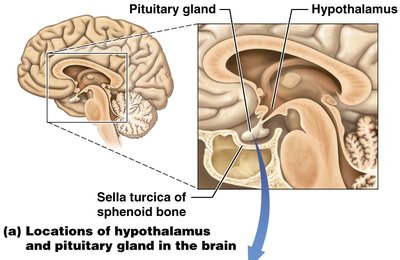
Control of Secretion
Hormone secretion from the hypothalamus and pituitary is regulated by negative feedback. Stimuli include neural signals, chemical changes in blood, and other hormones.
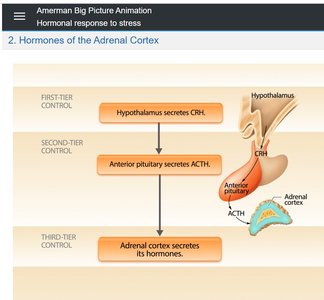
Example: Increased CRH (hypothalamus) leads to increased ACTH (anterior pituitary), which stimulates cortisol release (adrenal gland). Elevated cortisol then inhibits CRH and ACTH release.
Human Growth Hormone (hGH) and Insulin-like Growth Factors (IGFs)
hGH is the most plentiful anterior pituitary hormone, stimulating the production of IGFs by other organs. These hormones promote body growth, repair, and regulate metabolism.
Underproduction: Leads to abnormally small stature.
Overproduction: Leads to gigantism or acromegaly.
Posterior Pituitary Hormones
Oxytocin and Antidiuretic Hormone (ADH)
The posterior pituitary stores and releases two hormones from the hypothalamus:
Oxytocin: Stimulates uterine contractions and milk let-down response.
ADH: Conserves body water by decreasing urine volume and constricting arterioles to increase blood pressure. Osmoreceptors monitor solute concentration in blood to regulate ADH release.
The Thyroid and Parathyroid Glands
Thyroid Gland
The thyroid gland is bi-lobed and located inferior to the larynx. Follicles produce and release T4 (thyroxine) and T3 (triiodothyronine), which set the basal metabolic rate (BMR). Parafollicular cells release calcitonin, which decreases blood Ca2+ levels by inhibiting osteoclasts.
Parathyroid Glands
The parathyroid glands consist of four lobes embedded within the posterior thyroid. Chief cells produce and release parathyroid hormone (PTH), which increases blood Ca2+ levels by stimulating osteoclasts.
The Adrenal Glands
Structure and Function
The adrenal glands are located superior to each kidney and consist of an outer cortex and inner medulla.
Adrenal cortex: Has three zones:
Outer zone: Secretes mineralocorticoids (e.g., aldosterone) for mineral homeostasis.
Middle zone: Secretes glucocorticoids (e.g., cortisol) for glucose homeostasis and anti-inflammatory effects.
Inner zone: Secretes androgens with minimal effects.
Adrenal medulla: Produces epinephrine (E) and norepinephrine (NE), increasing effects of sympathetic stimulation under stress.
The Endocrine Pancreas
Structure and Function
The pancreas is located inferior and posterior to the stomach. It is mostly an exocrine organ (digestive enzymes), but 1% of its cells are grouped in islets and produce hormones.
Alpha cells: Secrete glucagon, increasing blood sugar.
Beta cells: Secrete insulin, decreasing blood sugar.
Delta cells: Secrete somatostatin, inhibiting insulin and glucagon.
Glucagon and Insulin
Glucagon and insulin are antagonistic hormones that maintain blood glucose levels within the normal range (80-100 mg/dL). Glucagon stimulates liver cells to release stored glycogen, while insulin stimulates uptake of glucose into body cells.
Other Endocrine Glands and Hormone-Secreting Tissues
Pineal and Thymus Glands
Pineal gland: Secretes melatonin and regulates diurnal rhythms.
Thymus gland: Secretes hormones that aid in T cell maturation (thymosin, thymopoietin).
Hormone-Secreting Tissues
Leptin: Induces satiety.
Other hormones: Regulate blood volume, blood pressure, and reproductive functions.
Testes: Secrete testosterone, promoting maturation of reproductive organs and secondary sex characteristics.
Ovaries: Secrete estrogens and progesterone, regulating menstrual cycle, oogenesis, pregnancy, and secondary sex characteristics.
Key Terms and Definitions
Metabolism: The sum of the body’s chemical reactions.
Basal Metabolic Rate (BMR): The amount of energy required by the body to carry out all its reactions when at rest.
Summary Table: Endocrine vs. Paracrine vs. Autocrine Signaling
Pathway | Secreting Cell | Substance Secreted | Transport Medium | Target Cell Location | Target Cell Type |
|---|---|---|---|---|---|
Endocrine | Endocrine cell | Hormones | Blood | Distant cell | Different cell type |
Paracrine | Tissue cell | Paracrine chemical | Extracellular fluid | Near cell | Different cell type |
Autocrine | Specialized cell | Autocrine chemical | Extracellular fluid | Same cell or near cell | Same cell or cell type |
Key Equations
Negative Feedback Regulation:
Additional info:
Hormones are essential for maintaining homeostasis and coordinating complex physiological processes.
Disorders of the endocrine system can lead to significant health issues, such as diabetes, hypothyroidism, hyperthyroidism, gigantism, and acromegaly.
