 Back
BackThe Endocrine System: Structure, Function, and Regulation
Study Guide - Smart Notes
 Tailored notes based on your materials, expanded with key definitions, examples, and context.
The Endocrine System: An Overview
Endocrine Glands
The endocrine system is composed of glands that secrete hormones directly into the bloodstream or surrounding tissues. Unlike exocrine glands, endocrine glands lack ducts, allowing hormones to travel through the extracellular fluid and affect distant target cells.
Functions: Regulate metabolism, growth, development, tissue function, and mood.
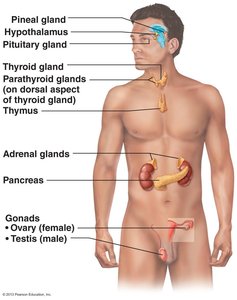
Locations: Major endocrine glands include the pituitary, thyroid, parathyroid, adrenal glands, pancreas, gonads, pineal gland, and thymus.
Hormones
The Chemistry of Hormones
Hormones are chemical messengers secreted into the extracellular fluid. They are classified based on their chemical structure and solubility:
Amino Acid-Based Hormones: Water-soluble; include most hormones except steroids and thyroid hormones.
Steroid Hormones: Lipid-soluble; derived from cholesterol (e.g., cortisol, estrogen).
Prostaglandins: Lipid-soluble; act locally (paracrine action) and do not fit the classic hormone definition.
Mechanism of Hormone Action
Hormones alter cellular activity by binding to specific receptors. The effect depends on the target cell, not the hormone itself. There are two main mechanisms:
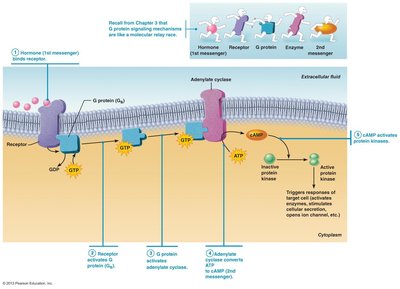
Amino Acid-Based Hormones and Second-Messenger System: Water-soluble hormones bind to receptors on the cell membrane, activating a cascade involving G proteins, adenylate cyclase, cAMP (second messenger), and protein kinases. This process is rapid due to pre-existing proteins.
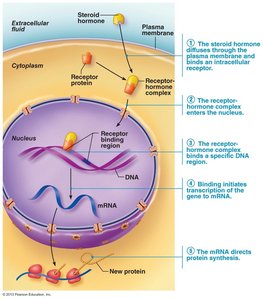
Steroid Hormones and Direct Gene Activation: Lipid-soluble hormones diffuse through the cell membrane, bind to intracellular receptors, and directly activate gene transcription in the nucleus. This process is slower, taking minutes to hours.
Hormone-Target Cell Specificity
Only cells with specific receptors for a hormone (target cells) will respond. A hormone can affect multiple cell types, and a cell can respond to multiple hormones.
Half-Life, Onset, and Duration of Hormone Activity
Water-soluble hormones: Short half-life, fast onset, short duration.
Lipid-soluble hormones: Long half-life, slow onset, long duration.
Control of Hormone Release
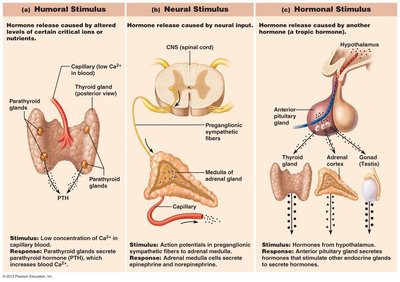
Hormone secretion is regulated by three main types of stimuli:
Humoral Stimuli: Changes in blood levels of ions/nutrients trigger hormone release (e.g., insulin in response to glucose).
Neural Stimuli: Nerve fibers stimulate hormone release (e.g., SNS stimulation of adrenal medulla).
Hormonal Stimuli: Hormones stimulate the release of other hormones (e.g., hypothalamic hormones regulating pituitary hormones).
Major Endocrine Organs
The Pituitary Gland (Hypophysis)
The pituitary gland is connected to the hypothalamus by the infundibulum and consists of two lobes: the anterior (adenohypophysis) and posterior (neurohypophysis) lobes.
Pituitary-Hypothalamic Relationships
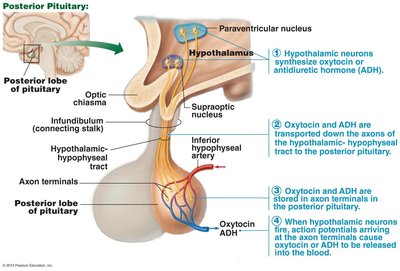
Posterior Lobe (Neurohypophysis): Stores and releases hormones (ADH and oxytocin) produced by the hypothalamus, transported via the hypothalamo-hypophyseal tract.
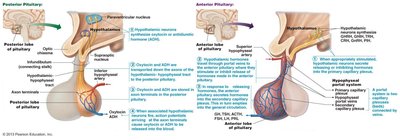
Anterior Lobe (Adenohypophysis): Receives releasing/inhibiting hormones from the hypothalamus via a portal system, which regulate the secretion of its own hormones.
Adenohypophyseal Hormones
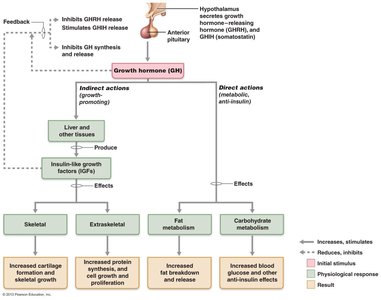
Growth Hormone (GH): Stimulates growth, protein synthesis, fat mobilization, and has a glucose-sparing effect. Regulated by GHRH and GHIH from the hypothalamus.
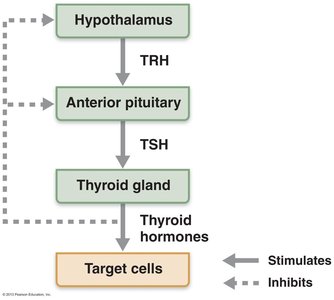
Thyroid-Stimulating Hormone (TSH): Stimulates thyroid gland activity; regulated by TRH from the hypothalamus.
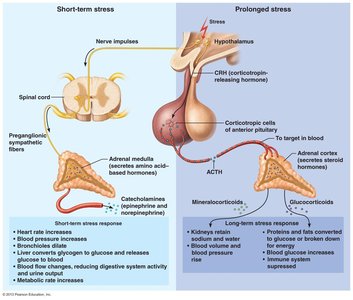
Adrenocorticotropic Hormone (ACTH): Stimulates adrenal cortex to release glucocorticoids; regulated by CRH from the hypothalamus.
Gonadotropins (FSH and LH): Regulate gonadal function and hormone production; stimulated by GnRH.
Prolactin (PRL): Promotes milk production; regulated by PRH and PIH.
Neurohypophyseal Hormones
Oxytocin: Stimulates uterine contractions during childbirth and milk ejection.
Antidiuretic Hormone (ADH): Regulates water balance by increasing water reabsorption in the kidneys.
The Thyroid Gland
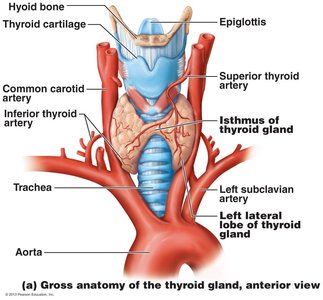
Location and Structure: Anterior to the trachea, bi-lobed, composed of follicles that store thyroglobulin.
Thyroid Hormone (TH)
Function: Includes T3 and T4, which regulate metabolism, growth, and development.
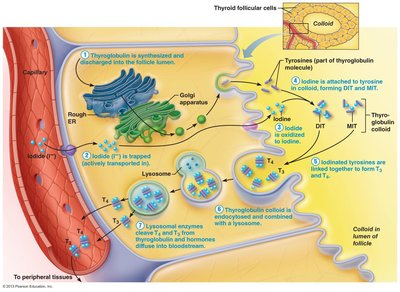
Synthesis: Involves iodination of thyroglobulin and storage in follicle lumen.
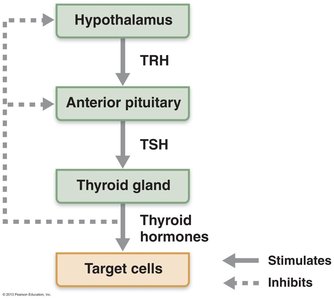
Transport and Regulation: T3 and T4 are transported bound to TBG; synthesis is regulated by TSH from the anterior pituitary.
Calcitonin
Produced by parafollicular cells; lowers blood calcium levels but is not the primary regulator.
The Parathyroid Glands
Location: Posterior surface of the thyroid gland.
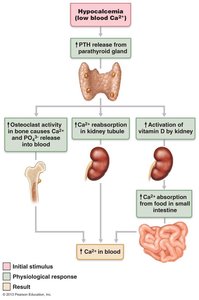
Parathyroid Hormone (PTH): Main regulator of blood calcium levels; increases blood Ca++ by stimulating osteoclasts, increasing kidney reabsorption, and activating vitamin D for intestinal absorption.
The Adrenal (Suprarenal) Glands
Location: Sit atop the kidneys; consist of cortex and medulla.
The Adrenal Cortex
Mineralocorticoids (e.g., aldosterone): Regulate sodium and potassium balance; secretion stimulated by the renin-angiotensin system, plasma ion concentration, ACTH, and inhibited by ANF.
Glucocorticoids (e.g., cortisol): Regulate metabolism, stress response, and have anti-inflammatory effects; secretion regulated by ACTH and CRH.
Gonadocorticoids (e.g., androgens): Contribute to secondary sex characteristics.
The Adrenal Medulla
Catecholamines (epinephrine and norepinephrine): Mediate the fight-or-flight response; effects are short-lived.
The Pancreas
Islets of Langerhans: Clusters of endocrine cells producing hormones.
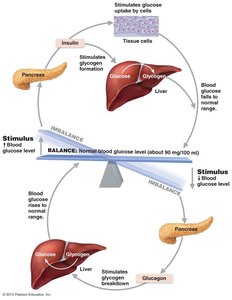
Glucagon: Secreted by alpha cells in response to low blood glucose; increases blood glucose by promoting glycogenolysis and gluconeogenesis.
Insulin: Secreted by beta cells in response to high blood glucose; lowers blood glucose by promoting cellular uptake and glycogen formation.
Type I Diabetes Mellitus: Caused by autoimmune destruction of beta cells; requires insulin therapy.
Type II Diabetes Mellitus: Characterized by insulin resistance; often managed with lifestyle changes and medication.
The Gonads
Female Hormones: Estrogens and progesterone regulate reproductive organ maturation, secondary sex characteristics, and menstrual cycle changes.
Male Hormone: Testosterone is essential for male reproductive organ development, secondary sex characteristics, and sex drive.
The Pineal Gland
Secretes melatonin, which regulates circadian rhythms and reproductive timing in some animals.
The Thymus
Secretes hormones necessary for T lymphocyte development; shrinks with age.
