 Back
BackThe Endocrine System: Structure, Function, and Regulation
Study Guide - Smart Notes
 Tailored notes based on your materials, expanded with key definitions, examples, and context.
The Endocrine System: Overview
Introduction to the Endocrine System
The endocrine system is a major regulatory system of the body, coordinating and integrating the activities of cells and organs through the secretion of hormones. It works closely with the nervous system to maintain homeostasis, but differs in the speed and duration of its effects.
Endocrine cells and tissues produce hormones—chemical messengers that regulate physiological processes.
Hormones are released into the bloodstream and affect distant target cells.
The endocrine system controls long-term processes such as growth, development, metabolism, and reproduction.
Mechanisms of Intercellular Communication
Types of Communication
Cells communicate through several mechanisms, each with distinct characteristics and roles in physiology.
Direct communication: Exchange of ions and molecules between adjacent cells via gap junctions; rare and highly specialized.
Paracrine communication: Chemical signals transfer information between cells within a single tissue.
Autocrine communication: Cells respond to signals they themselves secrete (e.g., prostaglandins).
Endocrine communication: Endocrine cells release hormones into the bloodstream, affecting distant target cells.
Synaptic communication: Neurons release neurotransmitters at synapses for rapid, targeted responses.
Hormones: Classification and Structure
Classes of Hormones
Hormones are classified based on their chemical structure, which determines their mechanism of action and solubility.
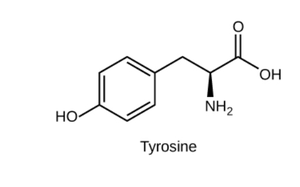
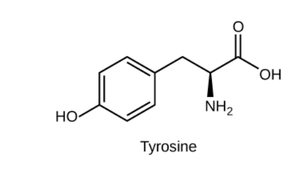
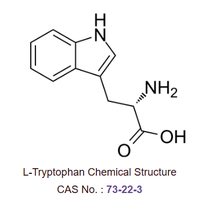
Amino acid derivatives (biogenic amines): Derived from tyrosine or tryptophan.
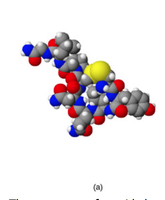
Peptide hormones: Chains of amino acids, ranging from short peptides to large glycoproteins.
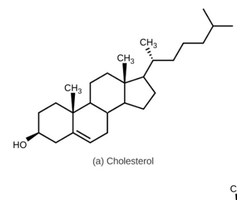
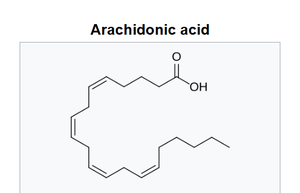
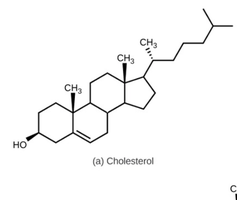
Lipid derivatives: Includes eicosanoids (from arachidonic acid) and steroid hormones (from cholesterol).
Amino Acid Derivatives
Tyrosine derivatives: Thyroid hormones, catecholamines (epinephrine, norepinephrine, dopamine).
Tryptophan derivatives: Serotonin and melatonin.
Lipid Derivatives
Eicosanoids: Derived from arachidonic acid; act as paracrines and hormones (e.g., prostaglandins, leukotrienes).
Steroid hormones: Derived from cholesterol; include androgens, estrogens, progesterone, corticosteroids, and calcitriol.
Hormone Transport and Mechanisms of Action
Transport in Blood
Hormones may circulate freely or be bound to carrier proteins. Free hormones are rapidly removed from circulation, while bound hormones remain active longer.
Free hormones: Short-lived, quickly inactivated by target cells, liver, or kidneys.
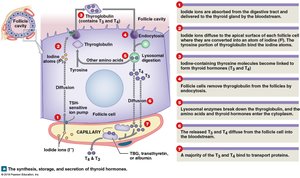
Bound hormones: Thyroid and steroid hormones are mostly bound to transport proteins, forming a reserve in the bloodstream.
Hormone Receptors and Cellular Effects
Hormones exert their effects by binding to specific receptors on or in target cells. The presence or absence of receptors determines a cell's sensitivity to a hormone.
Down-regulation: High hormone levels decrease receptor numbers, reducing sensitivity.
Up-regulation: Low hormone levels increase receptor numbers, enhancing sensitivity.
Water-Soluble vs. Lipid-Soluble Hormones
Catecholamines and peptide hormones: Water-soluble; bind to extracellular receptors on the plasma membrane.
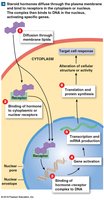
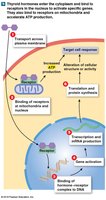
Steroid and thyroid hormones: Lipid-soluble; diffuse across the plasma membrane and bind to intracellular receptors.
Second Messenger Systems
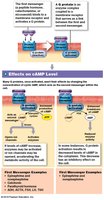
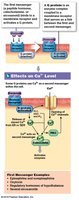
Many hormones act through second messenger systems, amplifying the signal inside the cell.
First messenger: The hormone that binds to the cell surface receptor.
Second messenger: Intracellular molecule (e.g., cAMP, cGMP, Ca2+) that mediates the hormone's effects.
G proteins: Link hormone-receptor binding to the activation of second messengers.
Intracellular Receptors and Gene Regulation
Lipid-soluble hormones (steroids and thyroid hormones) bind to intracellular receptors, altering gene transcription and protein synthesis for long-term effects.
Regulation of Hormone Secretion
Feedback Mechanisms
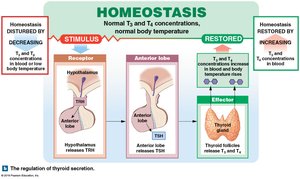
Hormone secretion is primarily regulated by negative feedback mechanisms, maintaining homeostasis.
Humoral stimuli: Changes in blood composition (e.g., glucose, Ca2+).
Hormonal stimuli: Arrival or removal of another hormone.
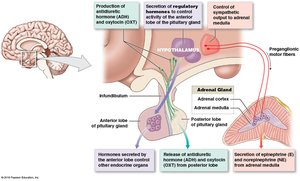
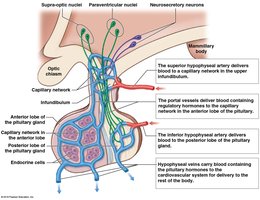
Neural stimuli: Neurotransmitter signals (e.g., hypothalamic control of the pituitary gland).
Major Endocrine Glands and Their Hormones
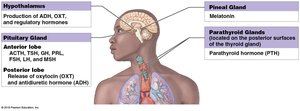
Pituitary Gland (Hypophysis)
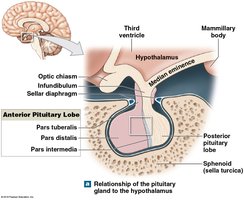
The pituitary gland is the "master gland," releasing hormones that regulate other endocrine glands. It is divided into anterior and posterior lobes, each with distinct functions and hormone products.
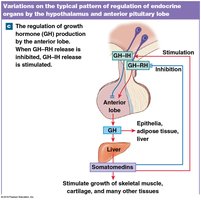
Anterior lobe (adenohypophysis): Produces TSH, ACTH, FSH, LH, GH, PRL, and MSH.
Posterior lobe (neurohypophysis): Releases ADH and OXT, synthesized in the hypothalamus.
Feedback Control of Pituitary Hormones
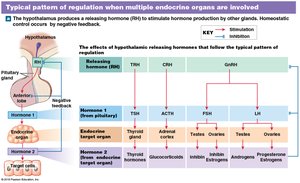
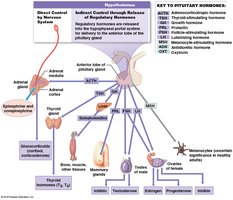
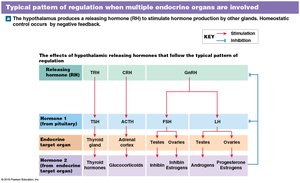
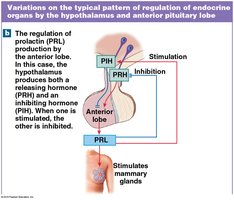
Thyroid Gland
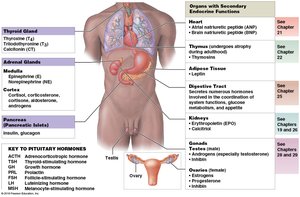
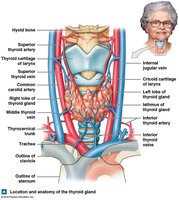
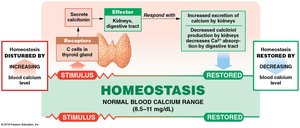
The thyroid gland is located inferior to the larynx and consists of two lobes connected by an isthmus. It produces thyroid hormones (T3 and T4) and calcitonin.
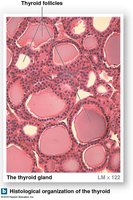
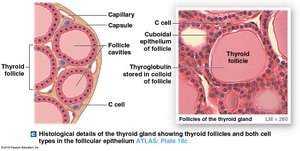
Thyroid follicles: Synthesize and store thyroglobulin, the precursor to thyroid hormones.
C cells (parafollicular cells): Produce calcitonin, which lowers blood calcium levels.
Parathyroid Glands
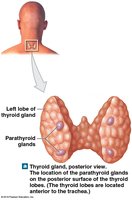
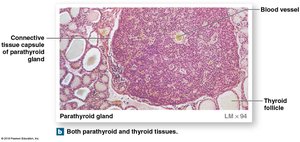
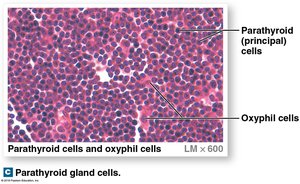
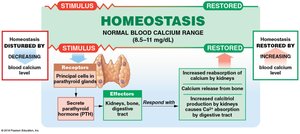
The parathyroid glands are small glands located on the posterior surface of the thyroid gland. They secrete parathyroid hormone (PTH), which increases blood calcium levels.
PTH: Stimulates osteoclasts, increases calcium reabsorption in kidneys, and promotes calcitriol synthesis.
Adrenal Glands
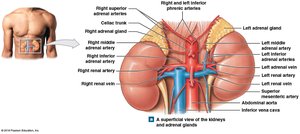
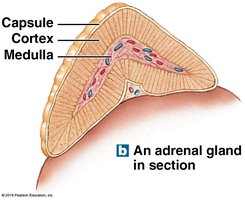
The adrenal glands are located on the superior border of each kidney and consist of an outer cortex and inner medulla.
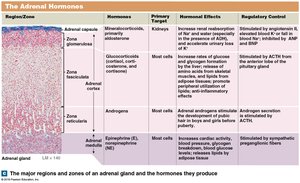
Cortex: Produces corticosteroids (mineralocorticoids, glucocorticoids, and androgens).
Medulla: Produces catecholamines (epinephrine and norepinephrine).
Pineal Gland
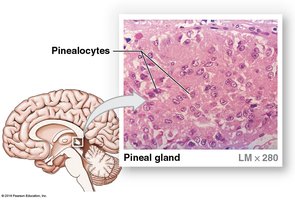
The pineal gland is located in the brain and secretes melatonin, which regulates circadian rhythms and reproductive timing.
Pancreas
The pancreas has both exocrine and endocrine functions. The endocrine portion consists of pancreatic islets, which secrete insulin, glucagon, somatostatin, and pancreatic polypeptide.
Alpha cells: Secrete glucagon (raises blood glucose).
Beta cells: Secrete insulin (lowers blood glucose).
Delta cells: Secrete somatostatin (inhibits insulin and glucagon).
PP cells: Secrete pancreatic polypeptide.
Summary Table: Major Endocrine Glands and Hormones
Gland | Hormones | Main Effects |
|---|---|---|
Pituitary (anterior) | TSH, ACTH, FSH, LH, GH, PRL, MSH | Regulate other endocrine glands, growth, lactation, pigmentation |
Pituitary (posterior) | ADH, OXT | Water balance, uterine contraction, milk ejection |
Thyroid | T3, T4, Calcitonin | Metabolism, calcium homeostasis |
Parathyroid | PTH | Calcium homeostasis |
Adrenal cortex | Aldosterone, cortisol, androgens | Electrolyte balance, stress response, secondary sex characteristics |
Adrenal medulla | Epinephrine, norepinephrine | Fight-or-flight response |
Pineal | Melatonin | Circadian rhythms |
Pancreas | Insulin, glucagon | Blood glucose regulation |
Additional info: Many organs have secondary endocrine functions, including the heart (ANP), kidneys (erythropoietin, renin), digestive tract (various hormones), and gonads (sex hormones).
