 Back
BackThe Female Reproductive System: Structure and Function
Study Guide - Smart Notes
 Tailored notes based on your materials, expanded with key definitions, examples, and context.
The Female Reproductive System
Overview
The female reproductive system is responsible for producing eggs, facilitating fertilization, and supporting the development of a fetus. It consists of several organs, each with specialized functions essential for reproduction and overall reproductive health.
Ovaries
Location and Structure: The ovaries are paired organs located on either side of the uterus. They are attached to the uterus by the ovarian ligament.
Function: Ovaries produce and store eggs (oocytes) before birth. Each ovary contains numerous follicles, each holding an immature egg.
Ovulation: Each month, one follicle matures and releases an egg in a process called ovulation.
Hormone Production: Ovaries also secrete hormones such as estrogen and progesterone, which regulate the menstrual cycle and secondary sexual characteristics.
Fallopian Tubes
Structure: Tubes that extend from the ovaries to the uterus.
Function: Receive the ovulated egg and are the site where fertilization typically occurs (where sperm meets the egg).
Transport: Lined with cilia and smooth muscle to help move the egg toward the uterus.
Uterus
Also Known As: The womb.
Structure: A hollow, muscular organ with thick walls.
Function: Site of fetal development during pregnancy.
Endometrium: The inner lining that receives, captures, and nourishes a fertilized egg. It sheds during menstruation if no pregnancy occurs.
Cervix
Location: The lower, narrow "neck" of the uterus that opens into the vagina.
Function: Produces mucus to prevent bacteria from entering the uterus. The cervix opens during menstruation and childbirth to allow passage of menstrual blood or the baby.
Vagina
Structure: A muscular canal extending from the cervix to the outside of the body.
Functions:
Receives semen during sexual intercourse.
Serves as the birth canal during delivery.
Provides a passageway for menstrual flow.
Ovarian Ligament
Function: Connects the ovary to the uterus, helping to hold the ovary in place.
Other Structures
Anus: The opening at the end of the digestive tract through which solid waste leaves the body. Not part of the reproductive system but located nearby anatomically.
Urethra: The tube that carries urine from the bladder to the outside of the body.
Urinary Bladder: Stores urine before it is excreted.
Labelled Diagram of the Female Reproductive System
The following image illustrates the anatomical relationships of the female reproductive organs described above. Use the labels to identify each structure:
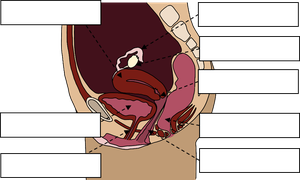
Example: During ovulation, an egg is released from the ovary, travels through the fallopian tube (where fertilization may occur), and then moves to the uterus for potential implantation.
Additional info: The coordination of these organs is regulated by hormones from both the ovaries and the pituitary gland, ensuring proper timing for ovulation, fertilization, and menstruation.
