 Back
BackThe Female Reproductive System
Study Guide - Smart Notes
 Tailored notes based on your materials, expanded with key definitions, examples, and context.
Organs of the Female Reproductive System
Overview of Female Reproductive Anatomy
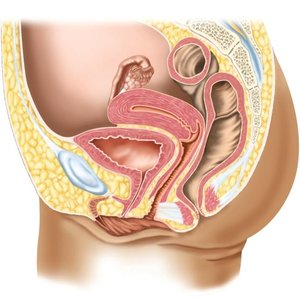
The female reproductive system consists of both internal and external organs that function together to produce gametes, facilitate fertilization, and support fetal development. The main organs include the ovaries, uterine tubes (fallopian tubes), uterus, cervix, vagina, and external genitalia.
Ovary: Site of oocyte maturation and hormone production (estrogen and progesterone).
Uterine tube (Fallopian tube): Transports ovulated oocyte; site of fertilization.
Uterus: Muscular organ; site of implantation and fetal development.
Cervix: Inferior entrance/exit of the uterus.
Vagina: Copulatory organ and birth canal.
External genitalia: Includes labia majora, labia minora, clitoris, and vestibular glands.
Ovary: Structure and Function
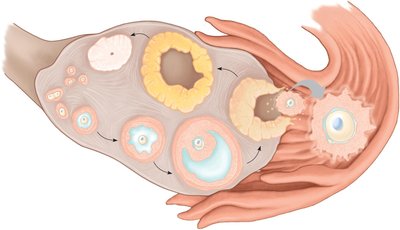
Oogenesis and Follicle Development
The ovary is responsible for the production of oocytes (egg cells) and the secretion of female sex hormones. Oogenesis is the process of egg cell formation, which begins before birth and continues until menopause.
Oogonia: Stem cells that divide by mitosis during prenatal development to produce more oogonia.
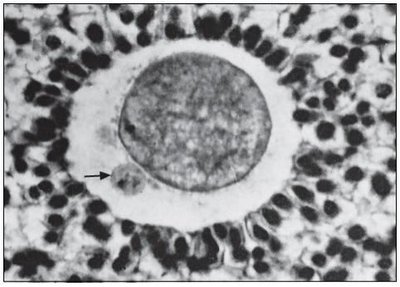
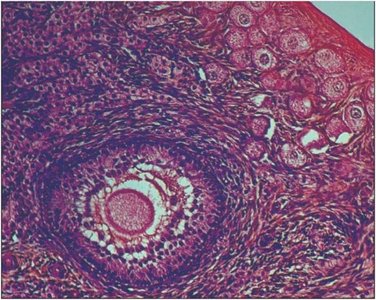
Primordial follicle: Contains a primary oocyte surrounded by a single layer of granulosa (follicular) cells.
Primary follicle: Oocyte surrounded by multiple layers of granulosa cells.
Stages of Oocyte Development
Oogenesis involves two meiotic divisions, resulting in the formation of a mature ovum and polar bodies. The process is regulated by hormones and occurs in distinct stages:
Meiosis I: Begins before birth, pauses at prophase I, and resumes at puberty.
Meiosis II: Completed only if fertilization occurs.
Polar bodies: Small cells that degenerate, ensuring most cytoplasm remains in the ovum.
Example: At fertilization, the secondary oocyte completes meiosis II, resulting in a zygote with 46 chromosomes (23 from each parent).
Follicle Maturation and Ovulation
Hormonal Regulation of Follicle Development
At puberty, the anterior pituitary gland secretes increased amounts of follicle-stimulating hormone (FSH), which stimulates the maturation of ovarian follicles. Luteinizing hormone (LH) also plays a key role in follicular development and ovulation.
FSH: Stimulates growth and maturation of ovarian follicles.
LH: Triggers ovulation and stimulates the formation of the corpus luteum.
Ovulation
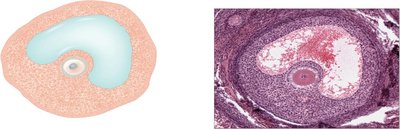
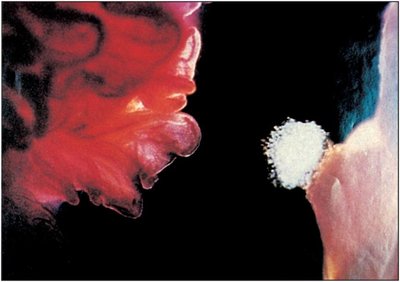
Ovulation is the release of a mature oocyte from the follicle, typically occurring around day 14 of the menstrual cycle. An LH surge stimulates this event.
Ovulation: Release of secondary oocyte from the ovary into the uterine tube.
Corpus luteum: Structure formed from the ruptured follicle; secretes progesterone and estrogen.
Corpus albicans: Degenerated corpus luteum if pregnancy does not occur.
Female Internal Accessory Organs
Structure and Function
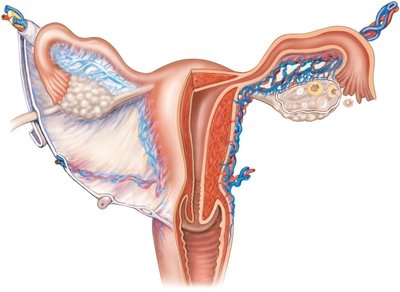
The internal accessory organs of the female reproductive system include the uterine tubes, uterus, cervix, and vagina. These structures facilitate the transport of gametes, fertilization, and support of fetal development.
Fimbriae: Finger-like projections that sweep the ovulated oocyte into the fallopian tube.
Uterine tubes: Site of fertilization; transport oocyte to uterus.
Uterus: Site of implantation and fetal development; muscular organ with three layers (endometrium, myometrium, perimetrium).
Cervix: Lower part of the uterus; forms a canal between the uterus and vagina.
Vagina: Muscular tube; serves as the birth canal and copulatory organ.
Uterine Wall Layers
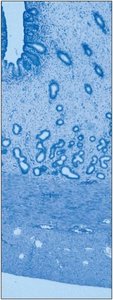
Endometrium: Inner lining; site of implantation and menstruation; target of estrogen and progesterone.
Myometrium: Middle muscular layer; contracts during labor; target of oxytocin (OT).
Perimetrium: Outer serous layer; anchors uterus in place.
Female External Reproductive Organs
Structure and Function
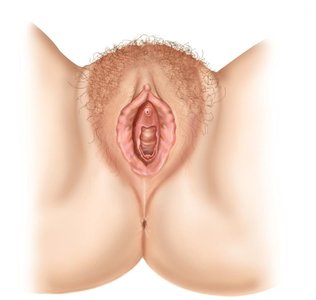
The external genitalia, collectively called the vulva, protect the internal reproductive organs and play a role in sexual arousal and lubrication.
Labia majora: Outer folds of skin and adipose tissue; protect vaginal and urethral openings.
Labia minora: Inner folds; protect vaginal and urethral openings.
Clitoris: Erectile tissue; abundant in sensory neurons; analogous to the male penis.
Vestibular glands: Secrete mucus for lubrication during sexual stimulation.
Vestibule: Space between labia minora containing openings of urethra and vagina.
Hormonal Control of Female Reproductive Functions
Major Hormones and Their Actions
The female reproductive cycle is regulated by a complex interplay of hormones from the hypothalamus, pituitary gland, and ovaries.
GnRH (Gonadotropin-releasing hormone): Released from hypothalamus; stimulates release of FSH and LH from anterior pituitary.
FSH (Follicle-stimulating hormone): Stimulates maturation of ovarian follicles.
LH (Luteinizing hormone): Triggers ovulation and stimulates corpus luteum to produce estrogen and progesterone.
Estrogen: Promotes development of secondary sexual characteristics; stimulates endometrial growth.
Progesterone: Prepares endometrium for implantation; maintains pregnancy.
Negative feedback: High levels of estrogen and progesterone inhibit further release of FSH and LH.
Mammary Glands
Structure and Function
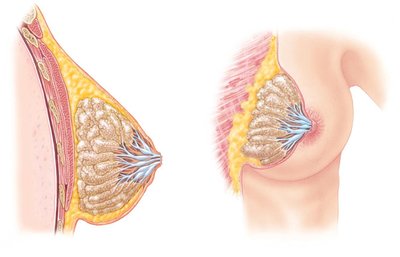
The mammary glands are modified sweat glands that produce milk to nourish infants. They are composed of glandular tissue, ducts, and adipose tissue.
Mammary glands: Produce milk under the influence of prolactin.
Mammary ducts: Transport milk to the nipple; milk ejection is stimulated by oxytocin.
Estrogen: Stimulates breast development during puberty.
Prolactin: Stimulates milk production.
Oxytocin: Stimulates milk let-down reflex.
Major Events in the Female Reproductive Cycle
Ovarian and Uterine Cycles
The average menstrual cycle lasts 28 days, beginning with the first day of menstrual bleeding. The ovarian and uterine cycles are interdependent and regulated by hormonal changes.
Ovarian cycle: Follicular phase (follicle growth), ovulation (release of oocyte), luteal phase (corpus luteum activity).
Uterine cycle: Menstrual phase (shedding of endometrium), proliferative phase (endometrial growth), secretory phase (preparation for implantation).
Ovulation: Occurs around day 14; triggered by LH surge; mature (Graafian) follicle releases secondary oocyte.
Equation for Chromosome Number in Fertilization:
