 Back
BackThe Human Body: An Orientation – Comprehensive Study Notes
Study Guide - Smart Notes
 Tailored notes based on your materials, expanded with key definitions, examples, and context.
The Human Body: An Orientation
Introduction to Anatomy and Physiology
Anatomy and physiology are foundational sciences for understanding the structure and function of the human body. Anatomy focuses on the physical structures, while physiology explores the functions and processes that sustain life.
Anatomy: The study of body structures and their relationships.
Physiology: The study of body functions and mechanisms.
Principle of Complementarity: Structure determines function; the way a part is built enables its role.
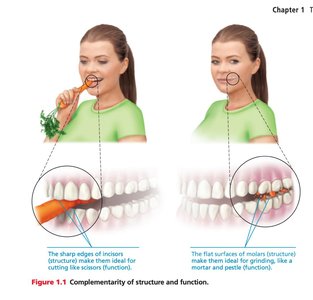
Example: The sharp edges of incisors (structure) are ideal for cutting food (function), while the flat surfaces of molars are suited for grinding.
Subdivisions of Anatomy and Physiology
Both anatomy and physiology have specialized branches that focus on particular aspects of the body.
Microscopic Anatomy: Study of structures too small to be seen with the naked eye (e.g., cytology, histology).
Developmental Anatomy: Study of structural changes throughout life (e.g., embryology).
Renal Physiology: Kidney function.
Neurophysiology: Nervous system function.
Cardiovascular Physiology: Heart and blood vessel function.
Levels of Structural Organization
Hierarchy of Organization
The human body is organized into a hierarchy of structural levels, each building upon the previous.
Chemical Level: Atoms combine to form molecules.
Cellular Level: Molecules form organelles, which are components of cells.
Tissue Level: Groups of similar cells with a common function.
Organ Level: Structures composed of at least two tissue types, performing specific functions.
Organ System Level: Groups of organs working together for a common purpose.
Organismal Level: The living human being, sum of all structural levels.
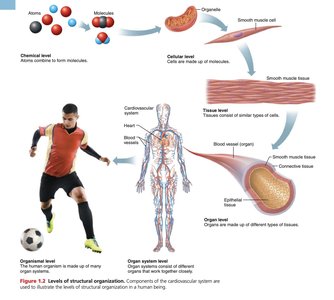
Example: The cardiovascular system includes the heart (organ), blood vessels (organs), and blood (tissue).
Organ Systems of the Human Body
The 11 Organ Systems
The human body contains eleven major organ systems, each with distinct functions and components.
Integumentary System: Skin, hair, nails; protects the body.
Skeletal System: Bones, joints; supports and protects.
Muscular System: Muscles; movement and heat production.
Nervous System: Brain, spinal cord, nerves; control and communication.
Endocrine System: Glands; hormone production and regulation.
Cardiovascular System: Heart, blood vessels; transport of nutrients and waste.
Lymphatic System: Lymph nodes, lymph vessels; immune response and fluid balance.
Respiratory System: Lungs, airways; gas exchange.
Digestive System: Stomach, intestines; breakdown and absorption of food.
Urinary System: Kidneys, bladder; waste elimination and water balance.
Reproductive System: Ovaries, testes; production of offspring.
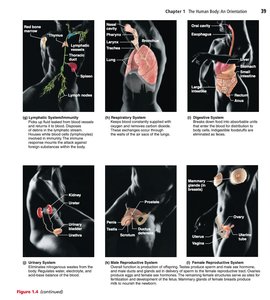
Example: The respiratory system supplies oxygen to the blood and removes carbon dioxide.
Requirements for Life and Survival Needs
Functional Characteristics Necessary for Life
To maintain life, the human body must perform several essential functions.
Maintaining Boundaries: Separation of internal and external environments.
Movement: Muscular activity and movement of substances.
Responsiveness: Ability to sense and respond to stimuli.
Digestion: Breakdown of food for absorption.
Metabolism: All chemical reactions in the body.
Excretion: Removal of waste products.
Reproduction: Cell division and organism reproduction.
Growth: Increase in size and number of cells.
Survival Needs
The body requires certain substances and conditions to survive.
Nutrients: Chemical substances for energy and cell building.
Oxygen: Required for oxidative reactions that release energy.
Water: Fluid environment for chemical reactions.
Temperature: Normal body temperature for optimal reaction rates.
Atmospheric Pressure: Necessary for breathing and gas exchange.
Homeostasis and Feedback Mechanisms
Definition and Significance of Homeostasis
Homeostasis is the body's ability to maintain stable internal conditions despite external changes. It is a dynamic equilibrium, achieved through the coordinated actions of all organ systems.
Law of Mass Balance: The total amount of a substance in the body remains constant.
Regulatory Systems: Nervous and endocrine systems monitor and regulate variables.
Feedback Loops
Feedback mechanisms are essential for maintaining homeostasis. They involve three components: receptor (sensor), control center, and effector.
Negative Feedback: Reduces or shuts off the original stimulus; maintains stability (e.g., regulation of body temperature).
Positive Feedback: Enhances or exaggerates the original stimulus; usually controls infrequent events (e.g., blood clotting).
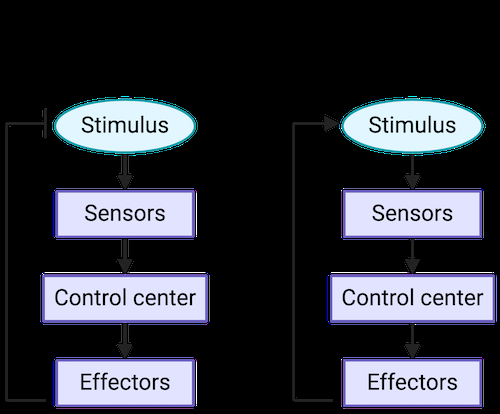
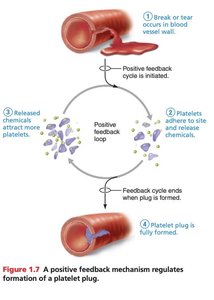
Example: Negative feedback regulates blood glucose levels; positive feedback accelerates labor contractions.
Homeostatic Imbalance
Disruption of homeostasis can lead to disease. Aging and impaired feedback mechanisms increase the risk of illness and instability.
Impaired Feedback: Overwhelmed negative feedback or destructive positive feedback can cause problems.
Clinical Example: Hiatal hernia, pleurisy, peritonitis, and surgical errors due to poor anatomical understanding.
Anatomical Terminology
Anatomical Position and Directional Terms
Anatomical terminology is used to describe locations, directions, and regions of the body, ensuring clear communication among health professionals.
Anatomical Position: Body erect, feet slightly apart, palms forward, thumbs away from body.
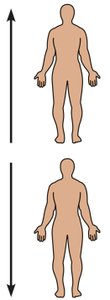
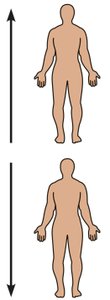
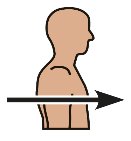
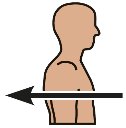
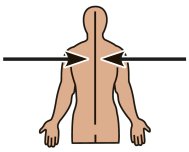
Directional Terms: Superior, inferior, anterior, posterior, medial, lateral, intermediate, proximal, distal, superficial, deep.
Regional Terms
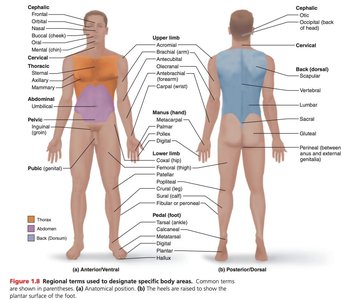
Regional terms designate specific areas within the axial (head, neck, trunk) and appendicular (limbs) divisions of the body.
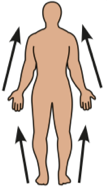
Body Planes and Sections
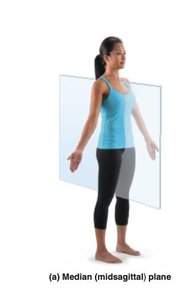
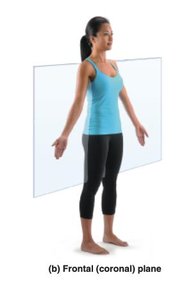
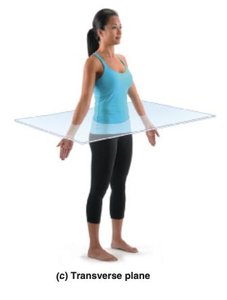
Body planes are imaginary lines used to divide the body for anatomical study. The three most common planes are sagittal, frontal (coronal), and transverse (horizontal).
Sagittal Plane: Divides body into right and left parts.
Median (Midsagittal) Plane: Exactly in the midline.
Parasagittal Plane: Offset from the midline.
Frontal (Coronal) Plane: Divides body into anterior and posterior parts.
Transverse (Horizontal) Plane: Divides body into superior and inferior parts.
Body Cavities and Membranes
Dorsal and Ventral Body Cavities
The body contains internal cavities that protect organs and allow for their movement and function.
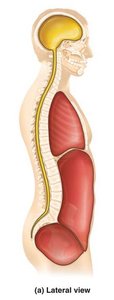
Dorsal Body Cavity: Cranial cavity (brain) and vertebral cavity (spinal cord), covered by meninges.
Ventral Body Cavity: Thoracic cavity (lungs, heart) and abdominopelvic cavity (digestive, urinary, reproductive organs), separated by the diaphragm.
Serous Membranes
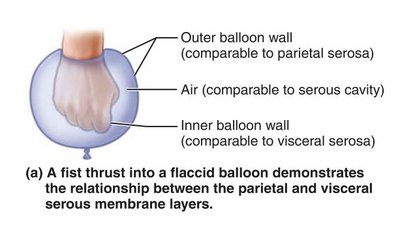
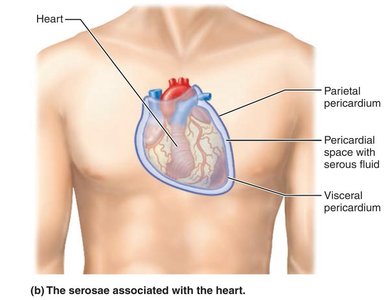
Serous membranes (serosa) are thin, double-layered membranes covering surfaces in the ventral body cavity. They secrete lubricating fluid to reduce friction.
Parietal Serosa: Lines cavity walls.
Visceral Serosa: Covers organs.
Examples: Pleura (lungs), peritoneum (abdominopelvic organs), pericardium (heart).
Abdominopelvic Regions and Quadrants
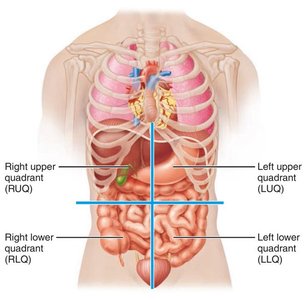
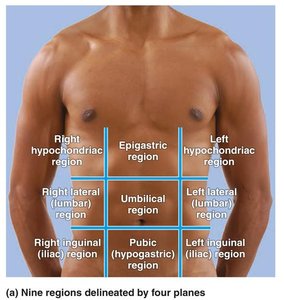
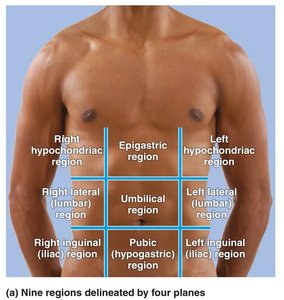
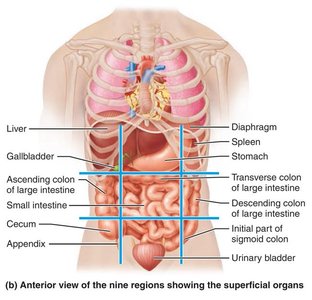
The abdominopelvic cavity is divided into four quadrants and nine regions for clinical and anatomical reference.
Four Quadrants: Right upper (RUQ), left upper (LUQ), right lower (RLQ), left lower (LLQ).
Nine Regions: Umbilical, epigastric, pubic (hypogastric), right/left inguinal (iliac), right/left lateral (lumbar), right/left hypochondriac.
Other Body Cavities
In addition to the main closed cavities, the body has several smaller cavities, some open to the environment (oral, nasal, orbital, middle ear) and some closed (synovial cavities around joints).
Clinical Imbalances and Importance of Terminology
Homeostatic Imbalance Examples
Clinical conditions can arise from anatomical or physiological imbalances, such as hiatal hernia, pleurisy, peritonitis, and surgical errors due to misunderstanding of anatomical terms.
Hiatal Hernia: Stomach protrudes through diaphragm, causing heartburn.
Pleurisy: Inflammation of pleurae.
Peritonitis: Inflammation of peritoneum.
Wrong Site Surgery: Errors due to confusion about anatomical terminology.
Importance: Precise anatomical terminology prevents medical errors and improves communication.
Summary Table: Orientation and Directional Terms
Term | Definition | Example |
|---|---|---|
Superior (cranial) | Toward the head end or upper part of a structure | The head is superior to the abdomen. |
Inferior (caudal) | Away from the head end or toward the lower part | The navel is inferior to the chin. |
Anterior (ventral) | Toward or at the front of the body | The breastbone is anterior to the spine. |
Posterior (dorsal) | Toward or at the back of the body | The heart is posterior to the breastbone. |
Medial | Toward the midline of the body | The heart is medial to the arm. |
Lateral | Away from the midline of the body | The arms are lateral to the chest. |
Intermediate | Between a more medial and a more lateral structure | The collarbone is intermediate between the breastbone and shoulder. |
Proximal | Closer to the origin of a body part | The elbow is proximal to the wrist. |
Distal | Farther from the origin of a body part | The knee is distal to the thigh. |
Superficial (external) | Toward or at the body surface | The skin is superficial to the skeletal muscles. |
Deep (internal) | Away from the body surface; more internal | The lungs are deep to the skin. |
Key Equations
Law of Mass Balance:
Feedback Loop (Generalized):
Additional info: These notes expand on brief points with academic context, definitions, and examples to ensure completeness and clarity for exam preparation.
