 Back
BackThe Human Body: An Orientation – Foundational Concepts in Anatomy & Physiology
Study Guide - Smart Notes
 Tailored notes based on your materials, expanded with key definitions, examples, and context.
Introduction to Anatomy and Physiology
Overview of A&P
Anatomy and Physiology (A&P) are foundational sciences that explore the structure and function of the human body. These disciplines are essential for students pursuing health-related careers and for understanding human biology and health. A&P integrates principles from biology, chemistry, physics, and mathematics to explain how the body operates.
Anatomy: The study of body structure and the relationships among body parts.
Physiology: The study of body function, focusing on how body parts work and carry out life-sustaining activities.
Applicability: Prepares students for health careers, enhances understanding of personal and family health, and provides a basis for advanced biological sciences.
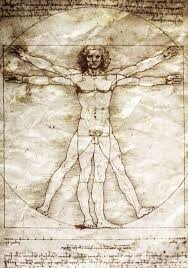
Divisions of Anatomy
Major Branches
Anatomy is divided into several branches, each focusing on different aspects of body structure:
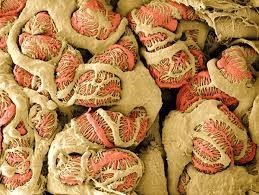
Microscopic Anatomy: Study of structures too small to be seen with the naked eye (e.g., cells, tissues).
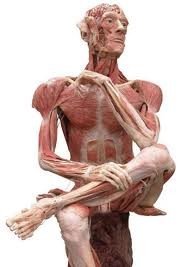
Gross (Macroscopic) Anatomy: Study of large, visible structures (e.g., organs, muscles).
Developmental Anatomy: Study of structural changes throughout the lifespan, including embryology.
Levels of Structural Organization
Hierarchy of Complexity
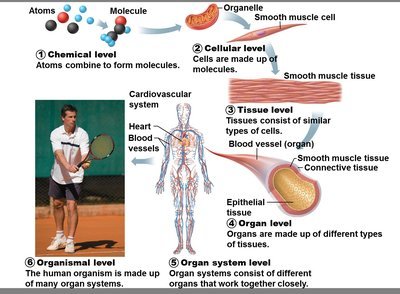
The human body is organized into hierarchical levels, each building on the previous one:
Chemical Level: Atoms combine to form molecules.
Cellular Level: Cells are made up of molecules and are the basic units of life.
Tissue Level: Tissues consist of similar types of cells performing a common function.
Organ Level: Organs are made up of different types of tissues working together.
Organ System Level: Organ systems consist of different organs that work closely together.
Organismal Level: The human organism is made up of many organ systems functioning together.
Principle of Complementarity of Structure and Function
Form Follows Function
Structure and function are closely related in biology. The form of a body part or organ enables it to perform its specific function. This principle is summarized as "form follows function." For example, bones are strong and rigid to support the body, while the thin walls of the lungs allow for efficient gas exchange.
Major Organ Systems of the Human Body
Overview of the 11 Organ Systems
The body is organized into 11 major organ systems, each with specific structures and functions:
Integumentary System: Protects the body, regulates temperature, and contains sensory receptors (skin, hair, nails).
Skeletal System: Supports and protects organs, provides a framework for muscles, stores minerals, and forms blood cells (bones, joints).
Muscular System: Produces movement, maintains posture, and generates heat (skeletal muscles).
Nervous System: Fast-acting control system, responds to stimuli, and activates muscles and glands (brain, spinal cord, nerves).
Endocrine System: Secretes hormones for regulation of growth, reproduction, and metabolism (glands such as pituitary, thyroid, adrenal).
Cardiovascular System: Transports blood, nutrients, gases, and wastes (heart, blood vessels).
Lymphatic System: Returns fluids to blood, cleanses blood, and is involved in immunity (lymph nodes, spleen, thymus).
Respiratory System: Supplies blood with oxygen, removes carbon dioxide, and maintains acid-base balance (lungs, trachea, bronchi).
Digestive System: Breaks down food, absorbs nutrients, and eliminates waste (stomach, intestines, liver).
Urinary System: Eliminates nitrogenous wastes, regulates water, electrolytes, and acid-base balance (kidneys, bladder).
Reproductive System: Produces offspring (testes, ovaries, uterus, etc.).
Body Cavities and Membranes
Organization and Protection of Internal Organs
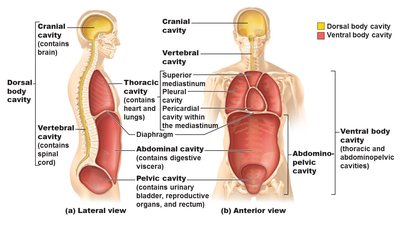
Organs are housed within body cavities, which protect them and allow for changes in size and shape. The two main body cavities are:
Dorsal Cavity: Contains the cranial cavity (brain) and vertebral cavity (spinal cord).
Ventral Cavity: Contains the thoracic cavity (heart, lungs) and abdominopelvic cavity (digestive, urinary, reproductive organs).
Most organs in the ventral cavity are surrounded by serous membranes, which have a double-layered structure (parietal and visceral layers) separated by serous fluid to reduce friction.
Interrelationships Between Organ Systems
Systemic Integration
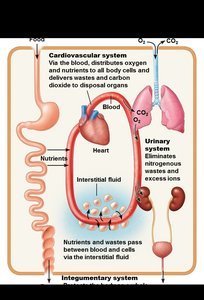
Organ systems do not function in isolation; they work together to maintain the body's internal environment. For example, the respiratory, digestive, urinary, and cardiovascular systems cooperate to deliver nutrients and remove wastes.
Homeostasis: Maintaining Internal Balance
Dynamic Equilibrium
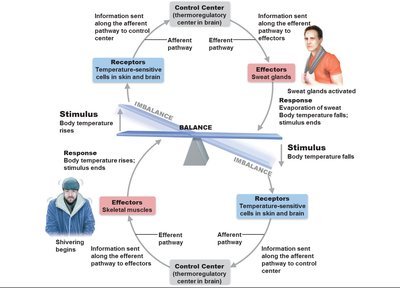
Homeostasis is the maintenance of a relatively constant internal environment, despite external changes. It is a dynamic equilibrium, primarily regulated by the nervous and endocrine systems. Homeostatic control mechanisms involve:
Variable: The factor being regulated (e.g., body temperature).
Receptor: Detects changes in the variable.
Afferent Pathway: Carries information from the receptor to the control center.
Control Center: Determines the set point and response (e.g., brain).
Efferent Pathway: Carries instructions from the control center to the effector.
Effector: Produces the response to restore balance.
Feedback: The response influences the original stimulus (negative or positive feedback).
Types of Homeostatic Regulation
Negative Feedback: The response reduces or eliminates the original stimulus, maintaining homeostasis. Most body processes use negative feedback (e.g., regulation of body temperature, blood glucose levels).
Positive Feedback: The response enhances or amplifies the original stimulus, usually controlling infrequent events (e.g., blood clotting, labor contractions).
Example: Regulation of Blood Volume by ADH
Receptors sense decreased blood volume.
The hypothalamus stimulates the posterior pituitary gland to release antidiuretic hormone (ADH).
ADH causes the kidneys (effectors) to return more water to the blood, restoring volume.
Systems Integration and Disease
Homeostatic Failure and Disease
Homeostasis is preserved through the integration of multiple organ systems. Failure of homeostatic mechanisms can lead to disease or illness, threatening survival.
Additional info: The study of A&P provides the foundation for understanding disease mechanisms, medical interventions, and the rationale for clinical procedures.
Feedback Types Table
Feedback Type | Definition | Example |
|---|---|---|
Negative Feedback | Reduces or shuts off the original stimulus | Body temperature regulation, blood glucose control |
Positive Feedback | Enhances or exaggerates the original stimulus | Blood clotting, labor contractions |
