 Back
BackThe Human Body: An Orientation – Structured Study Notes
Study Guide - Smart Notes
 Tailored notes based on your materials, expanded with key definitions, examples, and context.
The Human Body: An Orientation
An Overview of Anatomy
Anatomy is the study of the structure of the human body, while physiology focuses on body function. Understanding both is essential for comprehending how the body operates and responds to internal and external stimuli.
Anatomy: Examines the physical structure of organisms.
Physiology: Investigates the mechanisms and processes that allow organisms to function.
Subdisciplines of Anatomy
Anatomy is divided into several subdisciplines, each with a unique focus and methodology.
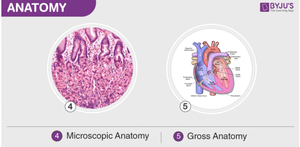
Gross Anatomy: Study of structures visible to the naked eye.
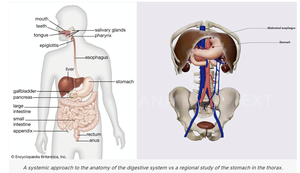
Systemic Anatomy: Study of anatomy by organ systems.
Regional Anatomy: Study of anatomy by specific bodily regions (e.g., head & neck).
Microscopic Anatomy (Histology): Study of structures at the cellular and tissue level using microscopes.
Other Branches of Anatomy
Additional branches of anatomy provide specialized perspectives on bodily structure and function.
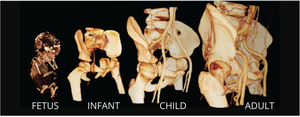
Developmental Anatomy: Examines how body structures form, grow, and change over time.
Embryology: Focuses on development before birth.
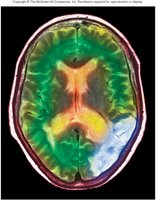
Radiographic Anatomy: Studies anatomy as seen on medical scans (e.g., X-rays, CT, MRI).
Pathological Anatomy (Pathology): Investigates structural changes associated with disease.
Functional Morphology: Relates structure to function.
The Hierarchy of Structural Organization
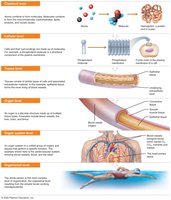
The human body is organized into a hierarchy of structural levels, each building upon the previous.
Chemical Level: Atoms combine to form molecules.
Cellular Level: Cells and their functional subunits.
Tissue Level: Groups of cells performing a common function.
Organ Level: Discrete structures made up of more than one tissue.
Organ System Level: Organs working together for a common purpose.
Organismal Level: The result of all simpler levels working in unison.
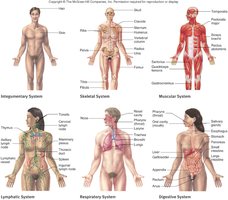
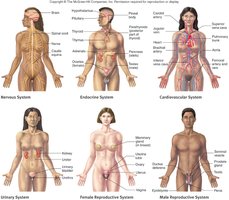
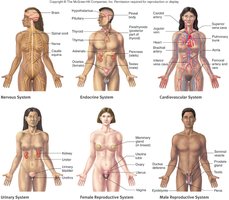
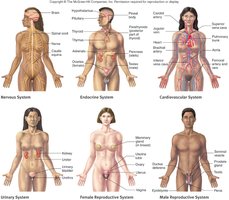
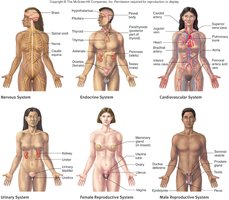
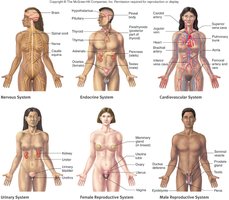
Overview of Organ Systems
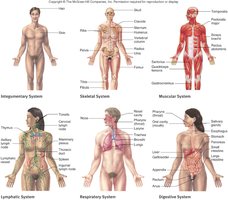
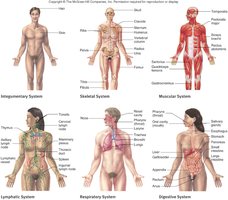
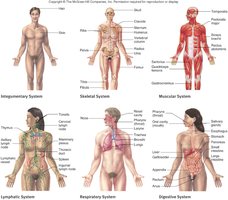
The human body consists of multiple organ systems, each with distinct functions essential for survival and health.
Integumentary System: Protects the body, synthesizes vitamin D, and houses sensory receptors.
Skeletal System: Supports and protects organs, forms blood cells, stores minerals.
Muscular System: Enables movement, maintains posture, produces heat.
Lymphatic System/Immunity: Returns leaked fluid to blood, disposes of debris, houses lymphocytes.
Respiratory System: Supplies oxygen, removes carbon dioxide, facilitates gas exchange.
Digestive System: Breaks down food, absorbs nutrients, eliminates waste.
Nervous System: Fast-acting control system, responds to changes, activates muscles/glands.
Endocrine System: Glands secrete hormones regulating growth, reproduction, and metabolism.
Cardiovascular System: Transports blood, nutrients, gases, and wastes.
Urinary System: Eliminates nitrogenous wastes, regulates water and electrolyte balance.
Reproductive Systems: Produces offspring, sex hormones, and supports fetal development.
Anatomical Terminology
Anatomical terminology is based on ancient Greek or Latin, providing a standardized nomenclature for professionals worldwide.
Standardized terms: Ensure clear communication and avoid ambiguity.
Gross Anatomy—Regional and Directional Terms
Regional and directional terms are used to describe the location of body parts relative to each other. The anatomical position serves as a reference point for these descriptions.
Anatomical Position: Person stands erect, feet together, eyes forward, palms facing anteriorly, thumbs away from the body.
Axial Region: Head, neck, and trunk.
Appendicular Region: Limbs and appendages.
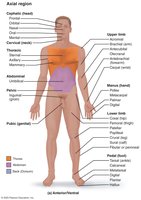
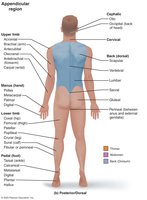
Directional Terms
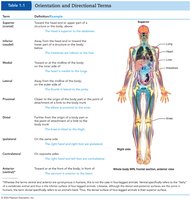
Directional terms are paired opposites used to explain the precise location of body structures.
Superior/Inferior: Above/below.
Anterior (Ventral)/Posterior (Dorsal): Front/back.
Medial/Lateral: Toward/away from the midline.
Superficial/Deep: Near/away from the body surface.
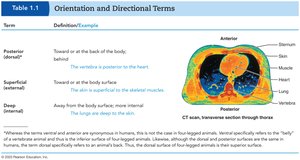
Term | Definition | Example |
|---|---|---|
Superior | Toward the head or upper part of a structure | The head is superior to the abdomen |
Inferior | Away from the head or toward the lower part | The navel is inferior to the chin |
Anterior (ventral) | Toward the front of the body | The sternum is anterior to the heart |
Posterior (dorsal) | Toward the back of the body | The vertebra is posterior to the heart |
Medial | Toward the midline of the body | The heart is medial to the arm |
Lateral | Away from the midline | The arms are lateral to the chest |
Superficial | Toward or at the body surface | The skin is superficial to the skeletal muscles |
Deep | Away from the body surface, more internal | The lungs are deep to the skin |
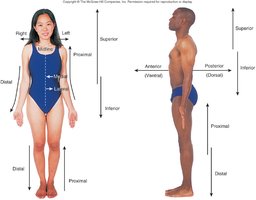
Body Planes and Sections
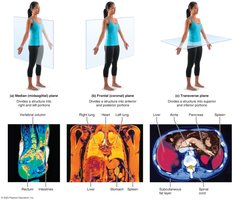
Body planes are imaginary lines used to divide the body into sections for anatomical study.
Sagittal Plane: Divides the body into right and left parts.
Median (Midsagittal) Plane: Runs along the midline.
Parasagittal Plane: Offset from the midline.
Frontal (Coronal) Plane: Divides body into anterior and posterior parts.
Transverse Plane: Divides body into superior and inferior parts.
Body Cavities and Membranes
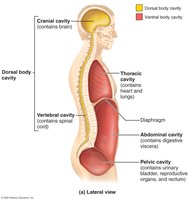
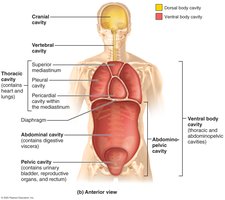
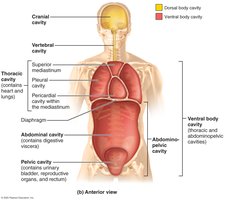
The body contains cavities that house organs and are lined by membranes.
Dorsal Body Cavity: Includes cranial and vertebral cavities.
Ventral Body Cavity: Includes thoracic and abdominopelvic cavities.
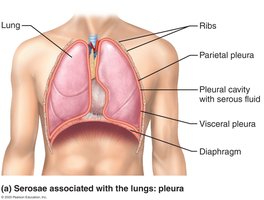
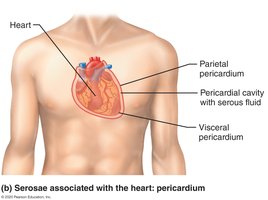
Thoracic Cavity: Contains lungs (pleural cavities) and heart (pericardial cavity).
Abdominopelvic Cavity: Contains abdominal and pelvic organs.
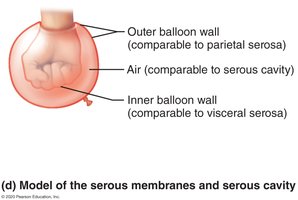
Serous Cavities: Slitlike spaces lined by serous membranes (pleura, pericardium, peritoneum).
Parietal Serosa: Lines the cavity wall.
Visceral Serosa: Covers the organs.
Serous Fluid: Lubricates the organs and cavity walls.
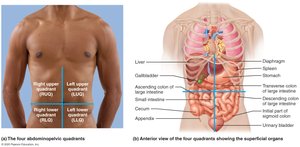
Abdominal Quadrants
The abdomen is divided into four quadrants for clinical and anatomical reference.
Right Upper Quadrant (RUQ)
Left Upper Quadrant (LUQ)
Right Lower Quadrant (RLQ)
Left Lower Quadrant (LLQ)
Summary Table: Structural Organization Levels
Level | Description | Example |
|---|---|---|
Chemical | Atoms combine to form molecules | Water, proteins |
Cellular | Cells and their functional subunits | Muscle cell |
Tissue | Group of cells performing a common function | Muscle tissue |
Organ | Structure made up of more than one tissue | Heart |
Organ System | Organs working together for a common purpose | Cardiovascular system |
Organismal | All simpler levels working in unison | Human body |
Key Equations and Concepts
Hierarchy of Organization:
Additional info: Academic context was added to clarify the definitions, examples, and relationships between anatomical terms and concepts. Tables were reconstructed for clarity and completeness.
