 Back
The Human Respiratory System: Structure and Function
Study Guide - Smart Notes
 Tailored notes based on your materials, expanded with key definitions, examples, and context.
The Respiratory System
Overview of the Respiratory System
The respiratory system is responsible for the exchange of gases—primarily oxygen and carbon dioxide—between the body and the environment. It consists of a series of organs and structures that facilitate breathing, protect the body from harmful substances, and help regulate blood pH.
Primary Function: To supply oxygen to the blood and remove carbon dioxide from the body.
Main Organs: Nasal cavity, pharynx, larynx, trachea, bronchi, and lungs.
Anatomy of the Respiratory System
The respiratory system can be divided into the upper and lower respiratory tracts, each with specialized structures and functions.
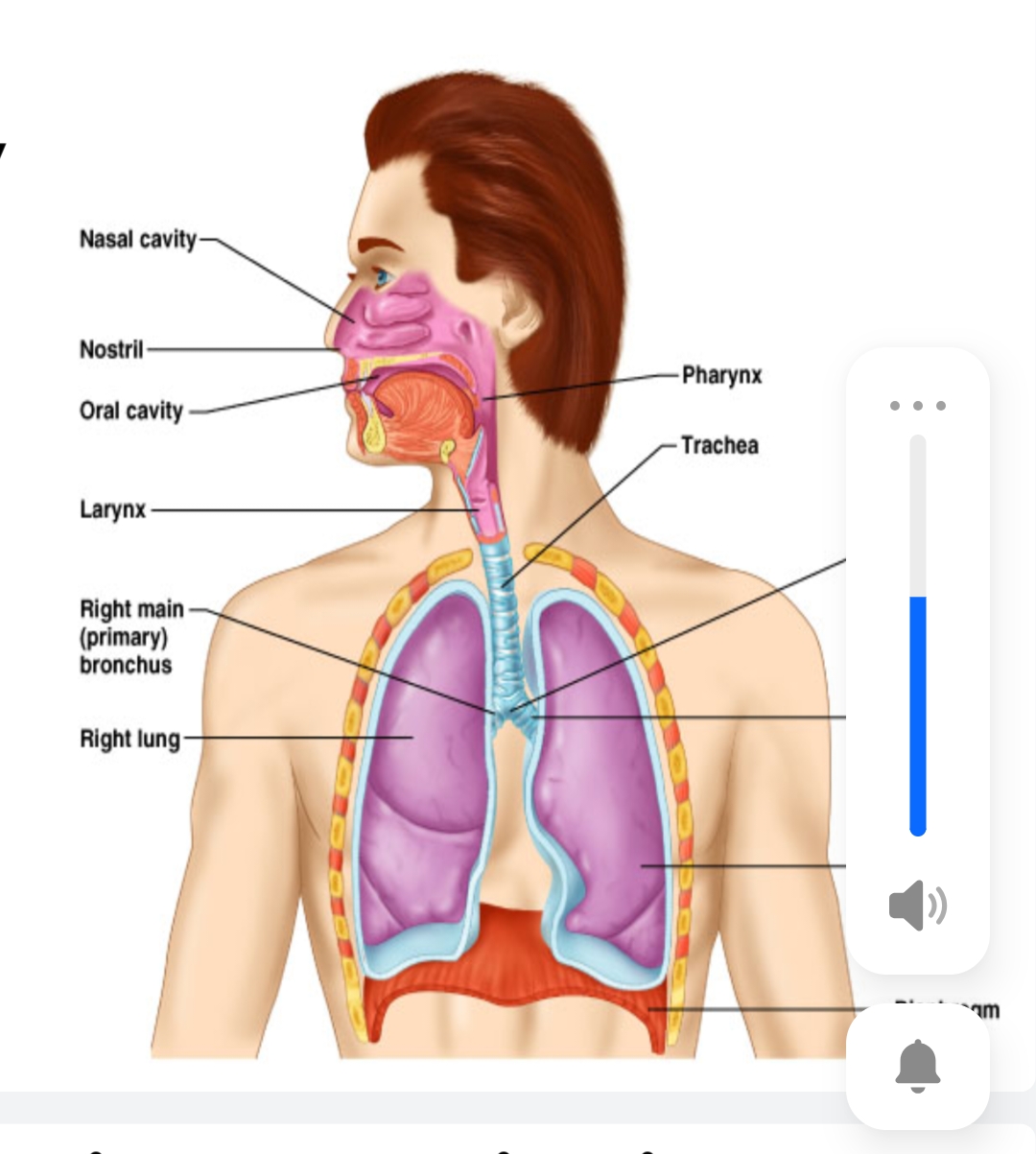
Nasal Cavity: The main external opening for air; filters, warms, and moistens incoming air.
Nostril: External openings of the nose that allow air to enter the nasal cavity.
Oral Cavity: Secondary opening for air intake, especially during increased respiratory demand.
Pharynx: A muscular tube that serves as a passageway for both air (to the larynx) and food (to the esophagus).
Larynx: Also known as the voice box; routes air and food into the proper channels and houses the vocal cords.
Trachea: Commonly called the windpipe; a tube that conducts air from the larynx to the bronchi.
Right Main (Primary) Bronchus: The trachea divides into the right and left main bronchi, which enter the respective lungs and branch into smaller airways.
Right Lung: One of the two lungs, responsible for gas exchange; the right lung is divided into three lobes.
Key Functions of the Respiratory System
Gas Exchange: Oxygen from inhaled air diffuses into the blood, while carbon dioxide diffuses from the blood into the alveoli to be exhaled.
Air Filtration: The nasal cavity and respiratory tract filter out dust, pathogens, and other particles.
Sound Production: The larynx contains vocal cords that produce sound as air passes through.
Olfaction: The nasal cavity contains olfactory receptors for the sense of smell.
Example: Pathway of Air During Inhalation
Air enters through the nostrils or oral cavity.
It passes through the nasal cavity, where it is filtered, warmed, and humidified.
Air moves into the pharynx and then the larynx.
It travels down the trachea and enters the right or left main bronchus.
Finally, air reaches the lungs, where gas exchange occurs in the alveoli.
Additional info:
The diaphragm (shown at the base of the lungs in the image) is a major muscle of respiration, contracting to increase thoracic volume during inhalation.
The bronchi further divide into smaller bronchioles, ending in alveolar sacs where gas exchange takes place.
